
Why Do Varicose Veins Appear at a Young Age? Causes and Prevention

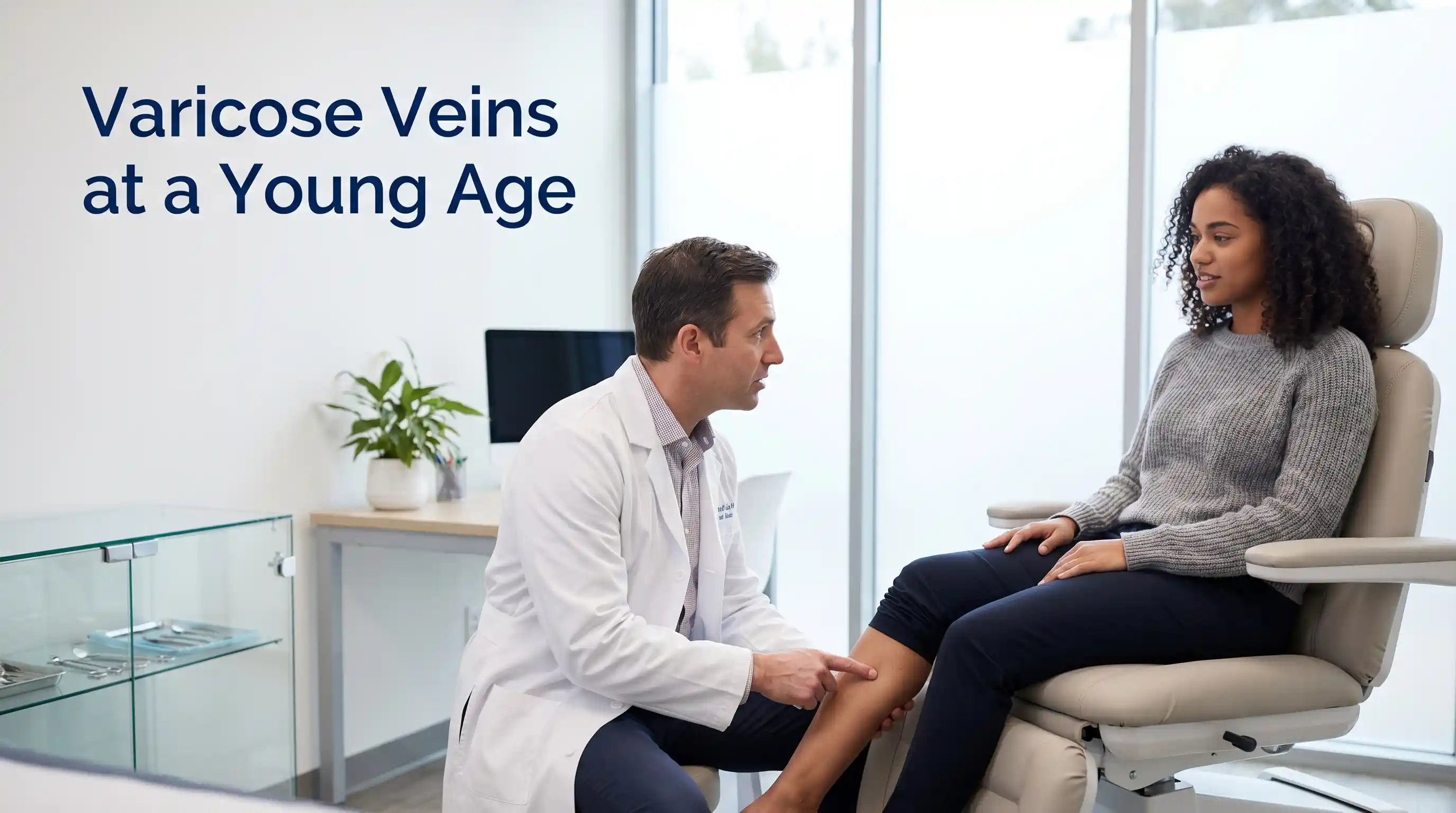
Most people think of varicose veins as a problem of middle age and beyond. Yet in recent years, a significant portion of the patients I see in my practice are still in their 20s and 30s. The number of young patients who come to me because of thin purple veins appearing on their legs, an increasing sense of heaviness and fullness in the evening, or aesthetic concerns is far from negligible. This picture shows that varicose veins are not solely a disease of aging, but a venous problem whose foundation is laid much earlier in life.
In this article, I want to explain why some people develop varicose veins at a younger age. From genetic predisposition to occupational conditions, from hormonal factors to pregnancy and lifestyle, I will address many factors together with the examples I have observed in my clinic over the years. My aim is not to frighten, but to show how much of a difference simple precautions taken in the early period and a timely vascular evaluation can make.
What Are Varicose Veins and Why Do They Appear at a Young Age?
In its simplest definition, varicose veins are the enlargement and twisting of the veins as a result of their inability to perform their function properly. The job of the veins in our legs is to carry blood upward against gravity, toward the heart. Inside these veins, there are small valves that prevent blood from flowing backward. When these valves weaken or do not close properly, blood begins to pool in the leg, the pressure inside the vein increases, and the vein gradually enlarges. The varicose vein picture we see with the naked eye is the result of this process.3
Many of my patients ask, “I am still very young, why would I have varicose veins?” However, valve insufficiency is not an inevitable process tied to age. If the genetic structure, hormonal environment, and daily living conditions are challenging enough, the vein valves can begin to fail even in the 20s. Varicose veins are actually the visible manifestation of a process that progresses over the years; in other words, varicose veins noticed in the 30s are often the result of a foundation that began much earlier.
In my young patients, the first findings I encounter most often are much more subtle than large, visible varicose packets. A feeling of heaviness that increases toward evening, mild swelling, cramps, leg restlessness, and the prominence of fine capillary veins are usually the first signs. Recognizing these early symptoms is very valuable for being able to evaluate the process before it progresses to more serious stages. If you want to examine these early signals in your legs in more detail, you can take a look at my article on varicose vein symptoms and early diagnosis.
Genetic Predisposition: The Most Determining Factor
There is one sentence I always say to my patients about varicose veins at a young age: You largely inherit your vein structure from your mother and father. Over the years, I have observed that the vast majority of patients who develop varicose veins at an early age also have a family history of varicose veins. If there is significant varicosity in the mother, father, or one of the siblings, the person’s likelihood of developing varicose veins increases significantly.
Scientific studies also support this observation. The connective tissue properties that determine the structure of the vein wall and valves are hereditary. It has been shown that in people with a family history of varicose veins, the vein wall can be more elastic and the valves can be weaker.2 When both parents have varicose veins, the risk increases even more. This does not mean that varicose veins are your “destiny”; however, knowing your predisposition gives you an early advantage in taking precautions.
Family history is the only factor in varicose veins that you cannot change. But knowing this predisposition is not a disadvantage; on the contrary, it is an early warning system. I always tell my young patients with a family history of varicose veins: You cannot choose your vein structure, but you can choose how to treat it.
If you have a family history of varicose veins, I recommend that you pay attention to your lifestyle even if you do not yet have any obvious complaints in your legs. Genetic predisposition is a factor that can be largely balanced with the right habits. An active life in the early period, an appropriate weight, and avoiding prolonged inactivity genuinely contribute to slowing down the process in people who carry hereditary risk.
Occupation and Standing or Sitting for Long Periods
After genetics, the second most common factor I encounter in young patients with varicose veins is occupational conditions. The most important helper in carrying the blood in the leg veins upward is the contraction of the calf muscles. When we walk, our calf muscles contract rhythmically and work like a pump, pushing blood toward the heart. When we remain motionless standing or sitting for a long time, this pump goes out of service, blood pools in the leg, and the pressure inside the vein remains constantly high.
In my clinic, I have observed that the young patients who come in with varicose veins at an early age are concentrated in certain occupational groups. The table below summarizes the working conditions that are challenging in terms of varicose veins and their main effect on the veins.
| Working pattern | Typical occupation examples | Main effect on the veins |
|---|---|---|
| Standing still for long periods | Nurse, hairdresser, teacher, sales consultant, cook | Calf pump works little, vein pressure remains constantly high |
| Sitting motionless for long periods | Office worker, software developer, driver, call center staff | Leg movement decreases, blood flow slows down, pressure increases below the knee |
| Jobs involving heavy lifting | Warehouse worker, mover, some construction jobs | Increased intra-abdominal pressure is reflected onto the leg veins |
What is important here is not for you to change your occupation, but to develop small habits that will reduce the pressure your working pattern places on your veins. I recommend that my patients who work standing alternate the weight on both legs whenever possible and take a few steps when they get the chance. For my young patients who work at desks, I advise them to stand up briefly every hour, do ankle movements while sitting, and not sit cross-legged for long periods. These simple movements restart the calf pump and reduce the accumulation of blood inside the vein.
Hormonal Factors, Birth Control Methods and Pregnancy
An important reason why varicose veins are more common in young women than in men is hormonal factors. Estrogen and progesterone in particular affect the tone and elasticity of the vein wall. Because progesterone has a relaxing effect on the vein wall, during periods when hormonal balance changes, the vein becomes more prone to enlargement and valve insufficiency.
For this reason, an increased feeling of fullness in the legs is common during certain periods of the menstrual cycle. I also occasionally observe that leg complaints become more pronounced in my young patients who use estrogen-containing birth control methods. My aim here is not to completely reject a method; I recommend that young women with a family history of varicose veins or who have begun to experience complaints in their legs evaluate their choice of birth control method together with their own obstetrics and gynecology physicians, taking their vascular status into consideration.
Pregnancy, on the other hand, is one of the most distinct periods that triggers varicose veins in young women. During pregnancy, several factors come into play at the same time: Hormonal changes relax the vein wall, the volume of blood in circulation increases significantly, and the growing uterus puts pressure on the large vein in the abdomen, making it harder for blood from the legs to flow. When these three effects combine, even a young woman who has never had varicose veins before may develop them during pregnancy.
Some of the varicose veins that develop during pregnancy regress significantly in the months following delivery. However, not all of them disappear completely; they can become permanent, especially in women who have had more than one pregnancy. Treatment planning for complaints during pregnancy is usually postponed until after delivery.
The Role of Weight, Inactivity and Lifestyle
In my conversations with young patients, I often emphasize that varicose veins cannot be explained solely by genetic and occupational factors, and that daily living habits also have an important share. The modern lifestyle contains many elements that strain our vascular health without us being aware of it.
Excess Weight and Intra-abdominal Pressure
Excess weight is an important factor that increases the load on the leg veins. An increase in body weight raises both the mechanical load on the leg veins and intra-abdominal pressure. The increase in intra-abdominal pressure makes it harder for blood from the legs to flow upward and keeps the pressure inside the vein constantly high. In my patients with excess weight at a young age, I have observed that varicose veins both start earlier and can progress more rapidly.
Inactivity and Long Screen Times
Today, a significant portion of young people spend most of their day sitting. Long working hours, followed by free time spent in front of a screen, create long periods in which the leg muscles barely work at all. When the calf pump does not engage sufficiently, blood pools in the leg and the load on the vein increases. Inactivity is perhaps the most easily changeable but most often neglected cause of varicose veins at a young age.
Sports: Friendly and Challenging Aspects for the Veins
Sports is one of the topics about which my young patients ask the most questions. Activities that work the calf muscles rhythmically, such as regular walking, swimming, cycling, and light jogging, are extremely positive for vascular health. These exercises strengthen the calf pump, accelerate blood flow, and reduce the load on the veins.
In contrast, some forms of sports can be more challenging for the veins. Movements that create high intra-abdominal pressure by holding the breath, such as very heavy weightlifting, temporarily increase the pressure on the leg veins in predisposed people. What I want to say here is not to give up sports; it is enough to pay attention to breathing technique in weight training, avoid excessive loads, and structure the program in a balanced way. My general rule is clear: Movement is the friend of the vein; the real damage is caused by inactivity.
There is a sentence I often say to my young patients: Varicose veins are not a disease that keeps you away from sports. On the contrary, properly chosen and regularly performed exercise is one of the most effective methods of prevention. What matters is to move; leaving your legs motionless for hours is far riskier than any exercise.
The common feature of these lifestyle-related factors is that all of them are under your control. You cannot change your genetic predisposition, but you can manage your weight, your activity level, and your daily habits. This is the most powerful tool you have in coping with varicose veins at a young age.
When Should You See a Doctor for Varicose Veins at a Young Age?
A common mistake my young patients make is postponing their complaints by saying, “I am still young, it will pass anyway.” Yet varicose veins are a progressive process, and evaluating them in the early period both expands the treatment options and makes the process easier. You do not need to wait for the formation of obvious and large varicose veins for a vascular evaluation.1
If you have one of the following conditions, I recommend that you get an evaluation from a cardiovascular surgery specialist:
- A feeling of heaviness, fullness, or fatigue in the legs that becomes more pronounced toward evening
- Recurrent swelling in the ankle and calf area
- Leg cramps or a feeling of restlessness, especially at night
- Newly visible capillary veins or networks of fine purple veins on the legs
- Enlarged, twisted veins felt under the skin or visible to the eye
- Color change in the varicose vein area, itching, or hardening of the skin
- People with a significant family history of varicose veins who have begun to have new complaints in their legs
The basis of a vascular evaluation is color Doppler ultrasonography, a painless and radiation-free method. This examination shows which vein has valve insufficiency and at what level.4 Sometimes, beneath the fine capillary veins visible to the eye, there can be a deeper source vein that creates the actual problem. If you are curious about this concept, my article what is the source vein in varicose veins explains the subject in detail.
Distinguishing the fine purple veins visible to the eye from the real varicose veins under the skin is also an important part of the evaluation. These two are often confused; I addressed the difference between them in my article on the difference between varicose veins and spider veins.
The Importance of Early Treatment and Treatment Options
The greatest advantage of varicose veins noticed at a young age is that the process is still at an early stage. Varicose veins are a disease that progresses over time; a picture evaluated in the early period can usually be controlled with simpler and less invasive methods. Neglected varicose veins that progress for years can, over time, lead to problems such as skin color changes, hardening of the skin, itching, and, in advanced stages, the development of wounds.
Here, I always try to be honest with my patients: Not every varicose vein requires immediate surgery or intervention. The treatment decision is determined by the level of complaint, the type of varicose vein, which vein is affected, and the person’s general health condition. While a picture that is still at an early stage in a young patient can usually be managed with lifestyle adjustments and, when necessary, compression stockings, in cases of significant source vein insufficiency, modern interventional methods come into play.
The main approaches used in varicose vein treatment today are as follows:
- Lifestyle adjustments: Increasing mobility, weight management, avoiding prolonged inactivity, and the habit of resting the legs. This is the basis of every treatment plan.
- Compression stockings: Support blood flow by applying graduated pressure to the leg. They can be used both in the early period and after the intervention.
- Methods for fine capillary veins: Approaches applied for superficial capillary veins that cause aesthetic discomfort. For details, you can see my article on capillary varicose vein treatment.
- Interventional methods for the source vein: Treatments applied to veins with significant valve insufficiency, today often performed with advanced techniques.
Which method is appropriate is definitely determined after an individual evaluation. I have explained all the treatment options and which one comes to the fore in which situation in detail on my varicose vein treatment page. Those who are curious about the general course of varicose veins and what is important for a lasting result can take a look at my article on how varicose veins go away.
I treat many young international patients in my clinic who travel for varicose vein treatment in Turkey. For young adults in particular, addressing the problem early, with modern minimally invasive methods, often means a faster return to daily life and a much smoother long-term outcome. Distance is not an obstacle when the right plan is built around the patient’s schedule.
The main point I want to emphasize about varicose veins at a young age is this: Acting early means fewer interventions, an easier process, and a better outcome. Postponing your complaints because of your age usually does not make treatment easier, but rather harder.
Frequently Asked Questions
Is it normal to see varicose veins in the 20s?
Contrary to what most people think, varicose veins are not only a problem of older age. When genetic predisposition, occupational conditions, hormonal factors, and a sedentary lifestyle come together, varicose veins or early signs of them can also be seen in the 20s. Instead of considering complaints that appear at this age as “early” and neglecting them, the right approach is to clarify them with a vascular evaluation.
If there are varicose veins in my family, will I definitely have them too?
A family history of varicose veins significantly increases the risk, but it does not mean that varicose veins will definitely develop. Genetic predisposition creates a foundation; whether this foundation turns into varicose veins or not also depends on lifestyle, weight, activity level, and occupational conditions. People with a predisposition can significantly slow down the process by acquiring the right habits in the early period.
Does doing sports increase the risk of varicose veins?
Exercises that work the calf muscles, such as regular walking, swimming, cycling, and light jogging, support vascular health and contribute to prevention. Only very heavy strength training performed while holding the breath can temporarily increase the pressure on the veins in predisposed people. In this case too, the solution is not to give up sports, but to pay attention to breathing technique and structure the program in a balanced way.
Do varicose veins that appear during pregnancy go away after delivery?
Some of the varicose veins that develop during pregnancy regress significantly in the months following delivery. However, not all of them disappear completely; they can become permanent, especially in women who have had more than one pregnancy. Treatment planning for complaints during pregnancy is usually postponed until after delivery, and the situation is reassessed during that period.
Which doctor should I consult for varicose veins at a young age?
Varicose veins are a vascular disease that concerns the venous system, and their evaluation is within the field of interest of cardiovascular surgery.5 If you have heaviness, swelling, cramps, or visible vein changes in your legs, you can consult a cardiovascular surgery specialist. The basis of the evaluation is color Doppler ultrasonography, a painless and radiation-free method.
Are varicose veins easier to treat when noticed early?
In general, yes. Varicose veins are a progressive process, and pictures evaluated at an early stage can usually be managed with simpler methods. Neglected varicose veins that progress for years can lead to problems such as skin changes and, at an advanced stage, wounds. For this reason, not postponing complaints because of age is one of the most important steps that makes the treatment process easier.
Final Word
Varicose veins at a young age are a picture I see more and more often in my practice. The most important message I want to convey in this article is this: Varicose veins are not an inevitable disease of aging, but a process whose foundation is laid in the early years and which can be largely managed. You cannot choose your genetic predisposition; however, an active life, an appropriate weight, avoiding prolonged inactivity, and a timely vascular evaluation are in your hands.
If you have begun to experience heaviness, swelling, or visible vein changes in your legs, I recommend that you do not rely on your young age and wait. Acting early often means an easier process and a better outcome. Do not hesitate to consult a cardiovascular surgery specialist to clarify the cause of your complaints and plan the approach that is suitable for you, including options for varicose vein treatment in Turkey if you are considering specialized care abroad. Small steps taken at the right time determine the vascular health of years to come.
Op. Dr. Onur Üstünel
Cardiovascular Surgery Specialist
References
- National Institute for Health and Care Excellence (NICE). Varicose veins: diagnosis and management (CG168). https://www.nice.org.uk/guidance/cg168
- Tang T, et al. Epidemiology and risk factors of varicose veins. National Library of Medicine (PMC). https://www.ncbi.nlm.nih.gov/pmc/articles/PMC2598394/
- MedlinePlus. Varicose veins. U.S. National Library of Medicine. https://medlineplus.gov/varicoseveins.html
- Society for Vascular Surgery. Varicose veins. https://vascular.org/patients-and-referring-physicians/conditions/varicose-veins
- Türk Kalp ve Damar Cerrahisi Derneği. https://www.tkdcd.org/