What Is the Difference Between Varicose Veins and Spider Veins?

Understanding the Difference Between Varicose Veins and Spider Veins
One of the most common misconceptions I encounter in my vascular surgery practice is that varicose veins and spider veins are the same thing. While they are both venous disorders and share some underlying causes, they differ significantly in terms of appearance, severity, symptoms, and treatment approaches. In this comprehensive guide, I’ll clarify the key differences based on my clinical experience and current medical evidence.
What Are Varicose Veins?
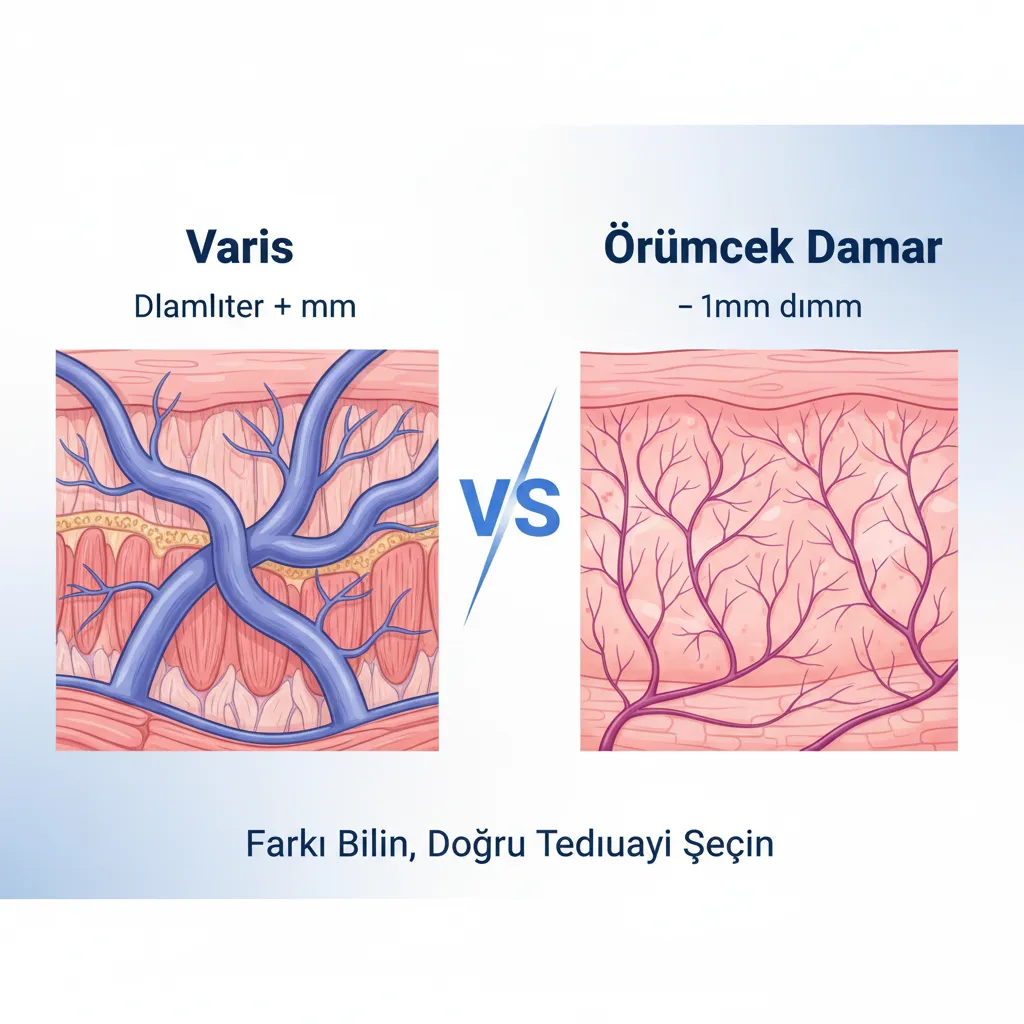
Varicose veins are enlarged, swollen, and twisted veins that typically appear dark blue or purple. They are usually 3 mm or larger in diameter and commonly affect the legs. Varicose veins develop when the one-way valves inside veins become weakened or damaged, allowing blood to pool and the vein to expand1.
Key characteristics of varicose veins:
- Raised, bulging appearance visible under the skin
- Dark blue or purple color
- Often twisted or rope-like in appearance
- Can cause significant symptoms: pain, heaviness, swelling, cramping
- May lead to complications if left untreated
I often explain to patients: “Varicose veins are not just a cosmetic concern. They represent a functional problem in your venous system that can progressively worsen over time.”
What Are Spider Veins?
Spider veins (telangiectasias) are small, thin blood vessels visible beneath the skin surface. They are typically less than 1 mm in diameter and appear as red, blue, or purple web-like patterns, hence the name “spider veins.” While they can occur anywhere on the body, they most commonly appear on the legs and face2.
Key characteristics of spider veins:
- Flat or slightly raised, thin lines
- Red, blue, or purple color
- Web-like or branching pattern
- Usually painless, primarily a cosmetic concern
- Rarely cause medical complications
Varicose Veins vs. Spider Veins: Detailed Comparison
| Feature | Varicose Veins | Spider Veins |
|---|---|---|
| Size | 3 mm or larger | Less than 1 mm |
| Appearance | Bulging, twisted, rope-like | Flat, web-like, branching |
| Color | Dark blue or purple | Red, blue, or purple |
| Location | Primarily legs | Legs and face |
| Symptoms | Pain, heaviness, swelling, cramping | Usually none (cosmetic) |
| Underlying cause | Valve insufficiency in larger veins | Increased pressure in small vessels |
| Health risk | Can lead to complications (ulcers, DVT, bleeding) | Minimal health risk |
| Treatment | EVLT, surgery, foam sclerotherapy | Sclerotherapy, surface laser |
What Causes Each Condition?
Shared Risk Factors
Both conditions share several common risk factors:
- Genetics: Family history is the strongest predictor3
- Age: Risk increases with age as vein walls weaken
- Gender: Women are more commonly affected due to hormonal factors
- Prolonged standing or sitting: Occupations requiring long hours on feet
- Pregnancy: Increased blood volume and hormonal changes
- Obesity: Extra weight increases pressure on leg veins
What’s Different?
Varicose veins typically result from dysfunction in the deeper venous system, specifically the great saphenous vein (GSV) or small saphenous vein (SSV). Spider veins, on the other hand, develop from increased pressure in the superficial microvascular system and don’t necessarily indicate deeper venous problems.
When Should You See a Doctor?
Spider veins alone rarely require medical attention unless they bother you cosmetically. However, you should consult a vascular surgeon if you experience:
- Visible bulging veins on your legs
- Persistent leg pain, heaviness, or swelling
- Skin changes around the ankles (darkening, hardening)
- Leg cramps, especially at night
- Bleeding from a varicose vein
- Open sores or ulcers on the legs
Early diagnosis expands your treatment options and improves outcomes significantly.
Treatment Options
For Varicose Veins
- Endovenous Laser Treatment (EVLT): The gold standard for larger varicose veins. A laser fiber is inserted into the vein to seal it shut. Learn more about varicose vein treatment.
- Foam Sclerotherapy: A foam solution is injected to close medium-sized veins
- Compression Therapy: Compression stockings help manage symptoms
- Surgery: Reserved for complex cases
For Spider Veins
- Sclerotherapy: The most common and effective treatment, a solution is injected to collapse the tiny vessels. Learn more about spider vein treatment.
- Surface Laser: External laser light targets and fades spider veins
- Radiofrequency: Uses heat energy to treat spider veins
Can Spider Veins Turn Into Varicose Veins?
This is another question I frequently hear. The short answer is: spider veins themselves don’t transform into varicose veins. However, having spider veins may indicate an underlying predisposition to venous insufficiency. If the deeper veins are already compromised, varicose veins may develop independently alongside existing spider veins.
This is why I recommend a Doppler ultrasound evaluation for patients who present with widespread spider veins, it helps us check whether there’s an underlying problem in the deeper venous system that needs attention.
Frequently Asked Questions
Are spider veins dangerous?
Spider veins are almost never dangerous. They are primarily a cosmetic concern. However, if they appear suddenly, in large numbers, or are accompanied by symptoms like pain or swelling, it’s worth getting evaluated to rule out deeper venous problems.
Can exercise help with varicose veins?
Regular exercise, especially walking, cycling, and swimming, improves blood circulation and can help manage varicose vein symptoms. However, exercise alone cannot cure varicose veins or reverse existing valve damage.
Do compression stockings work for both conditions?
Compression stockings are most effective for managing varicose vein symptoms (pain, swelling, heaviness). They can also help prevent spider veins from worsening, though they won’t eliminate existing ones.
Which condition is more common?
Spider veins are far more common, affecting up to 80% of women and 50% of men at some point in their lives4. Varicose veins affect approximately 25-30% of adults.
For international patients: Whether you have visible varicose veins or fine spider veins, our team can guide you through the right protocol. See our varicose vein treatment in Turkey overview for EVLT and surgical options, or our sclerotherapy in Turkey page for spider vein removal.
References
- National Heart, Lung, and Blood Institute (NIH). “Varicose Veins.” NHLBI
- American Academy of Dermatology. “Spider veins: Overview.” AAD
- American Heart Association (AHA). “Venous Insufficiency.” AHA
- National Institute for Health and Care Excellence (NICE). “Varicose veins: diagnosis and management.” NICE
- Society for Vascular Surgery (SVS). “Clinical Practice Guidelines.” J Vasc Surg