
Varicose Vein Symptoms: Early Diagnosis Guide

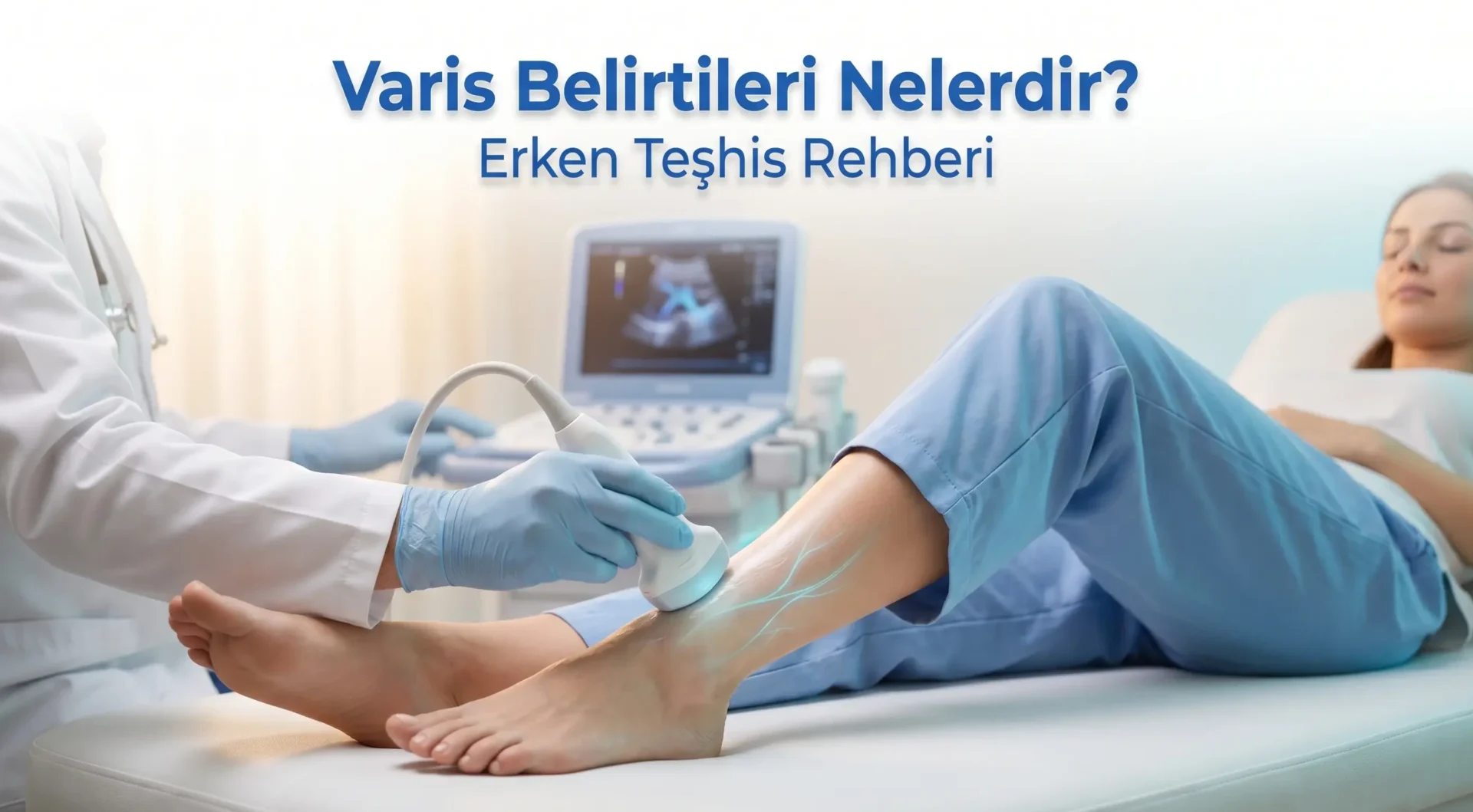
Varicose veins are not a disease that begins silently; unfortunately, most patients are slow to take the symptoms seriously.
I describe the importance of varicose vein symptoms to my patients like this: “The vessels speak to us; if we don’t listen, they start to shout.” In this article I am going to describe, one by one, the varicose vein symptoms I have observed in my clinic over the years, what each symptom means, which are urgent, and how they progress through the stages. My aim is to help you find the right answer to the question “could this be me?” and, where necessary, to ensure you consult a vascular surgeon in time.
What Are Varicose Veins? The Mechanism We Need to Understand Before the Symptoms
Varicose veins are the widening, twisting and visible appearance of the superficial veins (veins) in the legs due to impaired blood flow. The cause in one sentence: the one-way valves inside the vessel can no longer do their job. Instead of being pumped towards the heart, blood pools in the leg under the effect of gravity.
The longer this pooling continues, the greater the tension on the vessel wall; a sense of heaviness in the leg, pain, swelling and skin changes follow one after another as parts of the picture. The NICE guidelines on varicose veins also explain this mechanism under the heading of “chronic venous insufficiency.”1
Quick note: Varicose vein symptoms are mild in the morning and worsen towards the evening. This time pattern is a classic clue that helps us distinguish varicose veins from other leg pains. I tell my patients: “If your legs are reminding you of tiredness in the evenings, varicose veins should be considered.”
Varicose Vein Symptoms: The 9 Findings I Encounter Most Frequently in the Clinic
It is a mistake to evaluate symptoms in isolation; because in one patient a single finding may stand out, while in another five or six complaints may be present simultaneously. Nevertheless, my ranking based on records accumulated over the years is as follows:
- 1. Visible, twisted, blue-purple vessels: The most common reason for complaint. They usually appear on the inner surface of the calf and behind the knee. Although cosmetic concern is the primary issue, this is the visible face of the underlying valve insufficiency.
- 2. Heaviness and fatigue in the legs: My patients often describe this feeling as “like lead weights strapped to my legs.” It generally worsens by the end of the day.
- 3. Leg pain and aching: A dull, deep pain. It is worsened not by movement but by prolonged standing or sitting.
- 4. Swelling (especially at the ankle): Prominent in the evenings, diminishing after lying down at night. Unilateral, prolonged swelling requires particular attention.
- 5. Itching and a burning sensation on the skin: Venous blood pooling around the vessel causes inflammation in the subcutaneous layers. My patients describe this as “an itch I can’t quite describe.”
- 6. Nocturnal cramps: Cramps that occur at night, particularly in the calf muscles, sometimes waking the patient from sleep. Venous circulation should always be evaluated before attributing this to magnesium deficiency.
- 7. Restless leg sensation: The need to constantly move, stretch and rest the legs when sitting in the evenings. Typical, but not diagnostic on its own.
- 8. Skin changes: Brown pigmentation around the ankle, dry and flaky skin, tightness. These are signals that we are moving towards a more advanced stage.
- 9. Small clusters of vessels (capillary/spider veins): Fine, red-purple web-like vessels. They sometimes appear to be a purely cosmetic issue, but there is usually a deeper valve insufficiency underlying them. I have addressed this topic in detail on our capillary vein treatment page.
If three or more of these 9 symptoms are present together, we are dealing not with a merely cosmetic problem but with chronic venous insufficiency.2
Varicose Vein Symptoms by Stage (CEAP C0-C6)
I usually give my patients a brief explanation of the CEAP classification. CEAP is an internationally accepted system that describes the clinical (C), aetiological (E), anatomical (A) and pathophysiological (P) components of venous disease. The aspect I use most in practice is the clinical (C) classification.3
The clinical stages of CEAP offer me a valuable road map for predicting where the disease is heading. Knowing which stage the disease is at also largely determines the treatment option.
| Stage | Clinical Finding | Typical Symptom | Treatment Approach |
|---|---|---|---|
| C0 | No visible venous disease | Mild fatigue, heaviness (subjective) | Lifestyle advice, follow-up |
| C1 | Telangiectasias (capillary veins) and reticular veins | Cosmetic complaint, burning sensation | Sclerotherapy, laser |
| C2 | Prominent varicose veins (≥3 mm) | Visible twisted vessels, pain | Endovenous laser, radiofrequency, sclerotherapy |
| C3 | Oedema (swelling) | Evening ankle swelling, heaviness | Compression + endovenous treatment |
| C4 | Skin changes (pigmentation, eczema, lipodermatosclerosis) | Brown skin, tightness, itching | Endovenous treatment as priority, skin care |
| C5 | Healed venous ulcer | Scarred skin, risk of re-opening | Endovenous treatment + long-term compression |
| C6 | Active venous ulcer | Open wound around ankle, pain | Urgent multidisciplinary treatment |
The majority of my patients present at stages C2-C3; in other words, most of those who ignore or dismiss their symptoms as “ageing” are already at C4 or beyond when they come in. Yet it is possible to halt the process with a minimally invasive varicose vein treatment at C2.
Symptoms That Require Emergency Medical Attention
Patients sometimes ask me when they come to the clinic: “Can I just wait and see?” Most varicose vein cases are not an emergency. But if the following symptoms are present, you have no luxury of waiting:
Red flags:
- Sudden unilateral swelling and warmth: Suspected deep vein thrombosis (DVT). Due to the risk of pulmonary embolism, you should go to a vascular surgeon or the emergency department that same day. I covered DVT risk factors in detail in a dedicated article.
- Sudden bleeding from a varicose vein: In thin-skinned individuals, a varicose vein can rupture from a knock with a glass, key or similar object. Even if it looks minor, blood loss can escalate rapidly and you should go to hospital.
- Open wound or skin erosion (venous ulcer): CEAP stage C6. Will not heal on its own; multidisciplinary treatment is required.
- Severe pain, skin redness and hardness: Suggestive of superficial thrombophlebitis (clot blocking a surface vessel). Treatment is required and DVT may sometimes accompany it.
- Pale-bluish skin and weak pulse: This may indicate an arterial rather than a venous picture; urgent differential diagnosis is essential.
I have been saying this for years: varicose veins are not fatal on their own, but the complications they bring (especially DVT and pulmonary embolism) can be life-threatening. That is why recognising the emergency flags saves lives.
Differences in Symptoms by Age and Sex
The same varicose vein disease presents differently in women and men, in the young and the elderly. When I examine a patient I look not only at the leg but at the person’s whole life. Because how symptoms appear tells me who needs to pay attention to what.
Varicose Vein Symptoms in Women
The prevalence of varicose veins in women is approximately 2-3 times higher than in men. The main reason for this is hormonal: oestrogen and progesterone relax the smooth muscles in vessel walls and put strain on the valves.4 Three scenarios I frequently encounter in the clinic:
- Varicose veins in pregnancy: Pressure of the expanding uterus on the pelvic veins combined with hormonal effects causes pooling in the legs. It becomes more pronounced as pregnancy progresses and sometimes does not regress until the postpartum period.
- Oral contraceptive use: Oestrogen-containing drugs reduce venous tone and increase DVT risk. Awareness is important in women with a family history.
- Menopause: The fall in oestrogen weakens vessel wall structure; symptoms that were previously under control can flare during this period.
Varicose Vein Symptoms in Men
Varicose veins in men usually arise from occupational exposure. In occupational groups who stand for long periods or carry heavy loads (teachers, butchers, shop assistants, waiters, factory workers), symptoms progress more rapidly. Another characteristic of men is that they present later with the disease; most come in for examination when brown skin pigmentation or an ulcer has already opened. This means we frequently miss the early stage of the symptom.
In Patients Aged 60 and Over
In my elderly patients there are two important differences. The first is a raised pain threshold and a tendency to play down complaints; the second is the difficulty of distinguishing oedema because of accompanying conditions (heart failure, kidney failure, diabetes). In this age group, making a diagnosis without a direct Doppler ultrasound evaluation is incorrect. The risk of complications (ulcer, DVT) is markedly higher.
Methods We Use in the Diagnosis of Varicose Veins
The diagnostic process is not simply a matter of saying “that vessel has varicose veins.” Which vein is affected, where the valves are insufficient, whether the deep system is involved, all of this needs to be known for a correct treatment plan. In my clinic the process works as follows:
| Method | What It Measures / Shows | Duration | In Which Patient |
|---|---|---|---|
| Physical Examination | Vessel appearance, oedema, skin changes, tenderness on palpation | 5-10 min | Every patient |
| Colour Doppler Ultrasound | Direction of venous blood flow, valve insufficiency, deep/superficial vein assessment, source vessel identification | 20-30 min | Every patient (gold standard diagnostic method) |
| Plethysmography | Venous filling/emptying time, functional assessment | 15 min | Complex cases |
| Magnetic Resonance Venography | Pelvic vein insufficiency, deep system pathology | 30-45 min | Pelvic congestion, suspected recurrent varicose veins |
In my clinic I perform colour Doppler ultrasound myself. Because any treatment performed without identifying the source vessel results in recurrent varicose veins. The NICE guideline also recognises duplex ultrasound as standard in the diagnosis of varicose veins.1
Varicose Vein Symptoms vs Other Diseases (Differential Diagnosis)
Not everyone who comes in saying “my leg hurts” has varicose veins. Differential diagnosis is vitally important in clinical practice. The conditions most frequently confused:
- Deep Vein Thrombosis (DVT): Sudden unilateral swelling, warmth, redness are prominent. Unlike varicose veins, it develops rapidly. I covered the details in my article on DVT risk factors.
- Lymphoedema: The skin does not pit when pressed with a finger; hard swelling. The varicose pattern of “prominent in the evening, mild in the morning” is absent, continuous oedema predominates.
- Cellulitis (skin infection): Acutely starting pain, warmth, redness with clearly defined borders. Fever may accompany it. Antibiotic treatment is required.
- Peripheral artery disease: Cramp-type pain that worsens with walking and subsides with rest (claudication). Foot pulses are weak or absent. The skin is cold.
- Musculoskeletal pain: Worsens with movement, subsides with rest. Localised tenderness is present. Vascular symptoms do not accompany it.
For a correct diagnosis, tell your doctor clearly when the symptom started, what makes it worse and what makes it better. These small details guide the diagnosis.
What I Recommend to My Patients to Relieve Symptoms
To patients who have encountered symptoms but do not yet require surgery, I always give these five recommendations:
- Medical compression stockings: A stocking of the correct class (usually Class 1 or 2), correctly measured, worn before getting out of bed in the morning, significantly reduces the severity of symptoms.
- Regular walking: The calf muscles work like a “second heart,” supporting venous return. 30-40 minutes of brisk walking daily provides notable relief from varicose vein symptoms. I shared a practical programme in my article on varicose vein exercises.
- Leg elevation: Raising the legs above heart level for 15-20 minutes in the evenings directs pooled blood back towards the heart.
- Avoiding prolonged standing or sitting: If unavoidable, take a 2-3 minute movement break every 30-45 minutes.
- Body weight control and salt restriction: Excess weight increases intra-abdominal pressure; excessive salt triggers oedema. Both worsen varicose vein symptoms.
None of these recommendations reverses a varicose vein that has progressed to an advanced stage, but they do relieve symptoms and slow the progression of the disease.
Frequently Asked Questions
Do varicose vein symptoms resolve on their own?
No. Once valve insufficiency has started it does not reverse; without treatment, symptoms worsen over time. Lifestyle recommendations relieve symptoms but do not reverse the disease.
My varicose vein symptoms worsened in pregnancy. What should I do?
During pregnancy, therapeutic interventions are usually deferred. My recommendation: medical compression stockings, left lateral decubitus position, leg elevation. Some of the picture resolves within 3-6 months of delivery; complaints that do not resolve are assessed by a vascular specialist.
Do nocturnal cramps occur only from varicose veins?
No. Magnesium-calcium deficiency, kidney disease, thyroid disorders and some medications can also cause them. But if leg heaviness, evening swelling and nocturnal cramps are all present together, varicose veins should be the first consideration.
Can varicose veins occur at a young age?
Yes, and more frequently than you might think. In those with a family history, capillary vessel complaints can begin in their twenties. Early intervention prevents progression to more advanced stages.
Is compression stocking alone sufficient?
In early-stage (CEAP C0-C2) disease it relieves symptoms, but does not treat valve insufficiency. From C3 onwards, a stocking alone is not enough; methods such as endovenous laser or radiofrequency should be considered.
How are varicose vein symptoms distinguished from DVT symptoms?
DVT usually starts suddenly, is unilateral, warmth and redness accompany it, and the pain is continuous and severe. Varicose vein symptoms, by contrast, progress slowly, may be bilateral, worsen in the evenings and ease in the mornings. If in doubt, Doppler ultrasound makes the distinction.
Is surgery necessary?
Most varicose vein cases today are treated without surgery. Endovenous laser (EVLA), radiofrequency ablation (RFA) and sclerotherapy are now the standard. Classic surgery (stripping) is only considered in very selected cases.
Final Words
Varicose vein symptoms are not a complaint to be ignored. A picture that begins as cosmetic can, over time, impair skin structure, walking comfort and quality of life. The important thing is to recognise the symptoms in time and undergo a proper vascular assessment. If you have several of the symptoms I described above, I would recommend clarifying your picture with a Doppler ultrasonography before trying compression stockings.
Early diagnosis both widens your treatment options and prevents complications. The reality I observe in the clinic every day: a varicose vein evaluated in time is usually resolved with a 30-40 minute laser procedure. One that has been left too long turns into a years-long struggle.
Op. Dr. Onur Üstünel
Cardiovascular Surgery Specialist
For international patients: If you are considering varicose veins treatment in Turkey, our İzmir clinic provides comprehensive evaluation, Doppler ultrasonography and personalized treatment planning. We offer endovenous laser, radiofrequency ablation and sclerotherapy, review our treatment overview for protocols and pricing.
References
- National Institute for Health and Care Excellence (NICE). Varicose veins: diagnosis and management. Clinical guideline CG168. Published 2013. https://www.nice.org.uk/guidance/cg168
- Robertson L, Evans C, Fowkes FGR. Epidemiology of chronic venous disease. Phlebology. 2008;23(3):103-111. https://pmc.ncbi.nlm.nih.gov/articles/PMC2598394/
- Lurie F, et al. The 2020 update of the CEAP classification system. Journal of Vascular Surgery: Venous and Lymphatic Disorders. 2020;8(3):342-352. https://pmc.ncbi.nlm.nih.gov/articles/PMC7174139/
- Brand FN, et al. The Framingham Study: epidemiology of varicose veins. American Journal of Preventive Medicine. 1988;4(2):96-101. https://pubmed.ncbi.nlm.nih.gov/3395496/
- Society for Vascular Surgery (SVS) and American Venous Forum (AVF). The Care of Patients With Varicose Veins and Associated Chronic Venous Diseases. 2011. https://www.jvascsurg.org/article/S0741-5214(11)00111-6/fulltext
- Türk Kalp ve Damar Cerrahisi Derneği. Periferik Arter ve Ven Hastalıkları Ulusal Tedavi Kılavuzu 2021. https://www.tkdcd.org/content/887/periferik-arter-ve-ven-hastaliklari-ulusal-tedavi-kilavuzu-2021
- U.S. National Library of Medicine, MedlinePlus. Varicose Veins. https://medlineplus.gov/varicoseveins.html
- American Heart Association. Venous Thromboembolism (VTE). https://www.heart.org/en/health-topics/venous-thromboembolism