
Do Varicose Vein Creams Really Work? What Helps and What Falls Short

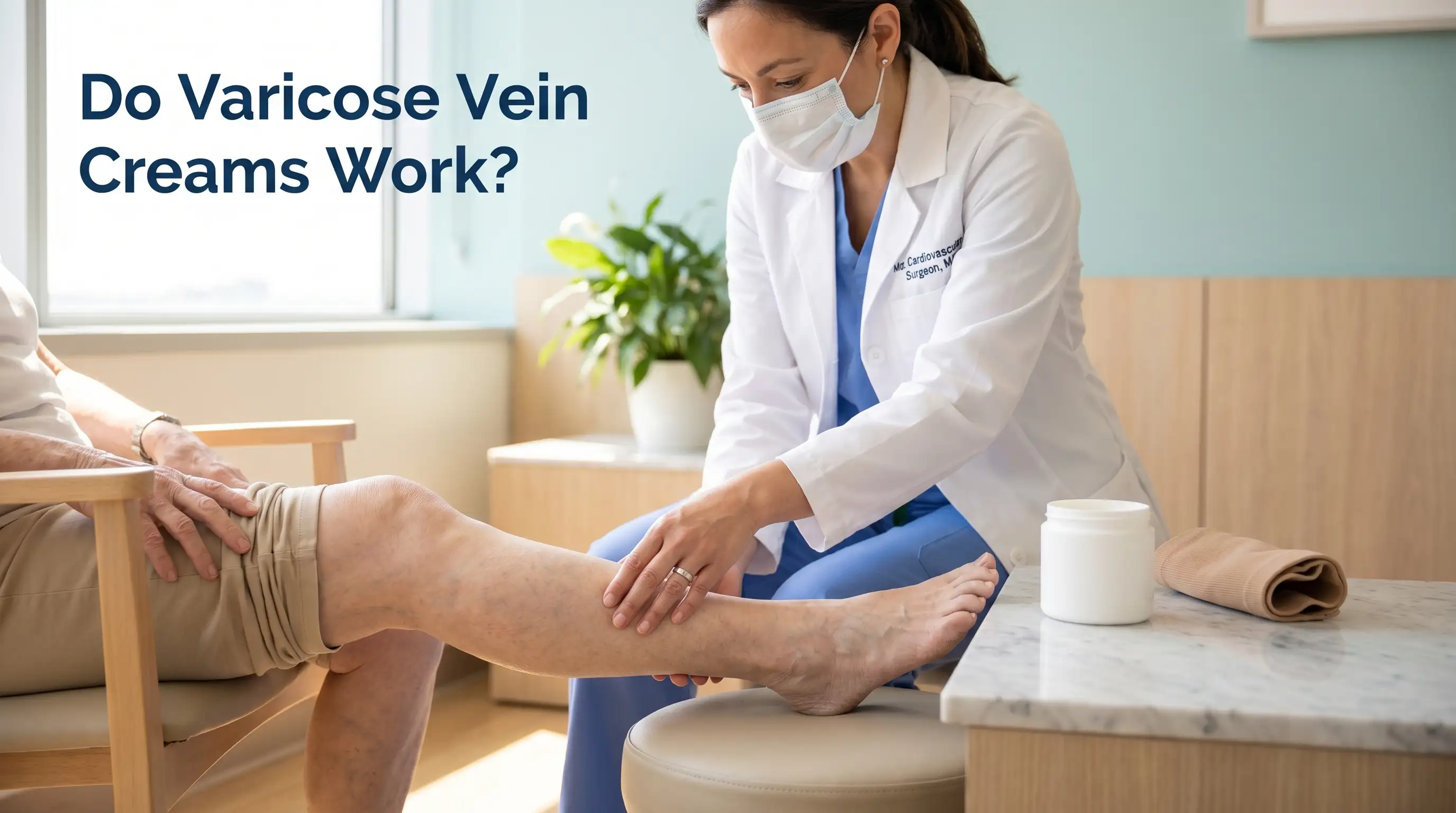
Pharmacy shelves and online stores are full of boxes that promise to “close veins”, deliver “miracle results for varicose veins” or “free you from varicose veins in 4 weeks”. The tubes carry before and after images showing purple veins disappearing, and the ingredient lists feature familiar names such as horse chestnut, grape seed, heparinoid, troxerutin and vitamin K. From a patient’s perspective it sounds like a reasonable promise. Apply a cream to the skin and the veins fade away.
In reality the picture is not that simple. As a cardiovascular surgeon, what I have observed over the years in my clinic is this, some varicose vein creams can briefly ease specific complaints, while others unfortunately remain nothing more than a marketing promise. In this article I will walk through what each active ingredient actually does, when using a cream can be meaningful and when it turns into a waste of time and money, drawing on examples from clinical practice. I will not mention brand names, I will talk directly about the ingredients.
What Are Varicose Veins, and Where Does a Cream Fit In?
Varicose veins are a chronic vascular disease that starts when the one-way valves inside the leg veins become incompetent. When a valve can no longer pump blood upward, blood pools in the leg, the vein widens, becomes tortuous and the ones close to the skin surface appear as purple-green lines.1 The problem is not on the skin surface, it sits in the valve mechanism deep inside the vein.
When a cream is applied to the skin, how deep can the active ingredient really penetrate? This is the core of the whole debate. The outermost layer of the skin, the stratum corneum, allows small and fat-soluble molecules to pass while largely blocking large active molecules. Substances such as heparinoid, troxerutin and horse chestnut extract may reach the superficial capillaries and subcutaneous tissue to a limited degree. However, restoring the valve function of a vein like the great saphenous, which runs deep beneath the skin at a diameter of 3 to 5 mm, is anatomically impossible with a cream.
This basic distinction has to be set out from the start. A cream is not a treatment that reverses valve failure in the deep system. At best, it is a supportive product that eases certain superficial complaints. Without this frame, the question of which cream actually works cannot be answered correctly. Varicose vein symptoms and the stage of the disease are the most important factors in deciding whether a cream will help or not.
The Most Common Active Ingredients on Cream Labels and Their Real Effects
In my clinical practice, almost every cream I see during patient selection and follow-up revolves around a handful of active ingredients. The table below puts the marketing promise of each substance next to the effect that is actually documented in clinical literature.
| Active Ingredient | Promise on the Label | Clinically Documented Effect |
|---|---|---|
| Heparinoid | Opens veins, eliminates varicose veins | May reduce pain and induration after superficial thrombophlebitis, does not close the varicose vein2 |
| Troxerutin | Strengthens the vein wall | Can briefly relieve the sensation of heaviness and fullness in the leg, does not visually reverse the varicose vein2 |
| Horse chestnut extract (topical) | Reduces swelling, treats varicose veins | A mild reduction of edema has been shown for the oral form, evidence for the cream form is limited3 |
| Vitamin K (phytomenadione) | Erases purple veins and broken capillaries | May speed healing of superficial skin bruises, does not erase varicose capillaries3 |
| Grape seed, ginkgo, centella | Vein-renewing miracle blend | An antioxidant effect has been described, no clinical effect that reverses the stage of varicose disease4 |
| Menthol, camphor, cooling gels | Soothes the veins | Temporarily numb the nerve endings to reduce burning and itching, no effect on the vein itself |
When I look at this table, the most common misunderstanding I see in my clinic is this, the patient reads the active ingredient on the label and then takes the before and after photos on the box as a real treatment result. In reality a marketing image and a clinical effect are very different things.
Marketing promise: With four weeks of regular use your veins will visibly diminish.
Realistic expectation: A cream with the right active ingredient can ease some of the existing superficial complaints enough to make daily life more comfortable. It cannot remove an existing varicose vein from the surface of the skin.
When Does a Varicose Vein Cream Really Help?
Once this distinction is clear, it is worth focusing on the scenarios in which a cream can genuinely be useful. Recommending a product without drawing these lines simply misleads the patient.
1. Early Stage, Superficial Telangiectasia Only
In people with red or purple capillary lines on the legs smaller than 1 mm, with no large superficial varicose veins yet, topical products containing heparinoid or vitamin K may soften the appearance of superficial skin bruising. The goal here is not treatment, it is cosmetic support and complaint reduction. Even with unilateral complaints, a cream can affect the superficial appearance, but moving forward without identifying the underlying insufficiency is not the right approach.
2. Evening Complaints in People Who Stand for Long Hours
In patients who stand all day, such as teachers, nurses, hairdressers and sales representatives, and who feel fullness, pain and burning in their legs in the evening, troxerutin or horse chestnut topicals combined with compression increase the rate of end-of-day relief in my practice. Here too the cream has to be positioned as a comfort product, not as a stand-alone treatment.
3. After Superficial Thrombophlebitis
For the painful, hard, red, cord-like complaints that follow inflammation and clotting in a superficial varicose vein, heparinoid creams provide a meaningful benefit in pain control.2 The goal here is not to eliminate the varicose vein, it is to ease the existing acute inflammation.
4. Sensitive Skin After Surgery or Sclerotherapy
After sclerotherapy or laser varicose vein treatment, I sometimes recommend vitamin K or heparinoid creams to speed the resolution of mild tenderness, a tendency to hyperpigmentation and small bruises on the skin. This is not the treatment itself, it is support during the healing phase.
When Is a Varicose Vein Cream a Waste of Time and Money?
The situation I run into more often in clinical practice is this, the patient tries several creams over months, gives the disease time to progress, and finally arrives saying the creams did not work. The cream did not fail, it was used in the wrong scenario. A cream will not deliver the expected benefit in the following situations.
- Visible, tortuous, bulging varicose veins on the skin: At this stage, valve failure has reached an anatomical level in the great saphenous vein or one of its branches. A cream has no effect on the vein wall. This is the stage where varicose vein treatment options need to be discussed.
- Color change and brown discoloration around the ankle: This is an advanced sign of chronic venous insufficiency. A cream does not correct the pigmentation, and the condition will not resolve without addressing the underlying reflux.
- Open wound, venous ulcer: Applying a varicose vein cream to an ulcer does not heal it, and it can sometimes delay healing by irritating the area. Ulcers are managed with clinical follow-up and compression.1
- Night cramps, deep aching, warmth in the leg: These can be warning signs of deep venous system pathology. Brushing them off with a cream is dangerous, a vascular examination and Doppler assessment are essential.
- Varicose veins worsening during pregnancy: In pregnancy, hormonal changes and intra-abdominal pressure impair venous return. Compression, leg elevation and appropriate exercise are far more useful than a cream.
Almost every item on this list is a scenario where the right question is not about a cream, but about how varicose veins actually go away.
Can a Cream Replace Compression Stockings?
One of the most common questions I get during patient selection is this, “If I am going to apply a cream, do I still have to wear stockings?” The answer is clearly no. A cream and a compression stocking do not perform the same function. A compression stocking applies graduated pressure around the leg, reducing blood pooling in the superficial veins and mechanically supporting venous return. This is a fundamental tool in the management of varicose veins.1
A cream, on the other hand, has a pharmacological effect on the vein wall or on the superficial skin layer. The two do not solve the same problem by different routes, they address different problems. The benefits and drawbacks of compression stockings should not be confused with the effect of a cream. In my patients who use a compression stocking together with an adjunctive cream, evening complaints decrease at a much higher rate. In those who rely on a cream alone and refuse stockings, the symptom course usually stays the same or worsens.
Things to Watch for When Using a Cream
Even when a cream is positioned as a safe form of support, I do not want to skip a few practical warnings.
- Do not apply to open wounds, eczema or eczematous skin. The active ingredient can worsen the irritation.
- Patients with bleeding disorders or on blood thinners should only use heparinoid creams after consulting their doctor.
- During pregnancy and breastfeeding, topical product choice always requires medical approval. “Herbal” on the label is not a guarantee of safety.
- After applying a cream, wait 5 to 10 minutes before pulling on a tight stocking so the skin can breathe. This both improves absorption and reduces skin irritation.
- If symptoms do not clearly improve after 4 to 6 weeks of regular use, the answer is not to switch products, it is to have a vascular examination. The underlying insufficiency may be progressing.
- Be cautious about any label that claims to “treat varicose veins”. There is currently no high-quality clinical evidence that a topical product treats varicose vein disease.4
A View From the Clinic: How Expectations About Creams Take Shape
When planning treatment, understanding how a patient’s expectation of a cream was formed has a direct impact on adherence. Two scenarios come up often. The first is the patient who has seen an elder in the family use a cream for years, assumes it is enough, and turns down a Doppler with “I do not need one”. These patients usually return at an advanced stage, once the ankle skin has changed color.
The second is the patient who tries a cream for two weeks and then loses hope, saying “nothing has changed”. Here the problem is that the expectation was not framed correctly from the beginning. Expecting a visible change from a cream in two weeks is the wrong target from the start. The correct frame is this, a cream should be treated as a product that helps to ease symptoms, not as a tool that produces a visible change. Visible results come from sclerotherapy, laser or surgery.
In my practice I often see international patients who have tried different creams for years before considering an intervention. For those who are now thinking about varicose vein treatment in Turkey, my recommendation is the same as for any patient, start with a Doppler ultrasound and a clear examination, then decide whether a cream is enough as supportive care or whether a structured treatment plan is the more honest answer.
Frequently Asked Questions
Does a varicose vein cream really get rid of varicose veins?
No. No topical product reaches a pharmacological effect that can remove an existing varicose vein. A cream is only used as an adjunct to ease symptoms. The treatments that visually reduce the vein itself are sclerotherapy, endovenous laser and surgical methods.5
Which ingredient is considered the most reliable?
Heparinoid for pain after superficial thrombophlebitis, troxerutin and horse chestnut for an evening sense of heaviness, and vitamin K for small bruises and capillary appearance are the most frequently recommended ingredients with the broadest clinical evidence base.2 Even so, the benefit varies from person to person and a medical assessment is still needed.
Can a cream and a stocking be used at the same time?
Yes, and it is recommended. A cream moisturizes the skin and eases symptoms. A compression stocking supports the vein function mechanically. Using them together significantly improves symptom control in most patients. Putting on the stocking 5 to 10 minutes after applying the cream is enough.
Is a herbal cream safer than a chemical one?
There is no such direct rule. A herbal label does not mean the risk of allergy or irritation is zero. Substances such as horse chestnut, centella and ginkgo can cause local reactions in some patients. For people on blood thinners, “herbal” is not a guarantee of safety.
Can I use a varicose vein cream during pregnancy?
During pregnancy, the choice of any topical product must be made with a doctor’s guidance. In this period, compression stockings, leg elevation and regular walking provide far stronger support than a cream. Heparinoid and some herbal ingredients are not recommended in this period.
Which symptoms during cream use should send me to a doctor immediately?
If you notice increased redness, itching, blistering, a hard and painful cord, unilateral swelling of the leg or shortness of breath at the application site, stop the cream and see a doctor. Sudden unilateral swelling and pain require urgent evaluation for deep vein thrombosis.1
Final Word
The correct answer to the question “does varicose vein cream work” is not a single word. Instead of “does it work”, we have to ask “in which patient, for which complaint, with which expectation”. In the right scenario, a cream with the right ingredient, combined with compression and lifestyle advice, can meaningfully ease daily complaints. In the wrong scenario, months are lost, the disease progresses and a more comprehensive treatment becomes necessary.
If you have visibly enlarged veins in your leg, evening fullness that does not go away, color changes at the ankle or a long family history of varicose veins, the most accurate starting point is a vascular assessment with Doppler ultrasound before reaching for a cream. When the treatment plan is personalized, cream, stockings and, when needed, interventional methods fall into place in the correct order.
Op. Dr. Onur Üstünel
Cardiovascular Surgery Specialist
References
- National Institute for Health and Care Excellence (NICE). Varicose veins, diagnosis and management. Clinical Guideline CG168.
- National Library of Medicine, PubMed Central. Topical heparinoid and troxerutin in chronic venous insufficiency, systematic reviews and clinical evaluations.
- MedlinePlus. Horse chestnut and vitamin K topical preparations, safety and clinical use overview.
- Cochrane Database of Systematic Reviews. Topical treatments for varicose veins and chronic venous disease, evidence summaries.
- Turkish Society of Cardiovascular Surgery. National Guideline for the Diagnosis and Treatment of Chronic Venous Disease.