What Is Sclerotherapy? A Comprehensive Treatment Guide

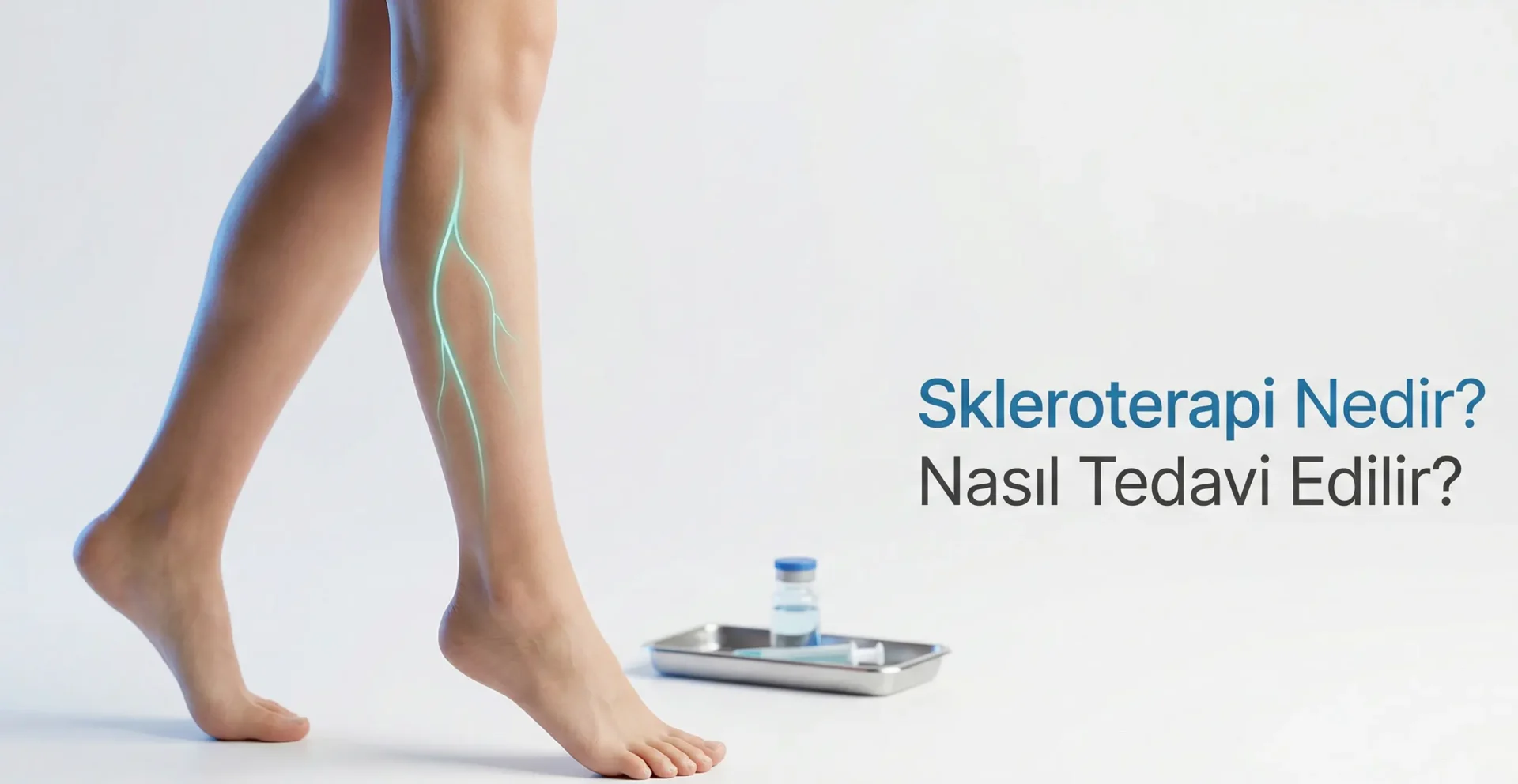
For years, one of the most common questions I hear from patients in my vascular surgery practice has been the same: “Doctor, do I need surgery for these purplish veins on my leg?” Most of the time, my answer is the same: no. Thanks to sclerotherapy, I am able to treat many of my patients without surgery, quickly and comfortably. So, what is sclerotherapy, how does it work, and who is it for? In this article, drawing from both my clinical experience and current medical literature, I will cover sclerotherapy from every angle.
What Is Sclerotherapy?
Sclerotherapy is a minimally invasive treatment method in which a special chemical solution (sclerosing agent) is injected into enlarged or damaged vessels, causing them to close and be naturally absorbed by the body. First used in its modern form in the 1930s, sclerotherapy is today one of the most widely used varicose vein treatment methods in the world1.
It is based on a technically simple principle: the injected solution creates a controlled injury in the inner wall of the vessel (endothelial layer). The vessel walls adhere to each other, blood flow stops, and the vessel gradually transforms into a fibrous cord and disappears. The body redirects blood to surrounding healthy vessels, so there is no functional loss.
I often tell my patients: “Sclerotherapy is essentially giving your body a ‘close’ command for a vein that is no longer functioning. When the body receives this command, it redirects blood to natural alternative pathways.”
How Is Sclerotherapy Performed? Step-by-Step Process
When I explain the treatment process to my patients, they are usually surprised, because it is much shorter and simpler than they imagined. Here is the step-by-step sclerotherapy procedure:
- Examination and mapping: The veins to be treated are identified by ultrasound or visually. Which veins will be treated, their size and depth are noted.
- Skin cleansing: The injection site is cleaned with an antiseptic solution.
- Injection: A very thin needle (usually 30-32 gauge) is used to inject the sclerosing agent directly into the vessel. The patient may feel a slight sting or burning sensation, but this lasts only a few seconds.
- Massage and compression: After injection, the area is massaged, then a compression bandage or compression stocking is applied.
- Observation: The patient is monitored for 15-20 minutes and sent home the same day.
The entire procedure typically takes between 15-45 minutes. No anesthesia is required. The vast majority of my patients are able to return directly to work or their daily activities after the procedure.
In What Conditions Is Sclerotherapy Applied?
Sclerotherapy is not suitable for every type of vascular problem. However, it produces highly effective results in the right indications. Here are the most common situations in my practice:
- Capillary varices (telangiectasias): Red-purple thin vessels smaller than 1 mm on the skin surface. Sclerotherapy is considered the gold standard in capillary vein treatment2.
- Reticular varices: Superficial vessels 1-3 mm in diameter, usually appearing blue-green.
- Spider veins: Thin vascular networks spreading in a star pattern. It is one of the most commonly preferred methods in spider vein treatment.
- Small to medium varicose veins: With foam sclerotherapy, varicose veins up to 6-8 mm can be successfully treated.
- Hemorrhoids: Sclerotherapy can be applied to certain types of hemorrhoids (this is a separate topic).
There are also situations where sclerotherapy is not appropriate. In patients with deep vein insufficiency, advanced varicose veins, or active deep vein thrombosis, this treatment is not recommended.
Types of Sclerotherapy: Liquid or Foam?
In practice, I use two basic sclerotherapy methods. The scenarios in which each has an advantage differ:
| Feature | Liquid Sclerotherapy | Foam Sclerotherapy |
|---|---|---|
| Vessel diameter | Below 1 mm (capillary varices) | 1-8 mm (including medium-sized varices) |
| Sclerosant form | Injected in liquid form | Injected after foaming with air/CO2 |
| Ultrasound guidance | Usually not required | Performed under ultrasound guidance for larger vessels |
| Mechanism of action | Acts by diluting with blood | Foam displaces blood, providing more contact with vessel wall |
| Number of sessions | 2-4 sessions | 1-3 sessions |
| Success rate | 70-80%3 | 85-95%3 |
The advantage of foam sclerotherapy is clear: foam remains in contact with the vessel wall much longer than liquid. This allows for more effective results with less sclerosing agent. You can find detailed information about sclerotherapy for varicose vein treatment on our relevant page.
Advantages of Sclerotherapy
Why do I recommend sclerotherapy to so many of my patients? Because the advantages are truly remarkable:
- Surgery-free: No incisions, no stitches, no general anesthesia. An ideal option for those seeking non-surgical varicose vein treatment.
- Outpatient treatment: No hospital admission required, return home the same day.
- Fast procedure: Completed in 15-45 minutes.
- Minimal pain: Most patients feel only a slight sting.
- Cosmetic results: Especially for capillary varices, 80-90% visual improvement is achieved4.
- Repeatable: Multiple sessions can be applied if needed.
- Low cost: More economical compared to surgical options.
Of course, as with every treatment, proper patient selection is critical. Starting treatment without correctly diagnosing the type and cause of varicose veins can negatively affect results.
Pre-Treatment Preparation: What Should You Do?
Pre-sclerotherapy preparation is quite straightforward, but there are a few important details. Here I share the instructions I give to my patients:
- Stop blood-thinning medications such as aspirin and ibuprofen 48 hours before the procedure (never discontinue prescription medications without consulting your doctor).
- Do not apply cream, lotion or oil to your legs on the day of the procedure.
- Wear comfortable, loose clothing, especially making sure the leg area is comfortable.
- Avoid alcohol for at least 24 hours before the procedure.
- It is fine to have a light meal before the procedure (do not come on an empty stomach).
A tip: Bring your compression stockings with you. They will be put on immediately after the procedure.
Post-Treatment Process and Recovery
The post-sclerotherapy process is just as important as the treatment itself. Here is the recovery timeline from the first days through weeks:
First 24-48 Hours
Mild redness, swelling or small bruises at the injection site are normal. Pain is usually minimal; paracetamol is sufficient. Walking is recommended, but strenuous exercise should be avoided.
First 2 Weeks
Compression stockings should be worn at least 12-14 hours a day (ideally 24 hours). Hot baths, saunas, Turkish baths, sunbathing and heavy lifting are prohibited. Daily walking (30-45 min) accelerates recovery.
After 4-6 Weeks
The treated vessels begin to fade noticeably. Full results typically appear within 3-6 months. A second session is planned if necessary.
Side Effects and Risks
Sclerotherapy is generally a safe procedure, but as with any medical intervention, there are some side effects and rare risks. I am always transparent with my patients; here is what you need to know:
Common (and Temporary) Side Effects
- Bruising at the injection site (resolves within 1-2 weeks)
- Temporary hyperpigmentation, brownish discoloration (seen in 10-30% of cases, usually fades within 6-12 months)5
- Mild itching or burning sensation
- Hardness in the treated vein (thrombus, a normal part of the healing process)
Rare Risks
- Matting (formation of new fine vessels, in 5-10% of cases)
- Skin ulceration (if the sclerosing agent escapes outside the vessel)
- Allergic reaction (very rare)
- Deep vein thrombosis (very rare, below 0.01%)6
The majority of these risks can be minimized in experienced hands with correct technique. Knowing when varicose veins can be dangerous is also important in this context.
Sclerotherapy vs. Laser Treatment: A Comparison
Another frequent question from my patients is: “Is laser better or sclerotherapy?” The answer depends on the type and size of the vessel.
| Criterion | Sclerotherapy | Endovenous Laser Treatment (EVLT) |
|---|---|---|
| Best suited for | Capillary varices, spider veins, small-medium varices | Great saphenous vein, large varicose veins |
| Anesthesia | Not required | Tumescent (local) anesthesia |
| Procedure time | 15-45 minutes | 30-60 minutes |
| Cosmetic result | Excellent (for small vessels) | Good (for large vessels) |
| Pain level | Minimal | Mild-moderate |
| Return to work | Same day | 1-2 days |
| Recurrence rate | 15-20% (5 years) | 5-10% (5 years)7 |
In short, the two methods are not competitors but complements. While laser treatment takes the lead for large varices, sclerotherapy is indisputably superior for superficial fine vessels. In fact, I apply both methods in combination in many of my patients. Our article on varicose vein types and treatment methods will give you a broader perspective on this topic.
Frequently Asked Questions About Sclerotherapy
Is sclerotherapy painful?
No, there is no serious pain involved. The majority of my patients describe the procedure as “much easier than they expected.” There may be a brief sting at the needle entry and a few seconds of burning sensation during the solution injection.
How many sessions are required?
This depends on the number, size, and type of vessels being treated. For small capillary varices, 2-3 sessions are usually sufficient. For more extensive or larger vessels, 4-6 sessions may be needed. Typically 4-6 weeks are waited between sessions.
Is sclerotherapy permanent?
The treated vessels close permanently and do not return. However, since the tendency for varicose vein formation continues, new vessels may form in different areas over the years. For this reason, I recommend regular check-ups.
Can I exercise after sclerotherapy?
Walking is recommended and even encouraged after the procedure. However, strenuous exercise, running, and weight lifting should be avoided for the first 2 weeks. Swimming pools and the sea are also not recommended during this period.
Can sclerotherapy be performed during pregnancy?
No. Sclerotherapy is not performed during pregnancy and breastfeeding. Varicose veins that develop during pregnancy may regress on their own after delivery; treatment planning should be done at least 3 months after birth.
Do vessels treated with sclerotherapy reopen?
The rate of reopening in vessels treated with correct technique is very low (below 5%). However, insufficient sclerosant dose, premature removal of compression stockings, or inexperienced application can increase the risk of recurrence.
Which doctor should I see?
Sclerotherapy should be performed by vascular surgery (cardiovascular surgery) specialists. Dermatologists can also perform some superficial procedures, but for comprehensive evaluation and especially for ultrasound-guided foam sclerotherapy, a vascular surgeon is preferred.
What are sclerotherapy prices?
Prices vary depending on the number of areas to be treated, vessel size, and the method used. You can find current information in our article on varicose vein treatment prices.
When Should You See a Doctor?
If you notice signs of varicose veins or spider veins in your legs, or if you experience pain, swelling or cramping, you should definitely consult a vascular surgeon. Early diagnosis broadens treatment options and improves outcomes. Thanks to minimally invasive methods like sclerotherapy, the treatment of varicose veins is now much more comfortable and accessible.
Patients in my clinic from across Europe and beyond regularly ask about treatment options in Turkey. With modern minimally invasive techniques, recovery is fast and results are lasting.
For international patients: If you are considering varicose vein treatment in Turkey, our İzmir clinic offers a full range of minimally invasive sclerotherapy procedures tailored to your vein type and condition. Learn more about sclerotherapy in Turkey and what to expect during your visit. Visit our treatment overview for detailed protocols and pricing.
References
- National Library of Medicine (NIH). “Sclerotherapy for Varicose Veins.” NCBI
- American Academy of Dermatology Association. “Sclerotherapy for Spider Veins and Varicose Veins.” AAD
- Rabe E, et al. “European guidelines for sclerotherapy in chronic venous disorders.” Phlebology. 2014;29(6):338-354.
- National Institute for Health and Care Excellence (NICE). “Varicose veins: diagnosis and management.” Clinical guideline CG168. 2013.
- Goldman MP. “Treatment of varicose and telangiectatic leg veins.” Journal of the American Academy of Dermatology. 1991.
- Jia X, Mowatt G, Burr JM, et al. “Systematic review of foam sclerotherapy for varicose veins.” British Journal of Surgery. 2007;94(8):925-936.
- Rasmussen LH, et al. “Randomized clinical trial comparing endovenous laser ablation, radiofrequency ablation, foam sclerotherapy and surgical stripping.” British Journal of Surgery. 2011;98(8):1079-1087.