
Compression Stockings for Varicose Veins: Benefits and Drawbacks

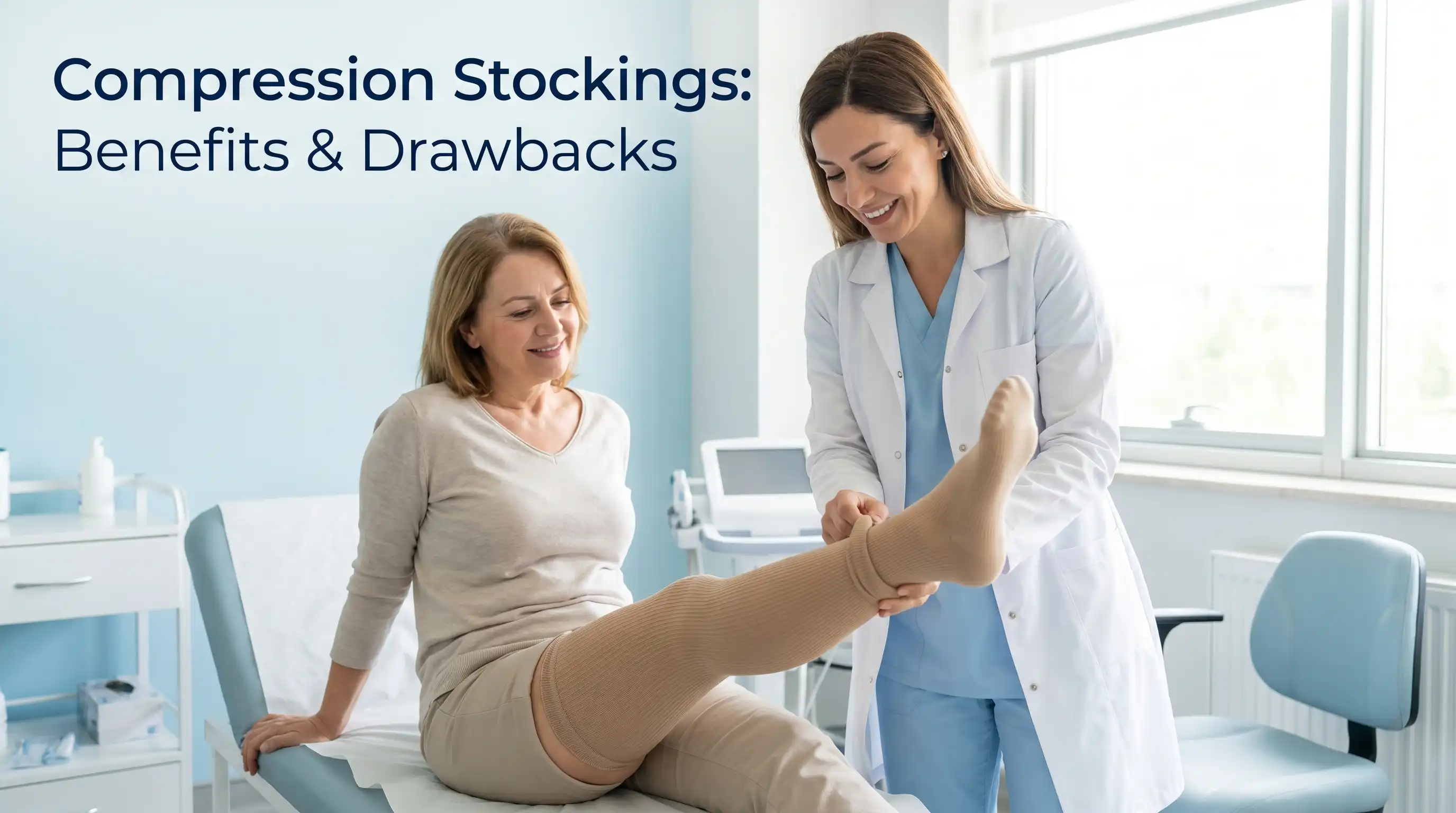
In my practice, one of the most frequent questions from patients who come in with varicose vein complaints is about compression stockings. “Doctor, is it enough if I just wear compression stockings?”, “Do these stockings really work, or am I wasting my money?”, “Can I wear them all day, or will they harm me?” Over the years, I have heard the same questions phrased in countless different ways. This pattern has taught me one thing: compression stockings are probably the most widely used yet most misunderstood support method in leg vein health.
As a cardiovascular surgeon, let me make one thing clear from the start. Compression stockings are not a miracle, but when used correctly, they are a genuinely valuable tool. By the same token, when used carelessly, they can cause discomfort instead of benefit. In this article, I will combine the experience I have gained in my clinic with current medical evidence to explain what compression stockings do, who benefits from them, when caution is needed and, most importantly, how to use them correctly.
What Are Compression Stockings and How Do They Work?
Although they are widely known as varicose vein stockings, the correct medical term is compression stockings. They may look like an ordinary sock, but the way they work is entirely different. These stockings apply graded pressure to the leg: the highest pressure is at the ankle, gradually decreasing toward the calf and thigh. This concept is called “graded compression” in medicine.
So what does this pressure actually do? The veins in our legs are responsible for carrying blood upward, against gravity, back to the heart. Inside these veins there are tiny one-way valves. In a healthy vein, these valves prevent blood from flowing backward. In varicose vein disease, however, the valves gradually weaken and blood begins to pool in the leg. Compression stockings, by applying external pressure, narrow the diameter of the veins, help the valves close more efficiently and support the pumping action of the calf muscles. As a result, blood flows upward more easily.1
There is an important point I want to emphasize here. A stocking does not repair a damaged valve. In other words, it does not make existing varicose veins disappear. What it does is support current circulation and slow the progression of symptoms. That is why in my clinic I always describe stockings as a “support”, not a “treatment”. This distinction is far more important than it sounds, because the patient’s expectations need to be set correctly.
Benefits of Compression Stockings
In the right patient, at the right compression class and when used regularly, compression stockings offer tangible benefits that I can confirm both from my own observations and from the scientific literature. Here are the most common positive effects I observe in my patients.
- They reduce the feeling of heaviness and fatigue in the legs. Patients who spend the whole day on their feet tell me that their legs feel less “like lead” in the evening after they start using stockings.
- They keep swelling (edema) under control. Ankle and calf swelling related to venous insufficiency clearly improves with regular stocking use. This is one of the most visible benefits.
- They ease leg cramps and nighttime restlessness. Many of my patients say their nighttime cramps and tingling decrease over time.
- They may slow the progression of varicose veins. While stockings do not cure existing varicose veins, they can play a supporting role in delaying progression to more advanced stages.
- They help reduce clot risk during long journeys. Staying immobile during long flights or bus trips raises the risk of clots in the leg veins; compression stockings help lower this risk.2
- They relieve venous load during pregnancy. Increased blood volume and hormonal changes during pregnancy create fertile ground for varicose veins; stockings are a safe support option in this period.
Let me also touch on the scientific side. The role of compression stockings in the healing of venous leg ulcers (open wounds related to varicose veins) and in preventing their recurrence has been examined in high-quality evidence reviews such as Cochrane systematic reviews.3 Even so, the strength of evidence varies by situation; the benefit of stockings depends on the individual, the stage of disease and consistency of use.
There is a sentence I often repeat in my clinic: a compression stocking, worn regularly, is a quiet but steady ally. As long as it sits in a drawer, it offers no benefit. The most effective stocking is the one that is actually worn.
If you would like to understand why varicose veins develop and what symptoms they produce, I recommend reading my article on varicose vein symptoms. Recognizing the symptoms early helps you take advantage of supportive methods like compression stockings at the right time.
Drawbacks and Misuse of Compression Stockings
Now let us look at the other side of the coin. The honest answer to “do stockings have side effects?” is this: when used correctly, side effects are negligible, but when used incorrectly, they can genuinely cause problems. In my practice I have seen many patients who used stockings with the best intentions, but without proper guidance, and experienced discomfort. The most common problems I encounter are the following.
- Wrong size. A stocking that is too tight breaks the graded compression principle. In particular, when the top band digs into the calf like a rubber band, it can restrict blood flow and produce the opposite of the intended effect. A stocking that is too loose, on the other hand, is useless.
- Wrong compression class. Stockings bought online or based on hearsay, with higher pressure than needed, can cause bruising, numbness and pain in the leg.
- Skin problems. Stockings worn for long periods can cause dryness, itching, redness and, rarely, contact allergies, especially on sensitive skin.
- Use in the wrong patient. This is the most critical point. In some situations compression stockings are not only useless but directly dangerous. I will address this separately in the next section.
- Folding or rolling the stocking down. A common mistake I see in my patients is rolling the top edge of the stocking down for comfort. This creates a tourniquet-like effect at that point.
Let me say this clearly: almost all of these harms are preventable. With the right size, the right class and the right technique, compression stockings are an extremely safe form of support. The problem is rarely the stocking itself; it is usually in how we choose and use it. That is why I do not recommend buying a stocking on the assumption that it is “harmless anyway”, without consulting a physician.
Compression Classes: Which Stocking for Whom?
Compression stockings are classified according to the pressure they apply. This pressure is measured in mmHg (millimeters of mercury). I always explain it to my patients like this: the “strength” of a stocking should not be thought of like a clothing size, but more like the dose of a medication. The wrong dose gives the wrong result. The table below is meant only as a rough guide; the decision about which class is right for you must be made after a clinical examination.
| Class | Pressure Range (approximate) | Typical Indications |
|---|---|---|
| Light / support | Below 15 mmHg | Prevention, long travel, mild fatigue in people who stand all day |
| Class 1 | 18-21 mmHg | Mild varicose veins, early-stage swelling, support during pregnancy |
| Class 2 | 23-32 mmHg | Prominent varicose veins, moderate venous insufficiency, edema control |
| Class 3 | 34-46 mmHg | Advanced venous insufficiency, chronic edema, after a healed venous ulcer |
You will notice that the table has no column for “personal preference”. That is because choosing the compression class is a medical decision, not a matter of preference. In my clinic, I make this decision by evaluating the patient’s symptoms, vein examination and, when necessary, a color Doppler ultrasound. Picking the best-selling or highest-pressure stocking online is not the right approach; sometimes a lower class is both more comfortable and more appropriate. National health authorities also emphasize in their guidelines that compression therapy on its own is not a complete solution and must be planned according to the stage of disease.4
I would also like to clarify something my patients often confuse: the length of the stocking. Below-knee, above-knee and pantyhose (waist-high) models are available. For most of my patients, especially when complaints concentrate around the calf, the below-knee model is both sufficient and most comfortable. For varicose veins that also involve the thigh, or when specifically recommended by a physician, longer models are preferred. A longer stocking is not always better; if a longer model than necessary stays in the drawer because it is not worn, it provides no benefit at all. That is why we decide the length together during the examination, just as we do with the class.
If you would like to learn about treatment methods beyond stockings and when each one comes into play, you may want to look at my varicose vein treatment page. When stockings are not enough, the question of whether non-surgical varicose vein treatment is possible is also a frequently asked topic.
Who Should Wear Compression Stockings, and Who Should Not?
This is perhaps the most critical section of the article, because the situations in which compression stockings are useful are matched by situations in which they may be harmful, and the latter is often overlooked.
Patients who usually benefit
- Those with varicose veins due to venous insufficiency
- Those who regularly experience swelling, heaviness and fatigue in the legs
- People whose occupation requires long hours of standing or sitting still (teachers, nurses, hairdressers, office workers, drivers)
- Pregnant women (with the appropriate class and physician guidance)
- Patients in the post-procedure period after varicose vein treatment (laser, sclerotherapy, surgery)
- People at clot risk who will undertake long journeys
Situations where caution or avoidance is required
In the following situations, compression stockings should not be used on your own initiative. In these cases, the stocking can compress a region whose circulation is already poor and lead to serious problems.
- Advanced peripheral arterial disease. In patients whose arterial circulation in the legs is significantly impaired, compression can further reduce the blood reaching the tissues.
- Uncontrolled heart failure. A sudden return of leg fluid into the circulation can place additional load on the heart.
- Active infection or open wound on the leg. In these cases, stocking use can only be planned under medical supervision.
- Advanced diabetic neuropathy. The patient may not feel it if the stocking is too tight.
- Known allergy to the stocking material.
This list should not be interpreted as “I think I have that” based on something you read online. My aim is not to frighten you, but to explain that, like any other medical tool, stockings must be used in the right context. If you have a chronic illness, always consult your physician before using compression stockings. For a general overview of how varicose veins go away and which approach is appropriate at which stage, you may find my dedicated article helpful.
How to Use Compression Stockings Correctly
Choosing the right stocking is half the job; the other half is using it correctly. Whenever I recommend a stocking to a patient in my clinic, I always explain how to use it. Because even the highest-quality, most appropriate-class stocking will not deliver the expected benefit if used incorrectly. Here are the practical recommendations I have refined over the years.
- Put them on in the morning, before getting out of bed. The legs are not yet swollen, so putting on stockings first thing in the morning is ideal. Trying to put them on after the legs have swollen during the day is harder and less effective.
- Wear them during the day, take them off at night. Unless instructed otherwise, compression stockings are worn during the day and removed at bedtime. When you are lying down, the legs are already at heart level and stockings are not needed.
- Put them on smoothly, without rolling or folding. There should be no wrinkles or folds anywhere on the stocking. The top band should not dig into the leg.
- Have your leg measured for the right size. When buying stockings, measurements at the ankle, calf and, if needed, thigh should be taken. Do not guess your size.
- Moisturize your skin, but put the stocking on dry skin. Using moisturizer in the evening protects the skin; in the morning, putting the stocking on dry skin is both easier and better for the skin.
- Wash the stockings regularly and replace them on time. Compression stockings lose their elasticity as they are used. They usually need to be replaced every few months; as they age, the compression effect decreases.
- If you feel discomfort, take them off and seek advice. If you notice numbness, bruising, color changes in the toes or increasing pain, remove the stocking and consult your physician.
For patients who struggle to put them on, especially older patients or those with difficulty bending, donning aids (stocking applicators) are very helpful. These small devices make stocking use much easier and more sustainable. If you have undergone a varicose vein procedure, the duration and method of stocking use in the post-procedure period are particularly important and will be planned specifically for your case.
Are stockings enough on their own?
The point I most want my patients to remember is this: a compression stocking is only one part of a healthy leg routine. Rather than relying on stockings alone, it is better to combine them with simple but effective daily habits. Avoiding prolonged immobility, taking short walks during long periods of standing, raising the legs above heart level when possible during the day, and walking regularly, all support what the stocking is trying to do. Patient education materials produced by national health institutions also recommend such self-care measures alongside compression stockings.5
Weight control is an important topic here as well. Excess weight increases the load on the leg veins and can offset the support a stocking provides. Similarly, sitting for long periods with legs crossed, or frequently wearing very tight trousers and high-heeled shoes, are habits that strain circulation. Over the years I have repeatedly seen that patients who combine stockings with these small daily adjustments achieve clearly better results. In other words, a stocking is not a burden you place entirely on its shoulders; it shows its real value when paired with the right habits.
For international patients: Many patients travel for varicose vein treatment in Turkey, where modern endovenous methods and proper compression follow-up are available as day procedures.
Frequently Asked Questions
Do compression stockings cure varicose veins?
No. I need to be clear about this. Compression stockings do not remove existing varicose veins and do not repair damaged vein valves. What they do is support circulation, relieve symptoms (swelling, pain, fatigue) and help slow the progression of the disease. For treating the varicose veins themselves, methods such as laser and sclerotherapy come into play. You can find detailed information about the advantages of laser varicose vein treatment.
Should I wear compression stockings at night?
Generally, no. Unless your physician has specifically recommended otherwise, compression stockings are worn during the day and removed at night. When you are lying down, your legs are already at heart level, blood flows upward easily and stockings are not needed. Wearing them at night provides no extra benefit and may even reduce comfort.
Are compression stockings safe during pregnancy?
Yes, when used in the appropriate compression class and on physician advice, compression stockings are a safe and often beneficial support during pregnancy. Increased blood volume and hormonal changes during pregnancy create the conditions for varicose veins; stockings help reduce swelling and the sensation of heaviness during this period.
How long should I wear compression stockings?
This depends entirely on the individual and the stage of disease. In some patients I recommend stockings only for specific situations such as long travel, while in others they become part of the daily routine. After a procedure, the duration of use is planned according to the intervention performed. Giving a standard length of time would be misleading; a personalized recommendation is made after the examination.
Is it appropriate to buy compression stockings online?
The place of purchase matters less than choosing the right class and the right size. Stockings bought online without proper measurements and without knowing the correct compression class often end up either too loose to be useful or too tight to be comfortable. The safest approach is to consult a physician about which class you need, have your measurements taken correctly, and then obtain the stocking from a reliable source.
I developed bruising on my leg while wearing compression stockings, what should I do?
This may be a sign that the stocking is not right for you, or that it is being used incorrectly. If you notice bruising, numbness, color changes in the toes or increasing pain, remove the stocking immediately and consult a physician. When the stocking is the correct class and the correct size, such problems are usually not seen, so do not take these warning signs lightly.
Can compression stockings be worn in hot weather?
Many of my patients tell me that wearing stockings is harder in summer, and this is understandable. Sweating and discomfort can increase in hot weather, but if your symptoms persist, your need for compression stockings does not change with the season. In this period, thinner, more breathable summer models make things easier. Keeping the skin dry, putting on stockings on dry skin in the morning and preferring lighter colors can also improve comfort. Rather than abandoning stockings entirely because of the heat, I recommend asking your physician about a model suited to summer conditions.
Final Word
Compression stockings have been used safely in leg vein health for many years and, in the right hands, are a truly valuable form of support. However, as I have emphasized from the beginning, they are not a treatment, they are a supportive tool. They reduce swelling, relieve fatigue and help slow the progression of disease; but on their own, they do not eliminate existing varicose veins.
What matters most to me in my clinic is that my patient sets out with realistic expectations. Choosing the right class, the right size and using the stocking correctly are the three factors that determine the benefit. If you have varicose veins, swelling or persistent leg fatigue, I recommend a vein examination before searching for stockings online. Only after an examination can I tell you which method, which class of stocking or, if needed, which treatment is right for you. Healthy legs begin with the right first step.
Op. Dr. Onur Üstünel
Cardiovascular Surgery Specialist
References
- National Center for Biotechnology Information (NIH). Compression Stockings. StatPearls.
- Centers for Disease Control and Prevention (CDC). Blood Clots and Travel.
- Cochrane Database of Systematic Reviews. Compression for venous leg ulcers (PMC7173741).
- National Institute for Health and Care Excellence (NICE). Varicose veins: diagnosis and management (CG168).
- MedlinePlus (NIH). Varicose veins – self-care.