
Is Leg Vascular Blockage Dangerous? What You Need to Know

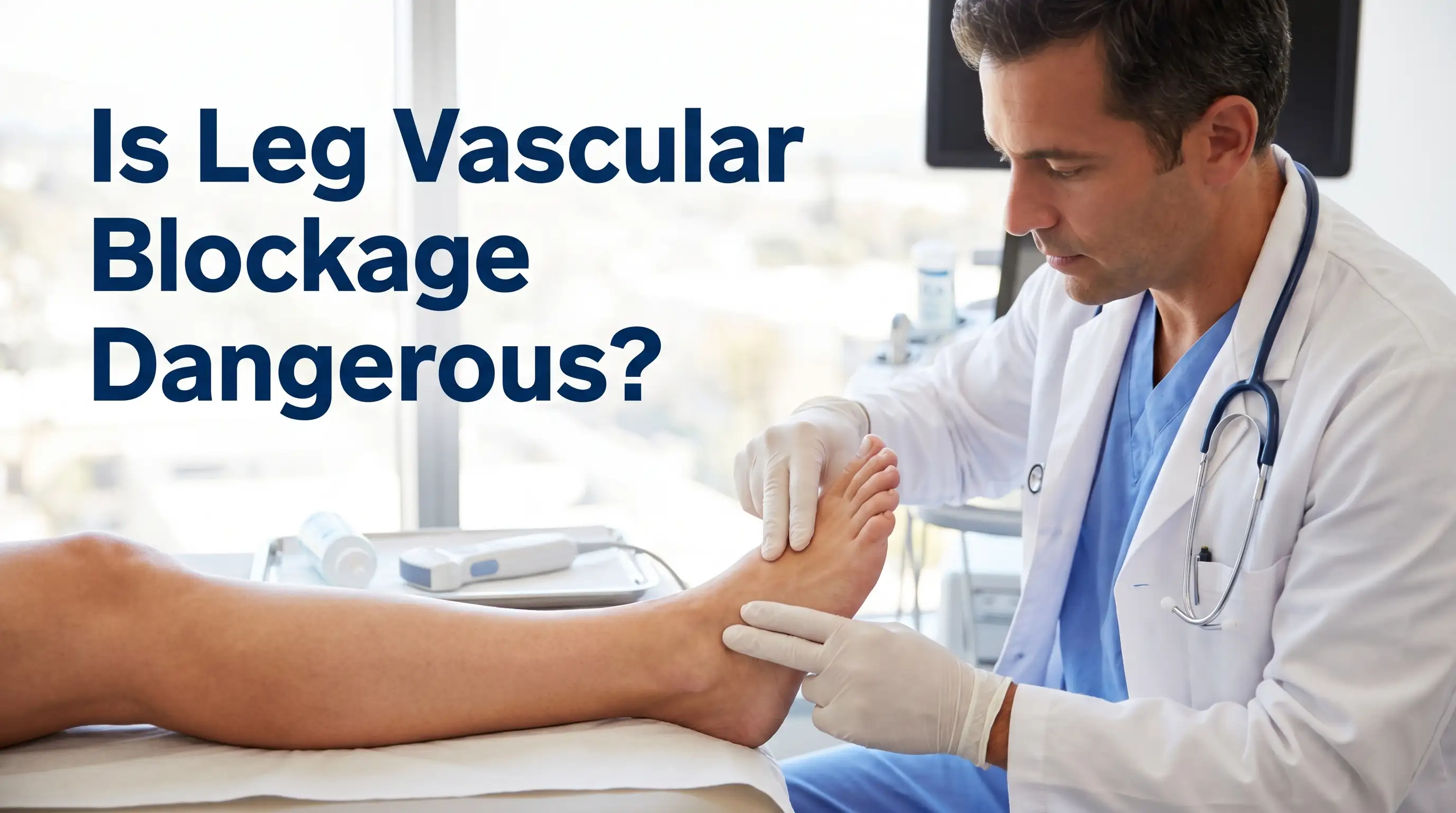
In my practice, one of the most frequent questions I hear is, “Doctor, there is something going on in my leg, but is it serious?” That question is actually very valuable. Because catching a vascular problem in the leg early, rather than ignoring it for months, can sometimes mean the difference between saving a limb, or even a life. Over the years, I have seen that most people think “vascular blockage” refers to a single disease. In reality, vascular blockage in the leg is not one single condition, and how dangerous it is depends entirely on which vessel is blocked.
My goal in this article is not to frighten you but to arm you with accurate information. I will give an honest answer to the question, “Is leg vascular blockage dangerous?” Some situations are genuinely urgent and life-threatening, while others can be treated over time but should never be neglected. I will explain which symptoms should send you to the hospital immediately, which can be addressed with a planned visit, and what can happen if treatment is delayed, drawing on examples from patients in my clinic.
First, the Distinction: Venous or Arterial?
Leg vessels are broadly divided into two groups. Arteries carry clean, oxygen-rich blood from the heart down to the leg. Veins return used blood from the leg back to the heart. When we say “vascular blockage,” it is impossible to discuss the level of danger without first knowing which of these two systems is affected. I always explain it to my patients this way: an arterial problem blocks the road going into the leg, while a venous problem blocks the road leaving the leg. Both are serious, but in different ways.
Arterial blockage, or peripheral artery disease, usually develops on the background of atherosclerosis. Plaque buildup inside the artery slows blood flow.1 The most dangerous form of this picture is when an artery suddenly becomes completely blocked (acute arterial occlusion). In that situation, the leg can be left without oxygen within hours, and this is a true surgical emergency.
When we talk about venous blockage, the first thing that comes to mind is deep vein thrombosis (DVT). A clot forms in the deep veins of the leg and blocks the return of blood to the heart. The main danger on the venous side is that the clot can break loose and travel to the lung. That is pulmonary embolism, a life-threatening picture.2 Superficial varicose veins should not be confused with deep vein thrombosis; they are different things, although patients who have varicose vein symptoms still benefit from understanding the underlying circulatory issue.
Why are the two pictures confused?
Most of my patients mix the two up because symptoms such as leg pain and swelling can be seen in both. However, the distinction becomes clear when you look at the details. The table below summarises the basic differences I use when explaining this to patients in my clinic.
| Feature | Arterial Blockage (Artery) | Venous Blockage (Vein / DVT) |
|---|---|---|
| Core problem | Reduced blood flow into the leg | Blocked return of blood from the leg |
| Pain type | Cramping pain that worsens with walking and eases at rest (claudication); rest pain in advanced stages | Constant, tight, aching pain usually in one leg |
| Skin appearance | Pale, cold; bluish discolouration in advanced stages | Red, warm, tense and swollen |
| Swelling | Usually not prominent | Marked, typically one-sided |
| Pulses | Foot pulses weak or absent | Foot pulses usually normal |
| Worst outcome | Tissue loss in the leg, gangrene, limb loss | Pulmonary embolism (clot in the lung) |
This table gives you a general idea, but only a physical examination and imaging can make the definitive distinction. To understand which vascular group a leg symptom comes from, the right step is to consult a cardiovascular surgeon, who is the correct specialist for these conditions.
So, Is It Really Dangerous?
My honest answer is this: yes, leg vascular blockage can be dangerous, but not always to the same degree. Three main factors determine how dangerous it is, which vessel is affected, how rapidly the blockage developed, and how long it has been ignored.
A slowly developing, chronic blockage gives the body a chance to form new vascular pathways (collaterals). For that reason, peripheral artery disease that progresses slowly over years is usually less dramatic than a sudden blockage. An acute occlusion, on the other hand, gives the body no time to adapt and is far more dangerous.
I want to say this clearly: “being dangerous” does not necessarily mean it will end badly. Over the years, I have seen that outcomes are generally very good in patients who present in time. The real risk lies in waiting, telling yourself the symptoms “will pass.” One of my patients attributed leg swelling to tiredness for three weeks; when he finally came in, he had a deep vein thrombosis, and fortunately the clot had not yet travelled to the lung. Coming early worked in his favour. Had he come late, the picture might have been very different.
Which situation is urgent and which can be planned?
I offer my patients a practical framework. Sudden, rapidly worsening symptoms belong in the emergency department. Complaints that develop slowly over weeks and ease with rest call for a planned visit to a cardiovascular surgeon. However, “planned” does not mean “postponable”; it simply means that instead of rushing to the emergency room, an appointment within a few days is enough.
When making this distinction, I remind my patients of one more point: the trajectory of the symptom matters as much as its severity. A complaint that starts mildly but worsens significantly over hours is no longer “mild.” Is your leg the same in the evening as when you woke up, or is it more swollen and painful? Even this simple observation tells you a great deal. In my clinic, I recommend that patients take notes on the course of their symptoms over a few days, because the direction of change is more valuable than a single snapshot.
Red Flags: Symptoms That Require Immediate Hospital Visit
The following symptoms are signs of emergencies that must be evaluated without delay. I always share this list with my patients, because every hour lost in these situations counts.
Red flags that should send you to the emergency department:
1. Sudden coldness, paleness and severe pain in one leg.
2. Sudden loss of sensation, numbness or inability to move the leg.
3. Rapidly developing marked swelling, redness and warmth in one leg.
4. Leg symptoms combined with sudden shortness of breath, chest pain or coughing up blood.
5. Non-healing wounds, colour change or foul-smelling tissue on the foot or toes.
6. Severe pain at rest, especially at night, that eases when the leg is lowered.
I want to highlight the fourth item in particular. When a leg complaint is accompanied by shortness of breath or chest pain, that is an extremely serious warning for pulmonary embolism, and minutes matter. In this situation, do not try to drive yourself; call emergency medical services as quickly as possible.
The fifth and sixth items point more towards advanced arterial blockage. Non-healing wounds on the foot show that the tissue is not receiving enough blood, and at that point the risk of limb loss enters the picture. These are not symptoms to “look at in a few days.”
At this point, I want to address a common misconception among my patients. Some people interpret a reduction in pain as always being a good sign. In arterial blockage, however, pain that suddenly disappears can sometimes mean that nerve tissue is no longer being nourished and sensation is being lost. So pain going away does not mean the problem has resolved; on the contrary, it can sometimes signal that the situation has progressed. Therefore, thinking “the pain is gone, so I must be getting better” and delaying evaluation is a dangerous approach. You need to read changes in the leg’s colour, temperature and mobility together, as a whole.
What Happens If It Is Not Treated?
My patients ask this often, and I believe it is important to answer it honestly. The consequences of untreated leg vascular blockage again depend on whether it is venous or arterial.
In untreated arterial blockage, blood flow to the leg gradually decreases. At first there is pain only when walking; over time, this pain appears at rest as well. In advanced stages, non-healing wounds open on the foot, tissue cannot be nourished, and gangrene may develop. In the worst case, limb loss, that is amputation, becomes a real possibility. Furthermore, a person with peripheral artery disease has a high likelihood of similar plaque buildup in heart and brain vessels; in other words, this disease is also a warning sign for heart attack and stroke.
In untreated venous blockage, that is deep vein thrombosis, there are two main risks. The first is the short-term risk of pulmonary embolism, when the clot breaks loose and travels to the lung; this is life-threatening. The second is a longer-term picture called post-thrombotic syndrome. After the clot, the vein valves are damaged, and persistent swelling, pain, skin colour change and sometimes non-healing wounds appear in the leg. For this reason, DVT should not be viewed only as an acute event but as a problem that, if not managed correctly, can persist for years. For details on how deep vein thrombosis can be prevented, please see my article on how to prevent deep vein thrombosis.
Why is it important to recognise the risk factors?
Over the years, I have seen that patients pay much closer attention to symptoms once they know their own risk factors. Prolonged immobility, long journeys, the post-operative period, pregnancy, certain hormone therapies, cancer, advanced age and a family history of clots all increase DVT risk. Smoking, diabetes, high blood pressure and high cholesterol are the main background for arterial blockage. To assess your own situation, I recommend reading my article on deep vein thrombosis risk factors. Knowing that you are in a high-risk group ensures that you take even a small symptom seriously, and that usually means early diagnosis.
Diagnosis and Treatment Approach
When a patient comes to my clinic with a leg vascular complaint, the first thing I do is take a detailed history and perform a physical examination. Even assessing the foot pulses by hand tells you a great deal. Depending on the situation, I then order a Doppler ultrasound; this is painless, radiation-free, and shows both venous and arterial flow clearly. When necessary, we use advanced imaging such as CT angiography. In arterial disease, ankle-brachial pressure index (ABI) measurement also supports the diagnosis.
Treatment is fully tailored to the picture, and there is no one-size-fits-all prescription. Even so, I summarise the main outlines for my patients as follows:
- In deep vein thrombosis, the cornerstone of treatment is blood-thinning (anticoagulant) medication. These drugs prevent the existing clot from growing and new clots from forming, giving the body time to dissolve the clot.3 In selected cases, procedures that directly dissolve or remove the clot may be considered.
- In arterial blockage, early-stage management focuses on risk factor control, a regular walking programme and medication. In more advanced cases, interventional methods such as balloon-stent procedures or bypass surgery may be required.
- In acute occlusions, time is the most critical factor, and urgent intervention is generally needed.4
Superficial varicose vein problems are a different topic and are usually not urgent; however, if neglected, they can become uncomfortable. For information on how varicose veins are managed, my varicose vein treatment page can guide you. To better understand which symptom points to which picture, I also recommend my article on leg vascular blockage symptoms and treatment.
I want to emphasise this: the duration of treatment, drug dose and method of choice vary from person to person. Rather than trying to apply a treatment plan you read online to yourself, the most accurate step is always to have your own picture evaluated by a vascular surgeon.
For international patients considering venous and vascular treatment in Turkey, my team coordinates the complete pathway, from Doppler-based diagnosis to interventional or surgical treatment, with multilingual support. You can review the full options on my detailed guide to vascular treatment in Turkey.
What Can You Do in Daily Life to Reduce the Risk?
There is a sentence I often repeat to my patients: vascular health is not protected by a single big decision but by small habits repeated every day. A significant portion of leg vascular blockage risk comes from modifiable factors. That actually means you have meaningful room to act. Below are the main headings I share with patients in my clinic.
- Stay active. Regular walking supports the return of blood from the veins and also helps new vascular pathways develop on the arterial side. Even 30 minutes of brisk walking per day makes a difference. When you must sit for long periods, try to stand up for a few minutes every hour.
- Quit smoking. Smoking is one of the strongest triggers of arterial vascular disease. Over the years, I have seen that in patients who quit smoking, both symptoms decrease and the response to treatment improves significantly.
- Keep your chronic conditions under control. Diabetes, high blood pressure and high cholesterol are the three main culprits that damage the vessel wall. Regular follow-up and proper treatment substantially lower the risk of vascular blockage.
- Maintain a healthy weight. Extra weight both increases the load on leg vessels and feeds other risk factors. Balanced nutrition and movement should be considered together.
- Take precautions on long journeys. On flights or car trips longer than four hours, moving periodically, performing ankle exercises and drinking enough water all reduce clot risk.
- Take your symptoms seriously. The most effective precaution is never to ignore even a small change. Early evaluation makes treatment easier and lowers the risk of complications.
When giving these recommendations, I also remind my patients that these steps do not prevent disease in a fully guaranteed way, but they meaningfully reduce risk and improve the course of any existing disease. Particularly for those who have had a previous clot or who are in a high-risk group, a personalised follow-up plan must be added alongside these general suggestions. Creating that plan is also something to do together with a physician.
Frequently Asked Questions
Does leg vascular blockage resolve on its own?
No, that is not an expected outcome. Small superficial clots can sometimes be dissolved by the body, but deep vein thrombosis or arterial blockage is not something you can wait out. Waiting for it to “pass” usually leads to disease progression and an increased risk of complications. Rather than waiting, the safest path with a suspicious symptom is to be evaluated.
I have swelling in both legs. Is this vascular blockage?
Usually not. Deep vein thrombosis typically causes swelling in one leg. Swelling in both legs more often points to heart, kidney or liver problems, or to the effects of certain medications. There are exceptions to this rule, however, so bilateral swelling should always be evaluated by a physician.
Do flights or long car trips increase the risk of vascular blockage?
Yes, prolonged immobility is a well-known risk factor for deep vein thrombosis. On journeys longer than four hours, standing up periodically, performing ankle movements while seated, drinking plenty of water and avoiding tight clothing all reduce the risk. People with a previous clot or in a high-risk group should consult their physician before travelling.
How do I know if my leg pain is from varicose veins or from a blockage?
It is not possible to make this distinction with certainty at home. As a general clue, cramping pain that increases with walking and eases at rest suggests the arterial side, while sudden tight swelling in one leg suggests the venous side. Varicose veins usually present as a feeling of heaviness at the end of the day, visible tortuous veins and discomfort that worsens towards evening. However, these symptoms can overlap, so an accurate distinction is made by a test such as Doppler ultrasonography.
Does vascular blockage also occur in young people?
Yes. Although arterial blockage is more associated with older age, deep vein thrombosis can occur in young adults as well. Familial clotting tendencies, periods of immobility, post-operative periods, pregnancy and certain hormone therapies create risk in younger people too. For this reason, a leg symptom should never be dismissed simply because the person is young.
Which department should I consult when vascular blockage is suspected?
Leg vascular diseases fall within the scope of cardiovascular surgery specialists.5 For emergency and rapidly worsening symptoms, you should go directly to the emergency department. For slower-developing complaints, the correct approach is to book a planned appointment at a cardiovascular surgery clinic. If you are unsure which specialist to see, my related articles provide guidance.
If I have had a vascular blockage once, will it recur?
That depends on the type of picture and how well your risk factors are controlled. In people who have had deep vein thrombosis, the risk of recurrence, especially in the early period, is higher than average; this is why the duration of treatment and follow-up plan are decided carefully. In arterial disease, if smoking, diabetes, blood pressure and cholesterol are not controlled, atherosclerosis continues to progress. The good news is that managing the risk factors really does reduce the chance of recurrence in a meaningful way. So a single course of treatment is not enough; follow-up must continue.
Final Word
Leg vascular blockage sits on a wide spectrum, from “always life-threatening” to “completely insignificant.” The honest answer to the question of whether it is dangerous is this: it can be, but when caught early, the outcomes are usually very good. The real risk lies less in the disease itself and more in ignoring the symptoms and delaying evaluation.
What I ask of you is this: keep the red flags from this article in mind. With a sudden, rapidly worsening leg symptom, or one accompanied by shortness of breath, get emergency help without losing time. For slower-developing but bothersome complaints, do not say “it will pass,” but see a cardiovascular surgeon. Over the years, I have seen that in patients who come early, treatment is easier and the uncertainty in their mind eases much more quickly. Your legs carry you a lifetime; a little attention you give them can prevent very big problems.
Op. Dr. Onur Üstünel
Cardiovascular Surgery Specialist
References
- American Heart Association, About Peripheral Artery Disease (PAD)
- Centers for Disease Control and Prevention, Venous Thromboembolism (Blood Clots)
- National Institute for Health and Care Excellence (NICE), Venous Thromboembolic Diseases Guideline (NG158)
- National Library of Medicine (PMC), Acute Limb Ischemia: Diagnosis and Management
- Turkish Society of Cardiovascular Surgery