
How to Prevent Deep Vein Thrombosis: 5 Evidence-Based Methods

Deep vein thrombosis — the formation of a blood clot in the leg veins — may sound frightening. But let me tell you this: DVT is a largely preventable condition when the right steps are taken. A significant proportion of the cases I have seen in my clinic over the years could have been prevented with simple lifestyle changes.
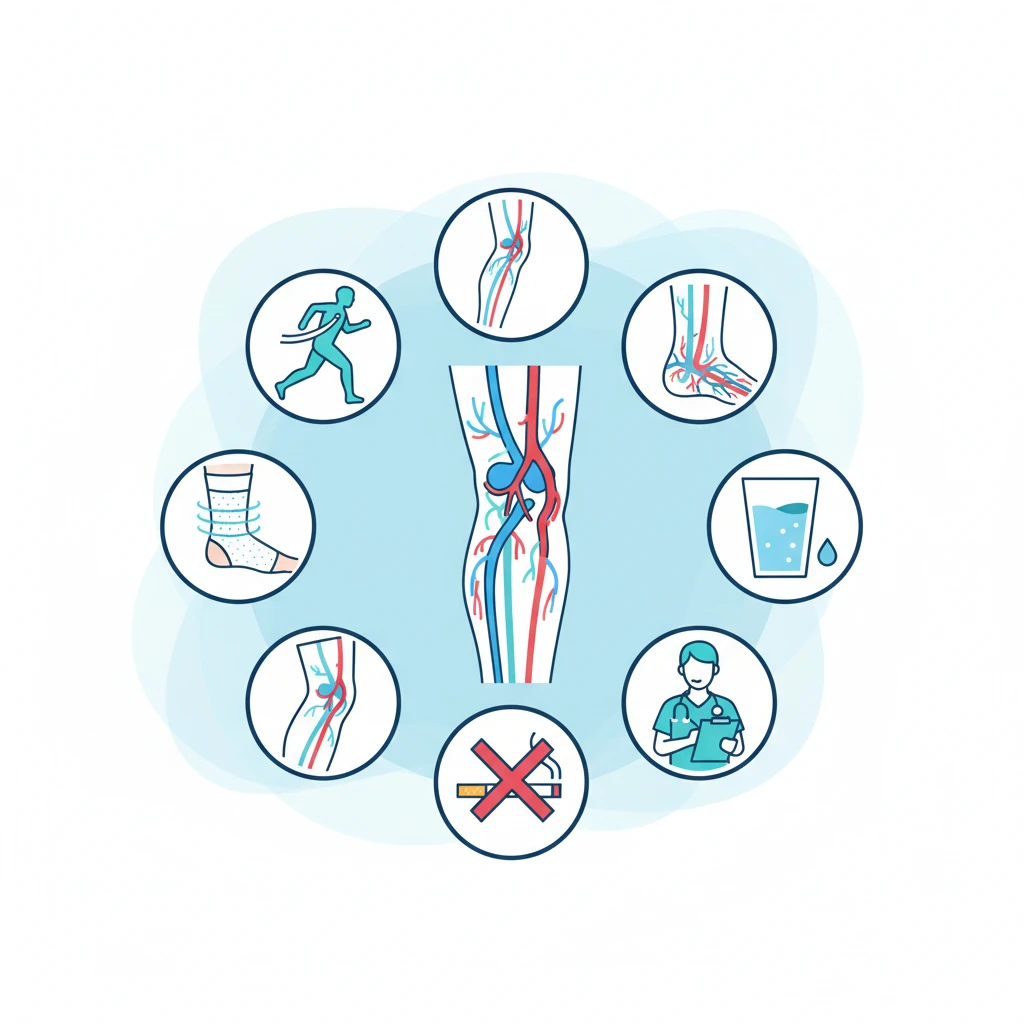
In this article, I will share five key methods supported by scientific evidence. These are practical measures included in clinical guidelines — the very same recommendations I give to my patients every day.
Why Should DVT Be Prevented?
First, let me make this clear: DVT is not just a problem limited to leg swelling and pain. Left untreated, it can lead to two serious, potentially life-threatening complications:
- Pulmonary embolism: A clot in the leg breaks loose and blocks the pulmonary arteries — this ranks among the leading causes of sudden death
- Post-thrombotic syndrome: Chronic leg swelling, pain, and skin changes that develop after DVT — observed in 20–50% of patients
The statistics speak clearly: venous thromboembolism (VTE) is one of the most common causes of preventable in-hospital deaths. Approximately 10 million VTE cases are diagnosed worldwide each year.
The good news? Mechanical methods alone can reduce asymptomatic DVT formation by approximately 60%. When combined with pharmacological therapy, this figure rises even further.
Method 1: Regular Physical Activity and Early Mobilization
This is the simplest yet perhaps the most effective preventive method. And I say this with a solid scientific basis: current research demonstrates that early mobilization is safe even in patients with acute DVT and helps alleviate symptoms.
The Calf Pump Mechanism
The deep veins in your legs must pump blood back to the heart against gravity. The calf muscles play a vital role in this task — they function as a second heart, so to speak. When you walk, climb stairs, or move your ankles, the calf muscles contract and push the blood within the veins upward.
When you remain immobile, this pump stops. Blood pools in the legs. And this is precisely where DVT begins.
Practical Exercise Recommendations for Daily Life
| Activity | Duration/Frequency | Mechanism of Action |
|---|---|---|
| Brisk walking | 30 minutes per day | Activates the calf pump, accelerates venous return |
| Ankle circles | 10–15 repetitions every hour | Can be done while seated — ideal for desk workers |
| Calf raises (toe raises) | 15–20 repetitions every 2 hours | Directly engages the calf muscle |
| Swimming | 2–3 times per week | The hydrostatic pressure of water provides additional compression |
| Cycling (stationary or outdoor) | 3–4 times per week, 20–30 min | Strengthens lower extremity circulation |
The majority of exercises we recommend for varicose vein treatment are also effective in preventing DVT, because the fundamental goal in both conditions is the same: to improve blood flow in the legs.
A special note for my post-surgical patients: If you have undergone a surgical procedure, get on your feet and begin walking short distances at the earliest time permitted by your doctor. The concept of “early mobilization” is a cornerstone of DVT prophylaxis. For detailed information about post-treatment care guidelines, please consult with your treating physician.
Method 2: Compression Stocking Use
Compression stockings are one of the mechanical methods with the highest level of evidence for DVT prevention. These are not your grandmother’s old nylon stockings — they are specially engineered, medically graded devices that apply graduated pressure from the ankle upward.
How Do They Work?
Compression stockings redirect blood from the superficial veins into the deep veins. This increases the blood volume and flow velocity in the deep veins. Blood pooling is reduced, and consequently, the risk of clot formation decreases.
When Are They Recommended?
- Long journeys: During flights or bus trips lasting more than 4 hours
- Post-surgical period: Especially after orthopedic and abdominal surgeries
- Prolonged bed rest: For individuals with limited mobility due to illness or injury
- Individuals with a history of DVT: To reduce the risk of recurrence
- Pregnant women: Particularly in the third trimester, when the risk of venous stasis increases
Choosing the Right Stocking
| Compression Class | mmHg Value | Indication |
|---|---|---|
| Class 1 (Mild) | 15–20 mmHg | Travel, mild leg heaviness, preventive use |
| Class 2 (Moderate) | 20–30 mmHg | Post-varicose vein treatment, DVT prophylaxis, pregnancy |
| Class 3 (Strong) | 30–40 mmHg | Post-DVT prevention of post-thrombotic syndrome, advanced venous insufficiency |
I recommend consulting your physician about the correct size and compression class for your compression stockings. An incorrect size or pressure class can significantly reduce the effectiveness of the stocking.
Warning: Compression stockings may be contraindicated in individuals with peripheral arterial disease. Always consult your doctor before starting to use compression stockings.
Method 3: Adequate Fluid Intake (Hydration)
It may seem simple, but dehydration is a serious risk factor for DVT. When there is insufficient fluid in the body, blood viscosity (thickness) increases. Thicker blood flows more slowly and clots more easily — it is that straightforward.
When Should You Be Especially Careful?
Long-haul flights create something of a perfect storm for DVT. Consider this: cabin humidity drops to around 10–20% (compared to 40–60% in normal living spaces), you remain immobile, and many people consume alcohol or caffeine instead of water. When all these factors combine, the blood thickens.
Practical Hydration Tips
- Drink at least 1.5–2 liters of water per day
- During flights, drink at least one glass of water every hour
- Avoid alcohol and excessive caffeine — both have diuretic effects
- Pay close attention to fluid intake before and after surgery
- Increase your water consumption during hot weather and exercise
As a patient, you might ask: “Does drinking water really prevent DVT?” Is it a magic solution on its own? No. But when applied alongside other methods, it plays an important role in reducing clotting risk by maintaining blood fluidity.
Method 4: Avoiding the Smoking and Estrogen Combination
I am going to approach this topic slightly differently, because here I am discussing the dangerous synergy of two separate risk factors.
Smoking: The Enemy of the Vessel Wall
The chemicals in cigarette smoke increase DVT risk through three mechanisms:
- Vessel wall damage: The endothelium (inner lining of the vessel) is directly harmed
- Increased blood viscosity: Blood thickens and loses its fluidity
- Activation of clotting factors: Fibrinogen levels rise
These three mechanisms encompass the entirety of Virchow’s Triad, which explains DVT formation. Smoking essentially sends a triple invitation for DVT.
Estrogen + Smoking: A Dangerous Duo
Women using oral contraceptives or hormone replacement therapy already have an elevated clotting risk. If these women also smoke, the risk multiplies. Some of the youngest DVT cases I have encountered in my clinical practice involved patients with precisely this combination.
Clear recommendation: Women using hormonal contraceptives or HRT should absolutely not smoke. Women who smoke should opt for non-hormonal contraceptive methods.
Quitting smoking is the most powerful protective step not only for DVT but also for varicose veins and all other peripheral vascular diseases. Smoking is one of the prominent factors among the causes that trigger varicose veins.
Method 5: Medical Prophylaxis (Preventive Drug Therapy)
The four methods I have described so far are measures that anyone can implement in daily life. The fifth method is a medical intervention specific to high-risk patients and must always be carried out under physician supervision.
Who Is It Applied To?
Medical prophylaxis is recommended for individuals whose DVT risk is significantly elevated:
- Patients undergoing major orthopedic surgery (knee replacement, hip replacement)
- Patients scheduled for abdominal and pelvic surgery
- Cancer patients — especially those receiving chemotherapy
- Patients requiring prolonged intensive care
- Individuals who have previously had DVT or pulmonary embolism and have additional risk factors
- Known carriers of hereditary thrombophilia (Factor V Leiden, Prothrombin mutation, etc.)
Drug Groups Used
| Drug Group | Examples | Area of Use |
|---|---|---|
| Low molecular weight heparin (LMWH) | Enoxaparin, Dalteparin | Post-surgical prophylaxis, hospitalized patient prophylaxis |
| Direct oral anticoagulants (DOACs) | Rivaroxaban, Apixaban | Post-orthopedic surgery, extended prophylaxis |
| Low-dose aspirin | Acetylsalicylic acid | An alternative in some post-orthopedic surgery guidelines |
Modern research has shown that direct oral anticoagulants (DOACs) are more effective than traditional blood thinners and carry a lower risk of bleeding side effects. These medications are taken orally, do not require routine blood tests, and improve patient compliance.
Important: Prophylactic drug therapy must always be initiated by a cardiovascular surgeon or the relevant specialist. Dosage, duration, and drug selection are determined according to the patient’s individual risk profile. Do not start taking blood-thinning medication on your own.
DVT Prevention Strategies for Special Situations
Certain life situations require special attention beyond standard measures. In this section, I share tailored recommendations for the scenarios I encounter most frequently.
A Roadmap for Long-Haul Flights
- Before the flight: Drink plenty of water and limit alcohol and caffeine consumption. Wear compression stockings on your doctor’s advice.
- During the flight: Choose an aisle seat. Get up and walk every 1–2 hours. Perform ankle exercises while seated.
- After the flight: Take a walk at your destination. If you notice swelling or pain in your legs, see a doctor.
DVT Prevention During Pregnancy
Vascular problems are common during pregnancy, and DVT risk is 5–10 times higher than in non-pregnant women. My recommendations for pregnant women:
- Establish a daily walking routine
- Sleep on your left side (this reduces vena cava compression)
- Discuss compression stocking use with your doctor
- Avoid standing or sitting for prolonged periods
- Pay attention to adequate fluid intake
A Daily Plan for Desk Workers
If you sit at a computer for 8–10 hours a day, you are actually at risk comparable to being on a long flight — and you repeat it every day:
- Stand up every 45–60 minutes and walk for 2–3 minutes
- Do ankle circles under your desk
- Avoid crossing your legs — it obstructs venous flow
- Keep a water bottle at your desk and drink regularly
- Use a standing desk if possible
A 7-Day Starter Program for DVT Prevention
To put all this knowledge into practice, here is a simple weekly program I recommend:
| Day | Goal | Action |
|---|---|---|
| Day 1 | Awareness | Identify your DVT risk factors and complete the risk checklist |
| Day 2 | Movement | Start a 30-minute walk, set hourly reminders at your desk |
| Day 3 | Hydration | Increase your daily water intake to 2 liters, track caffeine/alcohol consumption |
| Day 4 | Exercise | Add calf pump exercises (calf raises) to your daily routine |
| Day 5 | Evaluation | Review your smoking/hormone use, schedule a doctor’s appointment if needed |
| Day 6 | Compression | If you are in a risk group, seek medical advice about compression stockings |
| Day 7 | Sustainability | Create your weekly exercise plan and make these habits permanent |
Frequently Asked Questions
Can DVT be completely prevented?
Not every case of DVT can be prevented — particularly in individuals with a strong genetic predisposition, the risk cannot be reduced to zero. However, with lifestyle modifications and appropriate medical prophylaxis, the risk can be reduced very significantly. Mechanical methods alone can lower the risk by up to 60%; with pharmacological therapy, this figure rises even further.
Do compression stockings prevent DVT?
Yes. Medical compression stockings significantly reduce DVT risk, especially in the post-surgical period and during long journeys. However, selecting the correct compression class and size is critically important. Consult your physician for proper fitting and guidance.
Which exercises are most effective in preventing DVT?
Any exercise that engages the calf muscles is effective: walking, swimming, cycling, and calf raises. What matters most is consistency and continuity of movement. Establishing a regular exercise routine is one of the best ways to support your vascular health.
Does aspirin prevent DVT?
Aspirin is effective in preventing arterial clotting but is not a first-line choice for venous thrombosis (DVT) prophylaxis. Although it is listed as an alternative in some orthopedic surgery guidelines, more potent anticoagulants such as LMWH or DOACs are preferred for high-risk patients. Do not start taking aspirin on your own — always consult your physician.
How can the risk of recurrence be reduced after having DVT?
The recurrence risk after a first DVT episode is approximately 30%. Reducing this risk requires long-term anticoagulant therapy, regular use of compression stockings, maintaining physical activity, and regular medical follow-up. Eliminating triggering factors (obesity, smoking, physical inactivity) is also critically important.
What are the symptoms of DVT, and when should I seek emergency care?
Sudden swelling in one leg, calf pain and tenderness, skin redness, and increased warmth are typical symptoms of DVT. If, in addition to these, you develop shortness of breath, chest pain, or coughing up blood, you should go to the emergency room immediately — these symptoms suggest pulmonary embolism. If you notice any vascular symptoms in your legs, consult a cardiovascular surgeon promptly.
Conclusion: Small Steps, Big Protection
DVT prevention is neither complex nor expensive. Walking for 30 minutes a day, drinking enough water, avoiding prolonged immobility, and not smoking — these four simple steps alone can dramatically reduce your risk.
However, if you are in a high-risk group — if you are about to undergo major surgery, if you are receiving cancer treatment, if you have a hereditary clotting disorder, or if you have had DVT before — you must consult a cardiovascular surgeon to develop an individualized prophylaxis plan.
We provide our patients with modern, evidence-based approaches in varicose vein treatment and vascular disease management. If you would like to schedule an appointment for a DVT risk assessment or prophylaxis plan, please contact our vein clinic Turkey.
Remember: Stay active, stay hydrated, know your risk. These three phrases may be the shortest summary of DVT prevention.