How Is Varicose Vein Surgery Performed? Methods and Process

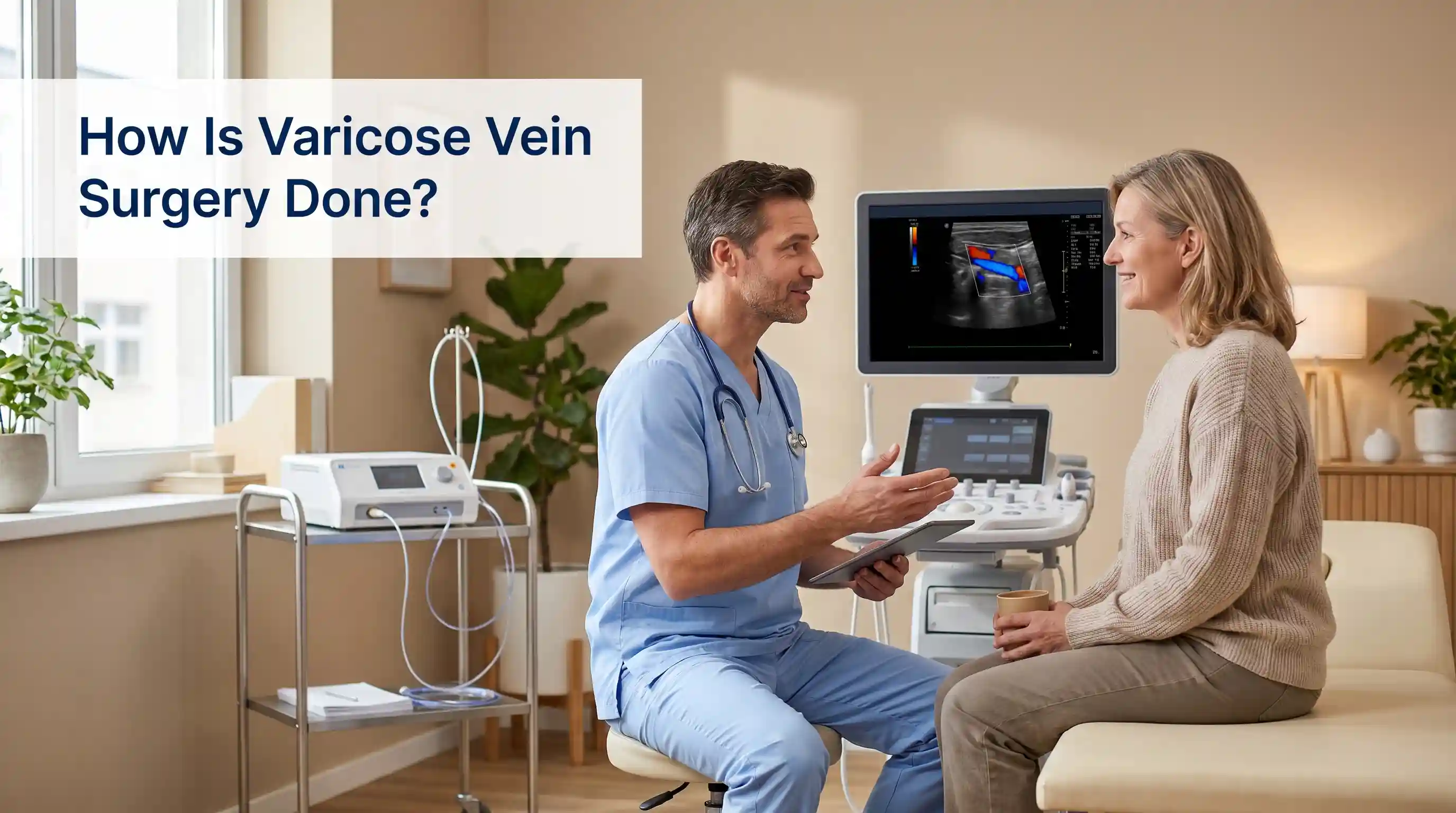
In my practice, one of the first questions patients with varicose veins almost always ask is the same: “Doctor, will I need surgery, will it hurt a lot, how many days will I have to stay in bed?” These questions are completely natural, because the picture of “varicose vein surgery” in their minds is largely a leftover from the past. Yet vascular surgery has changed quietly but profoundly over the last two decades. The vast majority of methods we use today to treat varicose veins are not what most people imagine when they hear the word “surgery”; they are day-case procedures performed under local anesthesia.
In this article, I want to walk you step by step through the varicose vein procedures I perform in my clinic. I will cover endovenous laser ablation, radiofrequency ablation, sclerotherapy, ambulatory phlebectomy, and the classical surgical method of the past, the stripping operation, one by one. I will honestly share how patients are prepared before the procedure, how anesthesia is administered, what is felt during the procedure, and how the recovery period unfolds. My goal is to help you make your decision based on knowledge, not fear.
What Do We Actually Mean by “Varicose Vein Surgery”?
First, I want to clear up a conceptual confusion. When my patients say “surgery,” they usually imagine a procedure done in an operating room, under general anesthesia, with incisions. The underlying cause of varicose veins is the failure of valves in the leg veins, which allows blood to flow backwards (medically known as venous insufficiency). Over the years I have observed that the way to solve this problem is to take the damaged, leaking vein out of circulation. Today there is more than one way to do this, and most of these are not surgery in the classical sense.
In modern vascular practice, varicose vein procedures can be broadly divided into two groups. The first group consists of closed, intravascular procedures: endovenous laser ablation (EVLA) and radiofrequency ablation (RFA) fall into this category. The second group includes complementary procedures performed with needles and fine instruments: sclerotherapy and ambulatory phlebectomy. The classical surgical method, stripping, has now moved to the background except in selected special cases.5 Which method is right for you depends on the type of varicose veins, the condition of the source vein, and your overall health. If you are wondering what the “source vein” actually means, I explain it in detail in my article on the source vein in varicose vein treatment.
I want to underline an important point: the correct method can only be determined after a detailed examination and color Doppler ultrasound assessment.1 The “best method” debates you read online are not meaningful for your specific leg, because the best method is the one most suitable for your individual vein map. For a general overview of treatment options, including varicose vein treatment in Turkey, you can review my dedicated treatment page.
Pre-Procedure Preparation: Treatment Begins at the Consultation
There is a sentence I often repeat to my patients: successful varicose vein treatment begins with proper planning. The assessment beforehand shapes the outcome just as much as the procedure itself. That is why I ask patients not to underestimate the preparation phase.
During preparation, I generally follow these steps:
- Color Doppler ultrasound: This examination maps out the veins in the leg. We clearly see which valves have failed, where the blood is leaking from, and what the diameter of the source vein is. The treatment plan is built upon this map.
- General health assessment: I ask about the medications you take, your past operations, any clotting issues, and chronic conditions. Patients on blood thinners may need additional planning before the procedure.
- Discussing expectations: Understanding what my patient expects from treatment is important to me. Some want relief from leg pain, others are bothered by the appearance. Clarifying expectations directly affects satisfaction with the result.
- Practical information for the day: We discuss whether you need to fast, what to wear, and how to get to the clinic in advance.
For procedures performed under local anesthesia such as endovenous laser and radiofrequency ablation, fasting is usually not required; I recommend a light meal beforehand. I also ask patients to obtain the compression stocking they will use after the procedure in advance, because the stocking is an important part of the recovery process. Coming in comfortable clothing that does not restrict your leg afterwards makes things easier.
One topic patients often raise during preparation is anxiety. Feeling worried about hospitals, incisions, and anesthesia is a very human response. Rather than ignoring this anxiety, I prefer to talk about it. Over the years I have observed that a patient who knows every step of the procedure in advance lies down on the table much more calmly and recovers more comfortably. That is why I never rush the consultation; I want you to ask all your questions to the end. Good preparation is not only about medical tests; being mentally ready is also part of the treatment.
Endovenous Methods: Laser (EVLA) and Radiofrequency (RFA)
Today, these are the methods I most often prefer in my clinic for patients with source vein insufficiency. The word “endovenous” means “inside the vein,” which summarizes the logic of these methods: instead of cutting out the damaged vein from the outside, we close it from the inside with heat energy.
How Is the Procedure Performed?
Endovenous laser and radiofrequency procedures follow similar steps. I can describe it like this:
- Ultrasound-guided entry: While the vein is visualized with color Doppler, a fine needle is inserted into the target vein, usually at the level of the knee. At this step only the needle entry is felt.
- Catheter placement: A thin wire is passed through the needle, and a catheter is advanced over it into the vein. The tip of the catheter is positioned at the beginning of the vein segment to be closed.
- Tumescent anesthesia: A dilute local anesthetic solution is injected around the vein under ultrasound guidance. This both numbs the area and insulates the vein from the surrounding tissues against heat. A few needle sensations are felt at this stage.
- Closing the vein: The laser fiber or the heating catheter tip is slowly withdrawn while heat energy is delivered to the vein wall. The vein shrinks and closes with this heat.
- Closure and stocking: No stitches are needed at the entry point; a thin adhesive strip is enough. A compression stocking is then placed on the leg.
The varicose vein procedure usually takes between 30 and 60 minutes and is performed as a day case; you go home the same day. The closed vein is gradually absorbed by the body, and blood continues to flow through healthy deep veins. For more information on the advantages of laser, you can read my article on the advantages of laser varicose vein treatment.
Another question patients are curious about is the difference between laser and radiofrequency. Both methods are based on closing the vein with heat energy; the main difference lies in the type of energy source. Laser uses light energy, while radiofrequency uses controlled heat produced by radio waves. In practice, both have high success rates, and the choice largely depends on the diameter of the vein, anatomical features, and clinical assessment.4 The most suitable method for one patient may not be appropriate for another. That is why I do not blindly defend a single method; I decide based on the vein map of each patient.
I often tell my patients: the goal of endovenous procedures is not to “destroy” the vein but to take a faulty highway, where blood was flowing backwards, out of traffic. The body did not need that vein anyway; on the contrary, the disease originated from it.
Recovery Process
The greatest advantage of endovenous methods is rapid recovery. Most of my patients walk out of the procedure right away and return to their daily routine the same day or the next. In the first few days some tightness, mild pain, or bruising may occur in the leg; this is expected and usually resolves quickly. It is important to follow the recommendations I will give you personally during this period.
Sclerotherapy and Ambulatory Phlebectomy: Complementary Procedures
After the source vein is closed, complementary procedures may be needed for surface varicose veins or spider veins that remain on the leg. The most common of these are sclerotherapy and ambulatory phlebectomy.
How Is Sclerotherapy Performed?
Sclerotherapy is based on injecting a special medication (sclerosing agent) into the vein with a thin needle. This medication causes controlled irritation in the vein wall; the vein shrinks, sticks together, and gradually becomes invisible. It is particularly effective in fine and medium-sized superficial varicose veins and spider veins.
The procedure is quite practical. The patient is usually in a lying position, and the medication is delivered to the targeted veins with fine needles. The foam form is preferred in certain cases because it contacts a larger surface than the liquid form. The procedure may last from a few minutes to half an hour; it does not require anesthesia because the needles used are very thin. Multiple sessions are usually needed, and the number of sessions varies depending on the extent of the varicose veins; that is why it is not appropriate to promise a fixed number from the start. I detail this method in my article on sclerotherapy for varicose veins.
How Is Ambulatory Phlebectomy Performed?
Ambulatory phlebectomy is the removal of prominently bulging, tortuous surface varicose veins through very small skin incisions. The word “ambulatory” means that the patient can walk after the procedure and is discharged on the same day.
The procedure is performed under local anesthesia. Tiny skin openings of millimeter size (usually 1 to 3 mm) are made over the varicose vein to be removed. Through these openings, the dilated vein segment is grasped with a special hook and gently withdrawn. The openings are so small that stitches are usually not needed; they are closed with a thin adhesive strip and the likelihood of leaving a scar is low. The procedure can often be performed in the same session as the endovenous procedure, completing the treatment in a single day.
I also explain to my patients how we choose between phlebectomy and sclerotherapy. In general, phlebectomy is more suitable for visibly bulging, thick varicose veins, while sclerotherapy is more appropriate for thinner surface veins and spider veins. These two methods are often complementary rather than competing. In one leg, the source vein can be closed by an endovenous procedure, prominent varicose veins can be removed by phlebectomy, and any remaining thin veins can be addressed later with sclerotherapy. Planning the treatment as a whole always gives a better result than thinking piece by piece.
Classical Surgery: The Stripping Operation
Stripping, the surgical removal of the great superficial vein, was the standard treatment for varicose veins for decades. When people hear “varicose vein surgery,” this is still what comes to mind first. To be honest, this method is effective; however, with the development of modern endovenous techniques, its area of application has clearly narrowed.
In the classical stripping operation, incisions are made at the groin and at the knee or ankle area. The insufficient great vein is tied at the point where it joins the deep vein in the groin and is removed along its course with a special instrument. This procedure usually requires general or regional (spinal) anesthesia and is mostly performed in an operating room setting. The recovery period is longer than with endovenous methods; bruising and pain may be more pronounced, and return to daily life may extend from several days to a few weeks.
So has stripping been completely abandoned? No. In some special situations, for example when the vein anatomy is not suitable for endovenous intervention, when the vein diameter is very large, or when it runs very close to the surface, classical surgery is still a valuable option.2 What matters is to discard a method because it is not suitable for the patient, not because it is outdated; and to apply it when it is genuinely needed. I make this decision together with my patient after evaluating their anatomy and general condition.
The conclusion to draw from this is: a method being “old” does not make it bad, nor does being “new” automatically make it the best. Endovenous methods are our first choice today because they offer clear advantages in comfort, rapid recovery, and early return to daily life for most patients. However, every rule in medicine has an exception. A good physician’s duty is not to apply the same method to every patient who walks in; it is to honestly recommend the most appropriate method for that patient. I speak openly with you when deciding which method to apply and share my reasoning.
Comparison of Methods
To clarify the picture in my patients’ minds, I find it useful to see the commonly used methods side by side. The table below offers a general overview; however, I want to remind you again that the right choice for you can only be determined after examination and Doppler assessment.
| Method | Anesthesia | For which type of varicose vein | Day case | Typical recovery |
|---|---|---|---|---|
| Endovenous laser (EVLA) | Local (tumescent) | Source vein insufficiency | Yes | Usually fast, quick return to daily life |
| Radiofrequency (RFA) | Local (tumescent) | Source vein insufficiency | Yes | Usually fast, quick return to daily life |
| Sclerotherapy | Not required | Fine, superficial veins and spider veins | Yes | Fast, usually multiple sessions |
| Ambulatory phlebectomy | Local | Prominent, tortuous surface varicose veins | Yes | Fast, small skin openings |
| Classical surgery (stripping) | General or spinal | Selected special anatomical situations | Mostly no | Longer, several days to a few weeks |
As the table shows, the vast majority of modern methods are performed under local anesthesia, as day cases, and with rapid recovery. If you are wondering whether varicose veins can be treated without surgery, I recommend my dedicated article on non-surgical varicose vein treatment: facts and myths.
Post-Procedure Process and Recovery
The success of a varicose vein procedure is shaped not only on the procedure table but also in the weeks that follow. I make a point of telling my patients to take the post-procedure period seriously. After the procedure I generally give the following recommendations:
- Walk: Staying immobile after the procedure is not the goal; regular gentle walks support recovery. Walking helps the leg muscles work like a vein pump.
- Use your compression stocking: Wearing the stocking in the way and for the duration I recommend reduces leg swelling and contributes to healing.
- Avoid prolonged immobility: In the early period, I recommend avoiding standing still for long periods or sitting with crossed legs for a long time.
- Avoid excessive heat: It is sensible to avoid very hot baths, saunas, and steam rooms in the first few days.
- Come for follow-up visits: Attending the follow-up appointments I recommend is important for evaluating the result. The condition of the closed vein can be checked with Doppler.
In the first few days mild pain, tightness, and bruising may occur; this is expected and usually temporary. The important thing is to distinguish between expected healing signs and conditions that need attention. If you notice unusual symptoms such as sudden marked swelling in the leg, increasing redness, high fever, or shortness of breath, please contact me or a healthcare facility without delay. Such symptoms are rare, but early evaluation is important.
I also want to add this: varicose vein procedures treat the existing damaged veins, but they cannot permanently guarantee that new varicose veins will not develop in the future. Genetic predisposition, lifestyle, and occupational factors play a role in the development of new varicose veins.3 That is why caring for leg health after treatment, controlling weight, regular movement, and using preventive stockings when necessary remain important. For my general perspective on why varicose veins occur and how varicose veins go away, you can read my dedicated article.
For international patients, I want to add that day-case varicose vein procedures are particularly well suited to short medical travel. Many of my patients who come for laser varicose vein treatment in Turkey are able to walk on the same day, rest for one or two nights nearby, and fly home within a short stay, supported by clear written aftercare instructions and remote follow-up.
Frequently Asked Questions
Is varicose vein surgery painful?
Modern endovenous methods are performed under local anesthesia, and during the procedure usually only needle entry sensations are felt; significant pain is not expected. In the first few days after the procedure, mild tightness, pain, or bruising may occur; this is expected and is usually managed with simple measures. With the classical surgical method, pain during the recovery period may be more pronounced.
Can varicose veins be treated without surgery?
The vast majority of methods we use today are not surgery in the way most people understand the word. Endovenous laser, radiofrequency, and sclerotherapy are day-case procedures that require either no incisions or only millimeter-sized openings and are performed under local anesthesia. Still, which method is appropriate is individual and is determined after examination.
When can I return to work after the procedure?
After endovenous methods, most patients return to their daily life the same day or the next; return to desk-based work is usually quick. For patients with heavy physical jobs or after classical surgery, this period may be longer. I give you a personalized recommendation based on your work and the type of procedure.
Is varicose vein surgery completed in a single session?
Closing the source vein is usually done in a single session, and ambulatory phlebectomy can be added to the same session when needed. However, for fine surface varicose veins and spider veins, methods such as sclerotherapy may require multiple sessions. The number of sessions varies depending on the extent of the varicose veins; it is not appropriate to promise a fixed number from the start.
Do varicose veins come back after the procedure?
The procedure eliminates the damaged veins that are treated. However, varicose vein disease is linked to factors such as genetic predisposition and lifestyle, so new varicose veins may develop in different veins over the following years. Regular movement, weight control, and the use of preventive stockings when needed help reduce this risk. Follow-up visits are also important for early detection.
Which varicose vein method is the best?
There is no single “best method” for everyone. The most suitable method is determined according to your vein map, the condition of the source vein, the type of varicose veins, and your general health. It is not possible to make the right decision without color Doppler ultrasound and a detailed examination. I therefore recommend that decisions be made through personal evaluation, not general information found online.
A Final Word
When people hear “varicose vein treatment,” they still imagine large incisions, long hospital stays, and difficult recovery periods. Yet advances in vascular surgery have changed this picture dramatically. Most of the procedures I perform in my clinic today are done under local anesthesia, as day cases, and with rapid recovery. Much of the fear comes from a lack of information; when you are properly informed, you can make your decision more comfortably.
For patients traveling from abroad, I plan the consultation, Doppler assessment, and procedure in a way that fits a short stay. If you are considering varicose vein surgery in Turkey, we can review your photos and any previous Doppler reports in advance and outline a realistic plan for your visit.
Please remember that what I have shared in this article is for general information purposes and does not replace a personal examination. The right method for your leg becomes clear only after I listen to you, examine you, and map out your veins. If you are bothered by the varicose veins in your legs or have questions on your mind, I will be glad to listen to you and review the options together.
Op. Dr. Onur Üstünel
Cardiovascular Surgery Specialist
References
- National Institute for Health and Care Excellence (NICE). Varicose veins: diagnosis and management (CG168). https://www.nice.org.uk/guidance/cg168
- Society for Vascular Surgery / American Venous Forum. Clinical practice guidelines on the management of varicose veins of the lower extremities. https://www.jvsvenous.org/
- MedlinePlus. Varicose veins. U.S. National Library of Medicine. https://medlineplus.gov/varicoseveins.html
- National Center for Biotechnology Information (NCBI / PMC). Endovenous ablation and treatment of varicose veins. https://www.ncbi.nlm.nih.gov/pmc/
- Türk Kalp ve Damar Cerrahisi Derneği. https://www.tkdcd.org/