Non-Surgical Varicose Vein Treatment: Facts and Myths

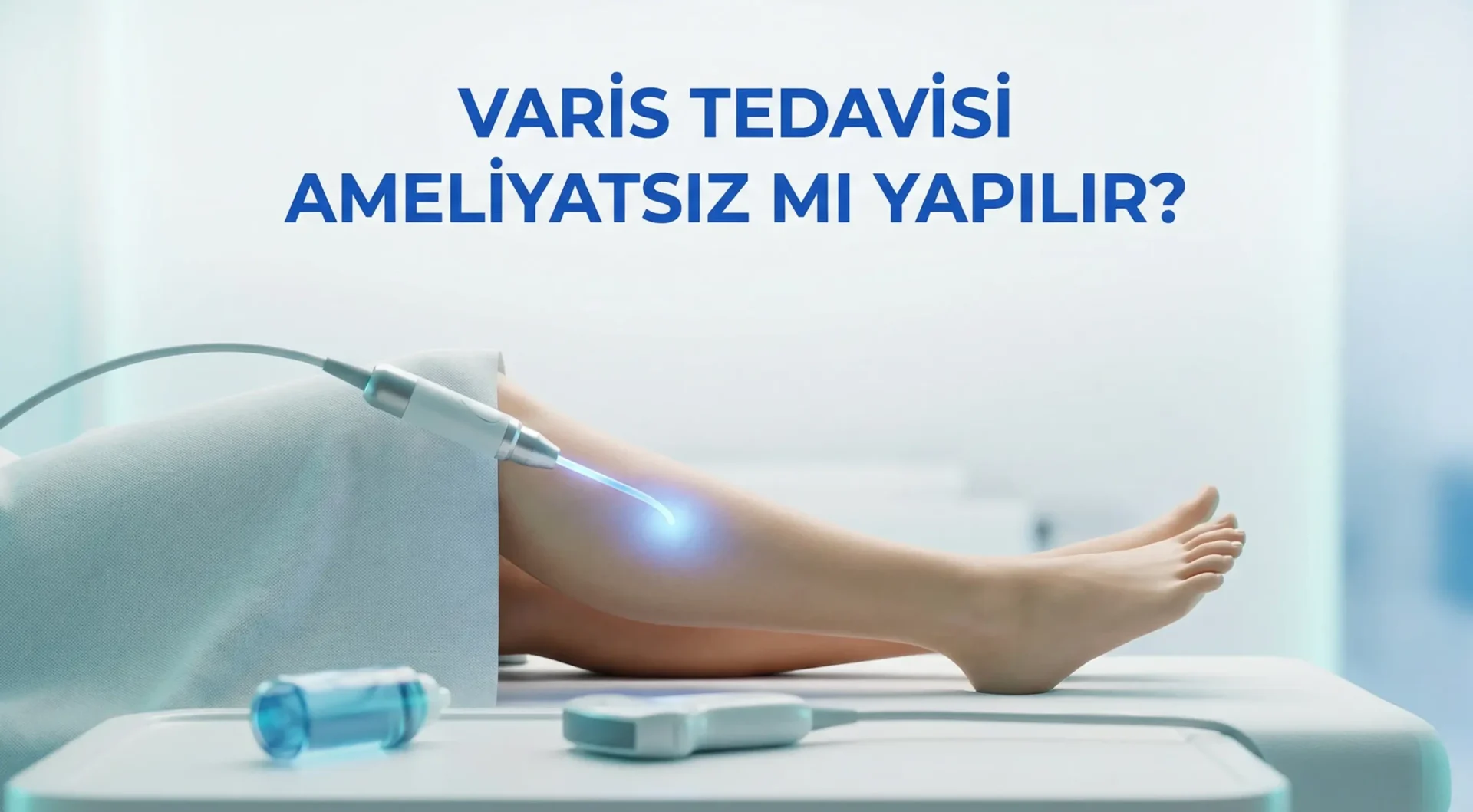
Non-Surgical Varicose Vein Treatment: Is It Really Possible?
When patients in my clinic hear “varicose vein treatment,” many still think of an operating room, general anesthesia, and lengthy recovery periods. I understand this concern very well, because years ago varicose vein treatment really was like that.
Today, however, the picture has completely changed.
The vast majority of varicose vein treatments I perform use non-surgical, minimally invasive methods. No general anesthesia, no large incisions, no hospital stay. Most of my patients walk out of the clinic on their own feet after the procedure.1
So is non-surgical varicose vein treatment truly possible? In what situations is it applied? What methods are available? And most importantly: can every varicose vein be treated without surgery?
In brief: Today, 85-90% of varicose veins can be successfully treated with non-surgical methods. However, correct diagnosis is essential for the right outcome.
What Does Non-Surgical Varicose Vein Treatment Mean?
Non-surgical varicose vein treatment refers to all modern endovascular methods that do not require general anesthesia or large surgical incisions. The basic logic behind these methods is:
- To close the source vein that is causing the varicose veins from the inside
- To redirect blood flow to healthy veins
- To enable the patient to return to daily life as quickly as possible
While in classic surgical stripping the vein is removed from the body, in modern methods the vein is left in place and closed with heat, laser, radiofrequency or biological adhesive. The body naturally absorbs this closed vein over time.
The biggest advantage of this approach? The patient gets up the same day and can return to work the next day.
What Are the Non-Surgical Treatment Methods?
Here is how I describe the non-surgical methods I use most frequently in my clinic when explaining to patients:
1. Endovenous Laser Treatment (EVLA)
A thin fiber optic catheter is placed into the varicose vein under ultrasound guidance. Laser energy closes the vessel wall from the inside. Endovenous laser treatment is the most widely used non-surgical method today.
- Applied under local anesthesia
- Procedure time: 30-45 minutes
- Success rate: 93-98%
2. Radiofrequency Ablation (RFA)
Radiofrequency energy is used instead of laser. The principle is the same: the vein is heated and closed from the inside. I prefer radiofrequency over laser in some patients. Especially for more superficially running vessels, tissue damage can be less. You can learn more about the advantages of this approach in our article on radiofrequency treatment advantages.
- Local anesthesia is sufficient
- Same-day discharge
- Success rate: 92-97%
3. Biological Adhesive (Venous Embolization – “Vein Glue”)
One of the newest methods. Medical adhesive material is injected into the vessel, closing it. Its biggest advantage: it does not even require tumescent anesthesia. Entry is made with a single needle.
- Method with the least anesthesia requirement
- Compression stockings may not be mandatory (in some protocols)
- Procedure time: 15-20 minutes
4. Sclerotherapy and Foam Sclerotherapy
Sclerotherapy involves injecting a special medication into the vessel to cause it to close. I use it as the first choice especially for capillary varices and spider veins. For larger vessels, we prefer the foam form.
This method is also frequently combined with other treatments. For example, sclerotherapy is applied to small remaining side branches after laser treatment.
5. Miniphlebectomy (Vein Removal Through Micro-incisions)
Superficial varicose veins are removed from 2-3 mm small incisions. While it may seem “surgical,” in practice it does not even require stitches – the incisions are closed with sterile strips. It should not be confused with major surgery.
Comparison of Methods
| Method | Anesthesia | Procedure Time | Return to Work | Success Rate |
|---|---|---|---|---|
| Endovenous Laser (EVLA) | Local | 30-45 min | 1-2 days | 93-98% |
| Radiofrequency (RFA) | Local | 30-45 min | 1-2 days | 92-97% |
| Biological Adhesive | Minimal | 15-20 min | Same day | 92-96% |
| Foam Sclerotherapy | Not required | 15-30 min | Same day | 80-90% |
| Miniphlebectomy | Local | 20-40 min | 1-3 days | 95%+ |
Common Myths – Corrected
I want to correct some misconceptions I have heard from my patients over the years:
“Varicose vein treatment is very painful”
False. Local anesthesia is used in modern non-surgical methods. My patients during the procedure generally say they feel only a slight pressure. The era of major surgery requiring general anesthesia is over.
“Non-surgical treatment is not permanent”
False. The 5-year success rates of endovenous laser and radiofrequency treatment are above 90%.5 Clinical studies have shown that these methods give results equivalent to, and in some parameters even better than, classic surgery.
“My varicose veins are mild, I do not need treatment”
A dangerous approach. Varicose veins are a progressive disease. If left untreated in the early stage, it can lead to serious complications such as venous ulcer, thrombophlebitis and even deep vein thrombosis.
“Wearing compression stockings is enough”
Partly true, partly false. Compression stockings alleviate symptoms and slow progression, but they do not treat the varicose veins. The stocking is a support for treatment, not an alternative to it.
“You need to rest in bed for a long time after treatment”
On the contrary. Early mobilization is recommended in non-surgical methods. I tell my patients to walk as much as possible after the procedure. The post-treatment process is much more comfortable than imagined.
Can Every Varicose Vein Be Treated Without Surgery?
I need to be very clear here: No, not every varicose vein can be treated without surgery.
The applicability of non-surgical methods depends on these factors:
- Stage and extent of the varicose veins
- Condition and diameter of the source vein
- Patient’s general health status
- Previous treatments
Very advanced cases, patients with complicated anatomy, or patients who have had multiple previously failed procedures may sometimes need to be treated with classic surgery. But these are now in the minority.
The important point is this: method selection should be made not according to the disease, but according to the patient. I can create different treatment plans even for two patients at the same stage.
How Is the Treatment Decision Made?
The first and most critical step in creating the right treatment plan is a Doppler ultrasound assessment.
With this evaluation:
- The source vein (leak point) is identified
- Vessel diameter and reflux duration are measured
- The deep vein system is assessed
- The most suitable treatment method is selected
It is not correct to say “this method is the best” without performing Doppler ultrasound. Every treatment plan must be based on this assessment.
I perform Doppler ultrasound on every patient during the examination. I create the treatment plan together with the patient, discussing the findings on screen. You can read a broad overview of the treatment options in our guide on varicose vein treatment in Turkey.
Frequently Asked Questions
Is non-surgical varicose vein treatment painful?
No. Since it is applied under local anesthesia, no pain is felt during the procedure. Mild tightness or aching may occur after the procedure; this usually resolves within 2-3 days.
How soon after treatment can I return to work?
Most of my patients return to their normal activities the next day. A wait of 3-5 days is recommended for those who do physically demanding work.
Can varicose veins recur after non-surgical treatment?
If the source vein has been correctly identified and treated, the recurrence rate is low (5-10%). However, varicose veins are a disease with a genetic predisposition; new varicose veins may develop in different vessels over the years.
Which method is most suitable for me?
The answer to this question varies according to Doppler ultrasound findings. The treatment method is personalized according to the size, location, source vein, and patient preference.
Conclusion
Today, the majority of varicose vein treatment is performed with non-surgical methods, under local anesthesia, with same-day discharge. These methods are both safe and deliver lasting results.
However, as with every treatment, the key to success is correct diagnosis. Treatments performed only based on appearance, without identifying the source vein, remain temporary.
Varicose vein treatment is personalized. The most suitable method must be determined according to the patient’s anatomy, complaints, and expectations following a detailed Doppler ultrasound assessment. Patients in my clinic who travel from abroad for treatment benefit from the same individualized evaluation approach. Deep vein thrombosis prevention is also an important part of the post-treatment follow-up plan we discuss with every patient.
For international patients: If you are considering non-surgical varicose vein treatment in Turkey, our İzmir clinic offers the full range of minimally invasive options – laser ablation, radiofrequency, biological adhesive, and sclerotherapy – with same-day procedures and rapid recovery. Visit our comprehensive treatment guide for detailed protocols and pricing information.