
Why Do Varicose Veins Return? Understanding Recurrence Risk

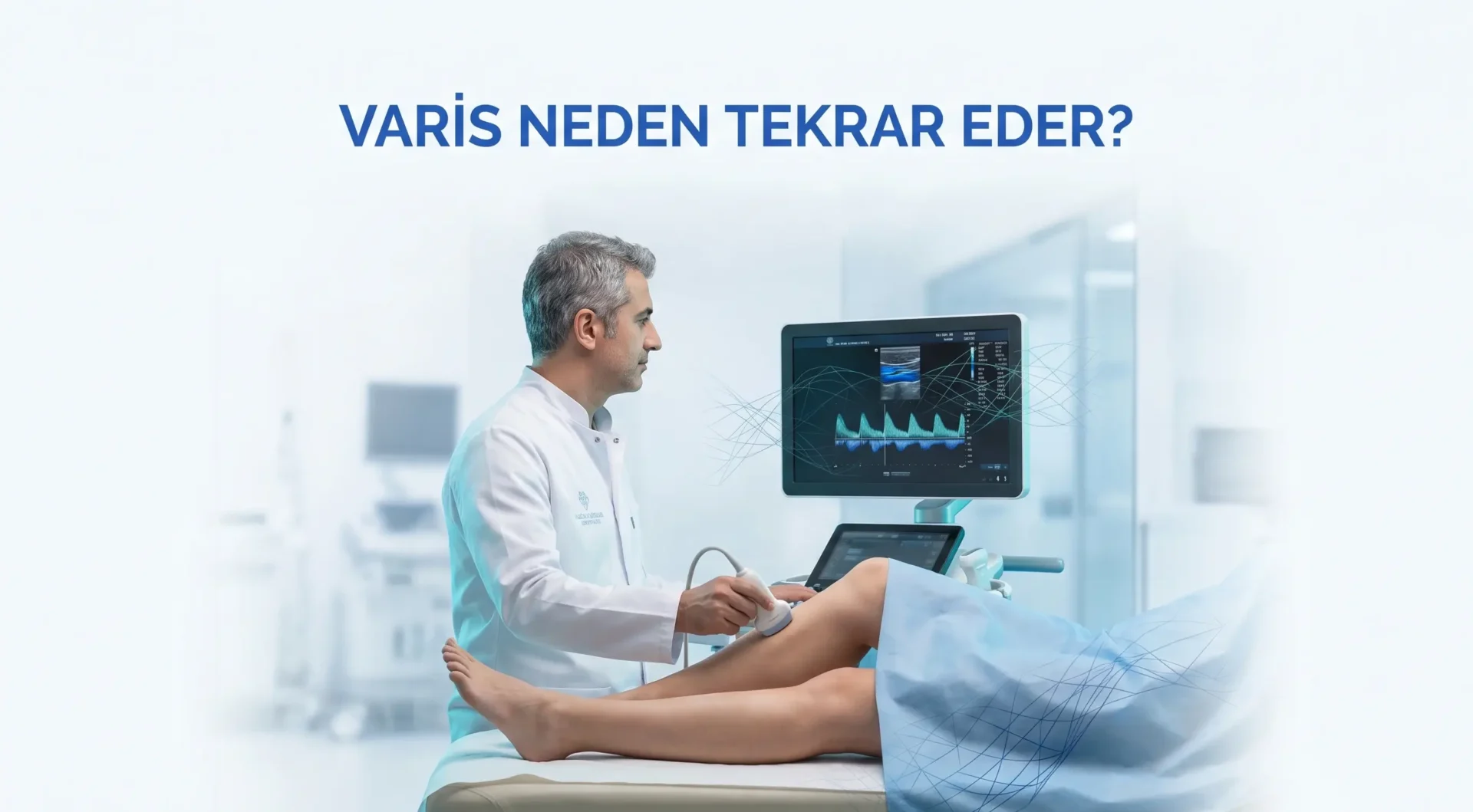
One of the most difficult situations I encounter in my practice is this: a patient who has already undergone varicose vein treatment walks in two or three years later with prominent veins reappearing on their leg. “Doctor, didn’t I have treatment?” they ask. That question actually points to something much deeper: treatment had been performed, but perhaps not in the right place.
Varicose vein recurrence, the reappearance of varicose veins after treatment, is a real challenge that both patients and surgeons must face. In this article, I want to explain why it happens, which factors increase the risk, and how the right approach can reduce that risk.
Let me start by saying this: recurrence after treatment does not always mean “poor treatment.” In some patients, the underlying disease continues to progress through new pathways over time, even after a correct and comprehensive intervention. But in the majority of cases I see in my clinic, the cause of recurrence is different. Treatments that do not begin at the source point are simply not sufficient in the long run.
Why Do Varicose Veins Return After Treatment?
The success of varicose vein treatment is not measured solely by the elimination of visible veins. True success depends on closing the source vein that feeds and disrupts the visible varices. When the source vein is left untreated and only superficial treatment is applied, the vein may refill over time, or new vessels may form around it.1
I often explain this to my patients with an analogy: if you patch a leak in a garden pipe, the problem seems solved, but if the main pipe is ruptured, new leaks are inevitable over time. The physiology of varicose veins works exactly the same way.
Note: Varicose vein recurrence is not always a sign of failed treatment. Sometimes it reflects the natural course of the disease; sometimes new risk factors come into play. However, the majority of recurrences are related to the source point being overlooked.
The Real Reason: Skipping the Source Vein
Varicose veins originate from valvular insufficiency in the superficial venous system. Normally, valves ensure one-directional blood flow toward the heart. When valve dysfunction begins, blood flows backward, pressure inside the vessel increases, and the vessel wall gradually dilates.2
The most common location for this dysfunction to begin is what I call the source vein, the great or small saphenous vein. Even if we close superficial varicosities with laser or sclerotherapy, if the source vein is still causing reflux, the collateral (side branch) vessels around it will eventually become varicose.
According to the NICE guideline, the first step in varicose vein treatment should always be evaluation of the insufficient saphenofemoral or saphenopopliteal junction.3 Performing treatment only on visible branches while bypassing these junctions significantly increases the recurrence rate.
During initial consultations, I sometimes meet patients who say: “I only had the prominent veins on my leg treated, they just injected them.” My first question is always: “Was an ultrasound performed before treatment?” The answer is usually no. Yet without an ultrasound, it is impossible to know which vessel is the source, or whether there is reflux at the saphenofemoral junction. If this step is skipped, even if the treatment appears initially successful, re-emergence within a few years becomes almost inevitable.
The Role of Doppler Ultrasound
I evaluate every varicose vein patient with Doppler ultrasound at their first visit. This is not a preference, it is an indispensable necessity. Because the vein I can see may not be the vein causing the problem; the issue may originate from a deeper, invisible point.
Doppler ultrasound tells us:
- Which valves are insufficient, and where is blood flowing backward?
- Are the great and small saphenous veins healthy, and what are their diameters?
- Is the deep venous system normal? (Is there thrombus or chronic occlusion?)
- Has the source point identified before treatment been closed, or is reflux still ongoing?
In patients who have had previous treatment, follow-up ultrasonography largely explains the reason for recurrence. During the varicose vein treatment process, ultrasound guidance is critically important both when planning treatment and when monitoring results.3
When I evaluate patients presenting with recurrence, ultrasound findings typically reveal one of three patterns: the previously closed vein has reopened (recanalization), new reflux has started in another segment, or a previously undetected small perforator vein has become active. Each of these situations requires a different treatment strategy. That is why I approach recurrence not as “starting treatment from scratch,” but as “remapping the current situation.”
Factors That Increase Recurrence Risk
Beyond the issue of skipping the source vein, many individual factors also affect recurrence risk. The table below summarizes these factors and the mechanisms through which they act:
| Risk Factor | Mechanism of Action |
|---|---|
| Genetic predisposition | Weakness in connective tissue and vessel wall, tendency toward valvular insufficiency |
| Prolonged standing | Chronic increase in hydrostatic pressure in leg veins, tension on vessel walls |
| Pregnancy | Relaxation of vessel walls via progesterone, increased intra-abdominal pressure, increased blood volume |
| Hormonal factors (estrogen-containing medications) | Reduces vascular tone, may accelerate valve dysfunction |
| Obesity | Increased intra-abdominal pressure impairs venous return |
| Advanced age | Progressive deterioration of vessel wall elasticity and valve structure over time |
| History of deep vein thrombosis | Increased load on superficial veins following deep system damage |
The presence of these risk factors does not negate treatment success. However, it does increase the importance of long-term follow-up and lifestyle measures.2
I prefer to discuss these risk factors openly with patients before treatment. Treatment processes that begin with the expectation of “I had treatment, the problem is solved” tend to go poorly; those that start with the perspective of “We are managing this condition and will monitor it together” tend to go much better. Especially in patients with genetic predisposition, those who stand for long periods professionally, or those who have had multiple pregnancies, if this dialogue is not established from the outset, expectations from treatment become unrealistically high and disappointment may follow.
Personalized Treatment Plan
The most effective way to prevent recurrence is to create a personalized plan from the very first treatment. This plan should include:
- Identification of the source point via Doppler ultrasound: Treatment always begins here.
- Selection of the appropriate treatment method: Based on the diameter, length, and anatomical position of the source vein, laser (EVLA), radiofrequency ablation, or sclerotherapy is planned.
- Secondary treatment of superficial branches: After the source is closed, additional sessions may be planned for the remaining superficial vessels.
- Follow-up ultrasonography: I assess the status of the closed vein 4-6 weeks after treatment. If there is any reopened segment, we have an opportunity for early intervention.
Every patient’s anatomy is different. The “same protocol for everyone” approach is one of the most important mistakes that increases recurrence rates.
Let me share a practical example of a personalized plan: in a patient with reflux at the saphenofemoral junction in the great saphenous vein, this junction is first closed with laser or radiofrequency. At the follow-up ultrasound a few weeks later, the closed segment is evaluated. If there is a branch where reflux continues, additional treatment is planned. Superficial varicose branches can then be treated with sclerotherapy or miniphlebectomy. This stepwise approach both improves results and prevents unnecessary interventions.
A note from my practice: When I examine patients who have had treatment at another center and have experienced recurrence, I most commonly find active reflux still present at the saphenofemoral junction. The source point was skipped, and the procedure performed on the surface did not alter the course of the disease.
My Recommendations to Reduce Recurrence
A summary of the practical recommendations I give patients in the post-treatment period:
- Compression stocking use: Wearing a compression stocking at the pressure level recommended by your doctor during the first weeks after treatment supports closure of the superficial veins.
- Avoid prolonged immobility: For long flights, desk work, or long shifts on your feet, plan regular breaks and movement.
- Weight control: The effect of excess weight on intra-abdominal pressure directly strains the venous system.
- Review hormone therapy: If you are using estrogen-containing contraceptives or hormone replacement therapy, evaluate this together with your vascular surgeon and gynecologist.
- Regular check-ups: I recommend an ultrasonographic check-up in the first year after initial treatment. Small areas of reflux detected early can be addressed before they grow.
Frequently Asked Questions
How soon after treatment can varicose veins return?
This depends entirely on which vein was treated and whether the source point was closed. If the source vein was not treated, re-emergence may begin within a few months. If the source was closed but additional risk factors are present, new veins may develop over the years. Five-year follow-up studies show that recurrence rates remain significantly lower with source-targeted treatment.1
How often should check-ups be done?
I recommend the first follow-up ultrasound at 4-6 weeks after treatment. If there are no issues, I check again at one year. Subsequently, an annual examination provides adequate monitoring frequency. In patients with risk factors, this interval may need to be shortened.
Does every recurrence require retreatment?
No. If small capillary-level new vessels appear, they may cause cosmetic concern but are hemodynamically insignificant. However, new branches fed by the source vein that cause clinical symptoms must be evaluated and treated if necessary.
Can veins treated with sclerotherapy reopen?
After a successful sclerotherapy, the treated vein becomes fibrotic tissue and closes permanently. However, if the technique was not applied correctly, the solution was insufficient, or the source vein was bypassed, reopening or new vessel development may occur.
What is the single most important thing I can do to prevent varicose vein recurrence?
Making sure your treatment plan was prepared with Doppler ultrasound guidance, encompassing the source point. In addition, keeping your weight under control, avoiding prolonged immobility, and attending regular check-ups are the most important steps supporting long-term success.
For international patients: If you are considering varicose vein treatment in Turkey or varicose vein recurrence treatment Turkey, our İzmir clinic offers comprehensive evaluation and personalized protocols.
References
- Antani MR, Dattilo JB. Varicose Veins. StatPearls, NCBI Bookshelf (updated 2023). https://www.ncbi.nlm.nih.gov/books/NBK470194/
- NHLBI (NIH). Varicose Veins. https://www.nhlbi.nih.gov/health/varicose-veins
- NICE Clinical Guideline CG168. Varicose veins: diagnosis and management (2013). https://www.nice.org.uk/guidance/cg168
- NICE Interventional Procedures Guidance IPG440. Ultrasound-guided foam sclerotherapy for varicose veins (2013). https://www.nice.org.uk/guidance/ipg440
- NHS. Varicose veins (reviewed 2024). https://www.nhs.uk/conditions/varicose-veins/
Op. Dr. Onur Üstünel
Cardiovascular Surgery Specialist