
What Is Deep Vein Thrombosis? Symptoms, Causes and Treatment

Pain, swelling or tightness in the leg is often dismissed. It gets blamed on fatigue, standing for too long, or a minor strain. Yet in my practice, I have observed over the years that something more serious sometimes hides behind these seemingly ordinary complaints: deep vein thrombosis. A clot that forms in the deep portion of the veins can, if missed, travel as far as the lungs and turn into a life-threatening picture.
In this article, I want to explain in plain language what deep vein thrombosis is, why it develops, how it presents and why it deserves such careful attention. My aim is not to spread fear but to build early awareness through accurate information. Deep vein thrombosis is a serious illness, yet when diagnosed in time it is treatable and manageable. As I always tell my patients, knowledge is the foundation of sound decisions, not panic.
What Is Deep Vein Thrombosis?
Deep vein thrombosis, also known simply as DVT, is the formation of a blood clot (thrombus) in the deep veins of the body. It most often occurs in the legs, particularly in the deep veins of the calf and thigh. Less commonly, it can develop in the veins of the arms or in the pelvic region.
Our veins carry blood collected from the tissues back to the heart. The veins in the legs perform this task against gravity; the calf muscles act like a pump with every step, pushing blood upward, while one-way valves inside the veins prevent it from flowing back. When this system slows down or breaks down for any reason, blood flow becomes sluggish and the conditions for clotting are set.
It is important here to distinguish superficial vein thrombosis from deep vein thrombosis. In superficial thrombosis, the clot forms in veins close to the skin; it is usually more limited and less dangerous. In deep vein thrombosis, the clot develops in the large veins inside the muscle tissue. Because a fragment of this clot can break off and reach the lungs through the bloodstream, deep vein thrombosis is a condition that demands much closer attention.
There is a broader medical heading under which deep vein thrombosis and pulmonary embolism are considered together: venous thromboembolism. Physicians often regard these two conditions as different stages of the same disease process, because a clot starting in the leg can progress to the lungs when conditions allow.2 For that reason, when I identify deep vein thrombosis in a patient, I do not assess only the leg; I also evaluate possible lung-related findings from the outset. Seeing the disease as a whole places treatment decisions on much firmer ground.
Deep vein thrombosis is not as rare as people assume. A certain number of new cases appear in the population each year, and the incidence rises markedly with advancing age.3 I share this with my patients for a reason: deep vein thrombosis is not only an issue for people who are hospitalised or who have undergone major surgery. It can also develop in apparently healthy people living their daily lives. That reality makes recognising the symptoms valuable for everyone.
Why Does DVT Develop? Mechanism and Causes
There is a classic framework that explains how deep vein thrombosis develops, known in medicine as Virchow’s triad. Clot formation generally arises when one or more of three basic factors come together:
- Slow blood flow (stasis): Prolonged immobility allows blood to stagnate in one area. Long journeys, bed rest after surgery and illnesses that restrict movement are examples.
- Damage to the vessel wall: Surgical procedures, trauma or intravenous interventions can injure the inner surface of a vein. A damaged surface triggers the clotting process.
- A tendency to clot (hypercoagulability): Some genetic conditions, hormonal factors or diseases make the blood clot more easily than usual.
In most of the DVT cases I see in my clinic, more than one of these factors is present at the same time. After major orthopaedic surgery, for instance, vascular injury, immobility and the body’s stress-related tendency to clot all come into play together. This accumulation is exactly why the risk rises so noticeably in certain situations.
I have addressed the full range of factors that prepare the ground for clot formation in a separate article. If you want to evaluate your own situation, I recommend reading the article titled deep vein thrombosis risk factors; there I explain step by step who needs to be more careful.
Main Conditions That Increase DVT Risk
The table below summarises the risk situations I most often encounter in my practice and how they exert their effect:
| Condition | How It Increases Risk |
|---|---|
| Major surgical procedures and orthopaedic operations | Vessel injury, post-operative immobility and increased clotting tendency combine |
| Prolonged immobility (long journeys, bed rest) | The pump action of leg muscles is reduced, blood flow slows |
| Advanced age | Vessel elasticity and circulatory dynamics change over time |
| Pregnancy and the postpartum period | Hormonal shifts and pressure of the expanding uterus on the veins |
| Certain cancer types and their treatments | Biological effects that raise the blood’s clotting tendency |
| Obesity and a sedentary lifestyle | Circulatory load increases, pressure in the leg veins rises |
| Inherited clotting disorders | The blood clots more easily than it should |
Having one of these conditions does not mean DVT will certainly develop. However, it is essential that people who carry such risks recognise the symptoms and apply protective measures when needed.
The Difference Between Temporary and Persistent Risks
When I explain risk factors to my patients, I encourage them to think in two main groups. This distinction matters both for prevention and for treatment duration. Temporary risk factors are those tied to a specific period that later disappear. A major operation, a long flight, a stretch of bed rest or a cast on the leg are examples. In these cases, the risk returns to baseline some time after the factor is removed.
Persistent risk factors, on the other hand, are influences that continue throughout life or remain active for a long time. Inherited clotting disorders, certain chronic illnesses and active cancer fall into this group. National health guidelines recommend that exactly this distinction be observed when deciding on treatment duration and the protective approach.1 The reason is simple: the risk of recurrence is not the same for a clot caused by a temporary factor as for one driven by a persistent cause. Knowing which group you belong to will also make your conversation with your doctor more productive.
What Are the Symptoms of DVT?
The symptoms of deep vein thrombosis can vary from person to person. In some patients the picture is quite obvious; in others, it progresses with almost no complaints. This quiet course is what explains why the disease is sometimes recognised only after a delay.
I would draw your attention to the following findings, which usually appear in a single leg and become more pronounced over time:
- One-sided swelling: Most often one leg, especially the calf, becomes visibly more swollen than the other.
- Pain and tightness: There may be a cramp-like, deep pain or sense of tightness in the calf. It can intensify when standing or walking.
- Warmth: The affected area may feel warmer to the touch than the other leg.
- Colour changes: The skin may show redness or a mildly purplish discolouration.
- Prominent superficial veins: Veins on the surface may become more visible than usual.
An important point here: leg swelling and pain do not always mean DVT. Varicose veins, muscle strain, lymphoedema or conditions arising from the heart or kidneys can produce similar pictures. For a broader look at vascular problems in the leg, you can read my article on leg vascular blockage symptoms, and for complaints linked to widened superficial veins, my article on varicose vein symptoms. Even so, sudden one-sided swelling of a leg should always be assessed by a physician.
Why Is DVT Dangerous? Pulmonary Embolism
The real danger of deep vein thrombosis lies in the possibility that the clot will not stay where it formed. If a fragment breaks loose, it can travel through the bloodstream to the heart and then to the pulmonary arteries. When the clot blocks a vessel in the lung, the condition is called pulmonary embolism, and it is a serious situation that requires emergency care.
Depending on the size of the blocked vessel, pulmonary embolism can range from mild symptoms to life-threatening pictures. For that reason, when new complaints involving the respiratory system appear alongside symptoms of DVT in the leg, no time should be wasted.
Red Flags: Symptoms That Require Emergency Help
If one or more of the following appear suddenly, treat the situation not as a matter for a regular appointment but as an emergency, and go to the nearest hospital straight away:
Sudden shortness of breath or rapid breathing. Chest pain that worsens with breathing or coughing. Unexplained rapid heartbeat. Dizziness, a feeling of faintness or fainting. Coughing up blood. These symptoms become even more urgent when combined with swelling and pain in one leg.
I write these lines not to frighten you but to help you recognise the right moment. Pulmonary embolism is a condition that can be treated when caught early; when delayed, its outcomes can be far more severe. I always tell my patients: if you are not sure about swelling in your leg, do not wait, and if shortness of breath has been added, do not wait at all.
How Is DVT Diagnosed?
The diagnosis of deep vein thrombosis cannot be made on symptoms alone, because similar complaints can occur in many different conditions. For this reason, the assessment follows a specific order.
The first step is a detailed examination and history. In my clinic, I ask the patient when the complaints began, whether there has been a recent operation or long journey, which medications are being used and whether there is a family history of clotting problems. I then examine both legs in comparison.
The main methods used for diagnosis are:
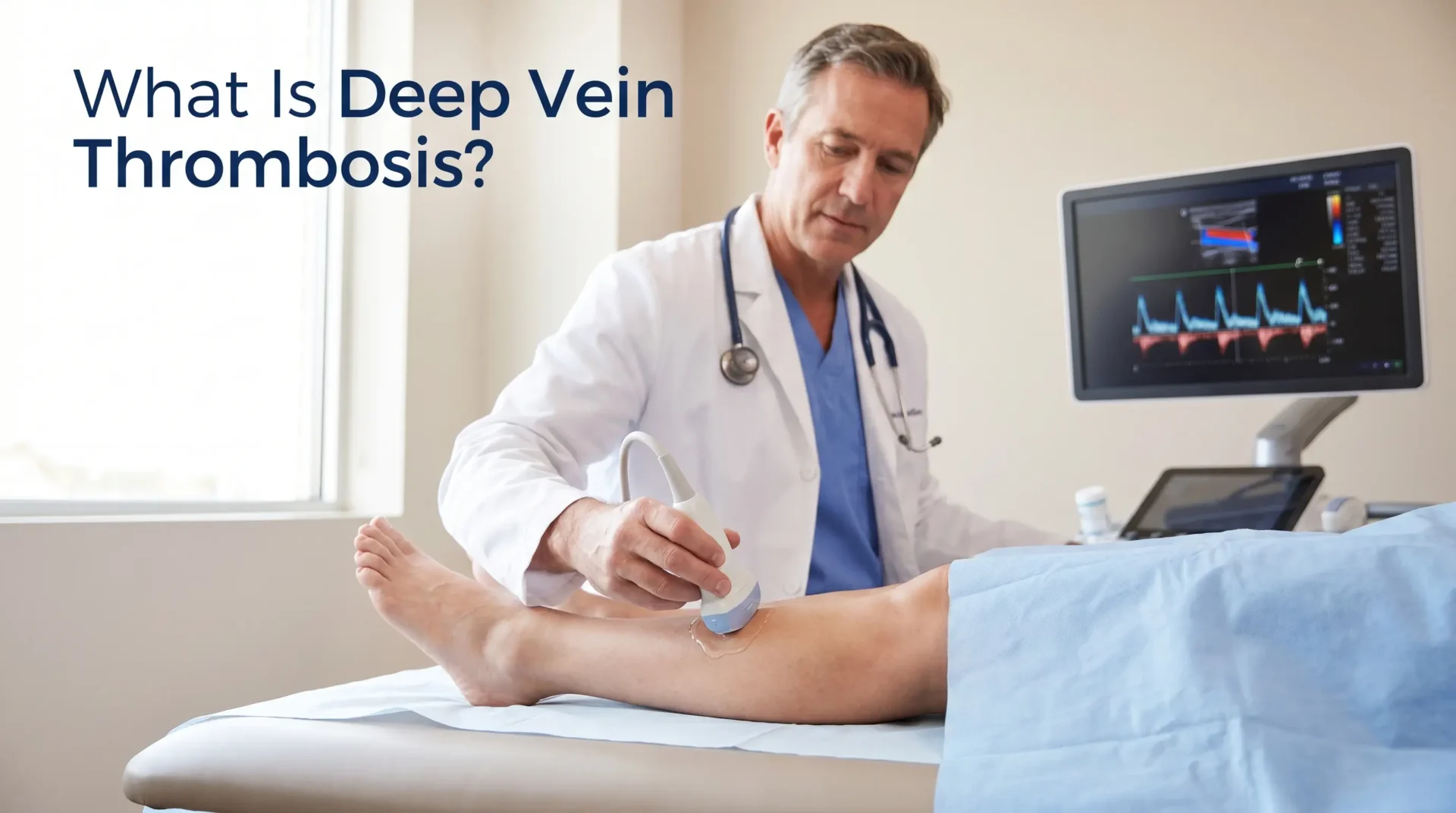
- Doppler ultrasonography: This is the method I turn to most often in DVT diagnosis. It is painless, radiation-free and non-invasive, showing both the flow of blood in the veins and the presence of a clot. Medical sources also state that Doppler ultrasound is the first-line imaging method for evaluating DVT of the leg.4
- D-dimer blood test: A value that reflects the formation and breakdown of clots in the body. It is particularly helpful in ruling out DVT in low-probability situations.
- Advanced imaging methods: In selected cases, additional imaging may be required when the pelvic veins need to be evaluated.
During the diagnostic process, clinical assessment and tests are interpreted together. A single test result is rarely decisive on its own; what matters is the joint evaluation of all findings. For that reason, instead of trying to diagnose yourself from the internet, the right approach is to have your complaints assessed by a vascular surgeon.
DVT Treatment: An Overview
The main goals of deep vein thrombosis treatment are clear: to prevent the existing clot from growing, to stop new clots from forming, to reduce the risk of a clot breaking off and reaching the lungs, and to prevent long-term complications.
The treatment plan is set individually for each patient. The location and size of the clot, the patient’s general health, accompanying illnesses and bleeding risk are among the many factors that shape this decision. Broadly, the approaches used include:
- Blood-thinning (anticoagulant) therapy: This forms the basis of DVT treatment. These medications prevent the existing clot from growing and stop new ones from forming. The body’s own mechanisms work to dissolve the clot over time. The duration and type of treatment are determined according to the patient.
- Compression (varicose) stockings: They can help reduce swelling in the leg and limit long-term complications. It is important to use them at the correct pressure and on the recommendation of a physician.
- Interventional methods: In selected, more severe cases, interventional treatments targeting the clot, or in some situations specific applications aimed at preventing the clot from reaching the lungs, may be considered.
I would like to underline an important point here: there is no single, one-size-fits-all prescription in the treatment of deep vein thrombosis. The choice of medication, dose and treatment duration must always be planned individually by a physician. Stopping anticoagulants on your own or using them irregularly can lead to serious problems. For a broader perspective on treatment processes related to venous health, you may also read my article on varicose vein treatment.
For international patients considering vascular treatment in Turkey, the same careful approach applies. A clear diagnosis, an individualised plan and structured follow-up are the foundation of safe care, whether the patient lives in Istanbul or travels from abroad. Decisions about deep vein thrombosis should never be made remotely; a face-to-face evaluation with a vascular surgeon remains essential.
Is It Possible to Prevent DVT?
The answer to this question is yes. Deep vein thrombosis is a condition that can be largely prevented, especially in people who carry risk factors. Prevention covers both simple measures in everyday life and medical approaches applied during high-risk periods.
Some basic points to keep in mind in daily life are:
- Avoiding long periods of immobility and, where possible, standing up and taking a few steps every one or two hours.
- Performing foot and calf exercises in your seat during long journeys and drinking enough fluids.
- Making regular physical activity a part of life; walking is particularly valuable for leg circulation.
- Maintaining a healthy weight and giving up smoking.
- In situations involving surgery or long bed rest, fully applying the protective measures advised by your physician (compression stockings and, if needed, preventive treatment).
I have addressed prevention strategies step by step according to risk factors, life stages and situations in a separate article. For the full set of practical suggestions, I recommend reading the guide titled how to prevent deep vein thrombosis.
Frequently Asked Questions
Is deep vein thrombosis fatal?
Deep vein thrombosis on its own is not a fatal condition. The real danger lies in the possibility that the clot will break off, reach the lungs and lead to pulmonary embolism. For this reason, DVT must be recognised early and treated. With timely intervention, DVT is a disease that can be brought under control. What matters is taking the symptoms seriously and not delaying.
How quickly do DVT symptoms appear?
This varies from one person to another. In some patients, symptoms become clear within hours, while in others they develop slowly over days. Some patients may have no significant complaints at all. That is why people who carry risk factors, especially after surgery or long periods of immobility, should pay attention to changes in their legs.
If I have leg pain and swelling, should I assume it is DVT?
No, not every case of leg pain or swelling means DVT. Muscle strain, varicose veins, lymphoedema and many other conditions can produce similar complaints. However, if there is sudden swelling and pain in one leg that gradually worsens, it should be evaluated by a physician. If symptoms such as shortness of breath are added, the situation becomes an emergency.
How long does DVT treatment take?
There is no standard duration; treatment is set according to the patient. The cause and location of the clot, the patient’s general condition and the risk of recurrence all influence the timeline. In some patients, treatment lasts a few months, while patients with recurrent disease or persistent risk factors may need longer therapy. This decision is always made by the physician guiding the treatment.
Can DVT come back after it has been treated?
Yes, deep vein thrombosis can recur after it has been treated. The risk of recurrence depends on the cause of the first clot and the presence of ongoing risk factors. For this reason, it is important that patients who have had DVT continue with medical follow-up, adhere to preventive recommendations and manage their risk factors.
Which doctor should I see when DVT is suspected?
Conditions involving the deep veins of the leg fall within the scope of a cardiovascular surgeon. The specialist training and clinical approaches in this field are guided by professional bodies such as the Turkish Society of Cardiovascular Surgery, which set certain standards.5 If your symptoms are emergency in nature, you should go to the nearest emergency department without delay.
What can I do to reduce DVT risk during a flight?
Long flights can slow blood flow in the leg veins because of immobility. For journeys of more than a few hours, I recommend doing ankle movements in your seat, taking short walks in the aisle whenever possible and drinking enough water. Avoiding tight clothing that compresses the legs and limiting alcohol also help. People in risk groups would do well to consult their physician about compression stockings or additional measures before a long trip.
Can a person who has had DVT still exercise?
Once the acute phase has passed and treatment is on track, most patients can gradually return to physical activity on the advice of their doctor. Regular walking and other light to moderate exercises actually support leg circulation and contribute to overall vascular health. Which activities can be done, when and at what intensity, however, depends on the stage of the clot and the treatment used. For a personalised programme, it is essential to consult the physician guiding the treatment.
Final Word
Deep vein thrombosis is an illness that must be taken seriously, yet one that can be overcome with the right approach. Over the years I have seen that the biggest difference comes from the patient recognising the symptoms and seeking care in time. Paying attention to sudden swelling, one-sided pain or a feeling of tightness in the leg, and consulting a physician when needed, can protect you from potentially serious outcomes.
Remember: the aim is not to live in constant worry, but to read the signals your body sends you correctly. If you belong to a risk group, follow the preventive measures, and if you notice a suspicious symptom, do not wait. Making timely decisions about your health is always the strongest form of treatment. Whenever you have concerns about the health of your legs, do not hesitate to consult a vascular surgeon.
Op. Dr. Onur Üstünel
Cardiovascular Surgery Specialist
References
- National Institute for Health and Care Excellence (NICE). Venous thromboembolic diseases: diagnosis, management and thrombophilia testing. https://www.nice.org.uk/guidance/ng158
- American Heart Association. What is Venous Thromboembolism (VTE)? https://www.heart.org/en/health-topics/venous-thromboembolism
- Centers for Disease Control and Prevention (CDC). About Venous Thromboembolism (Blood Clots). https://www.cdc.gov/blood-clots/about/index.html
- National Center for Biotechnology Information (NIH/PMC). Deep Venous Thrombosis. https://www.ncbi.nlm.nih.gov/books/NBK507708/
- Turkish Society of Cardiovascular Surgery. https://www.tkdcd.org/