
Which Doctor Treats Leg Vascular Blockage? A Complete Guide
As a vascular surgeon in Izmir, I explain which specialist treats a leg vascular blockage, when to go to the emergency room versus outpatient, and how the diagnostic pathway actually runs.

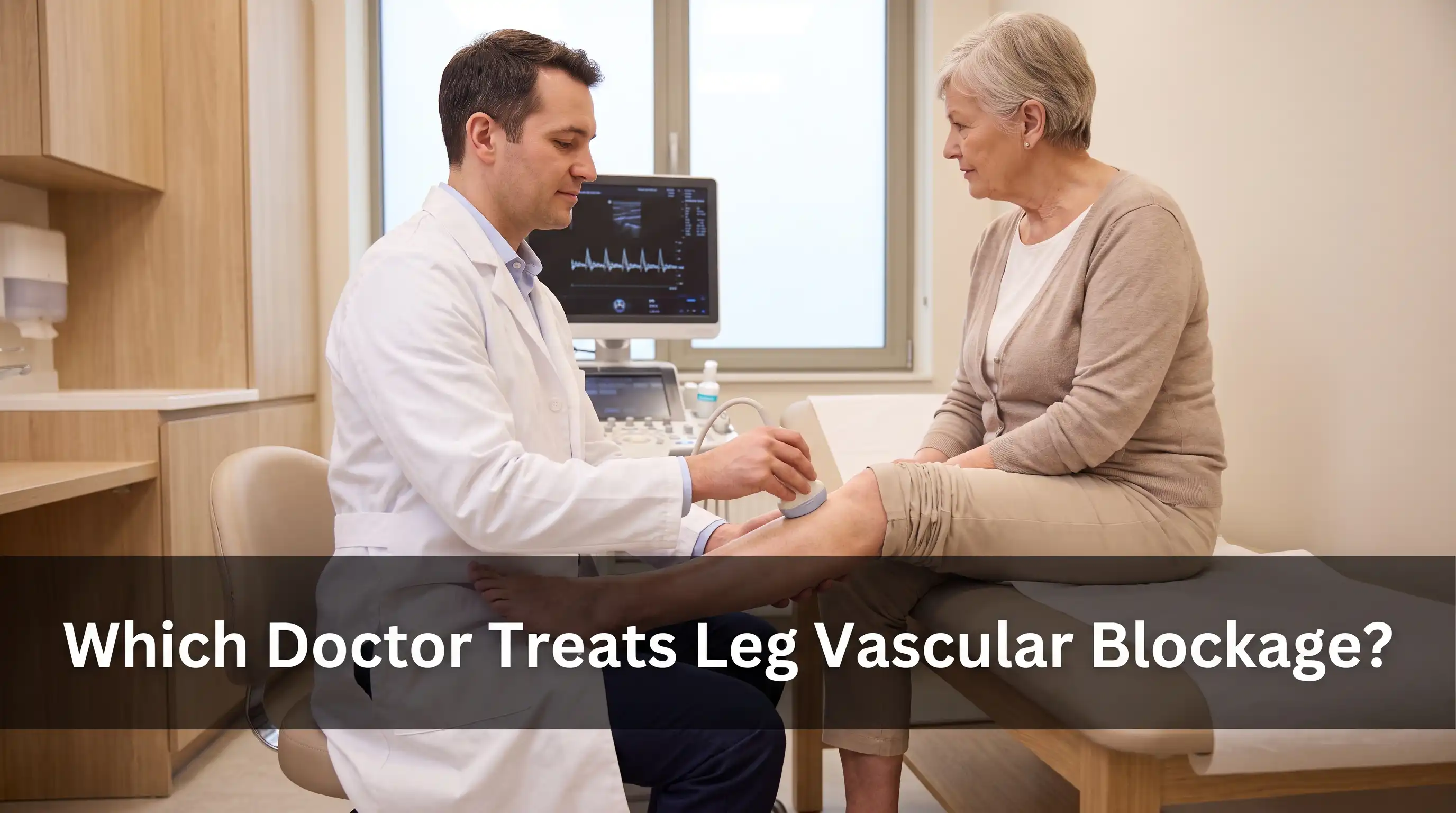
When a patient walks into my clinic pointing at a swollen calf or a leg that cramps after two hundred metres of walking, the first question in the room is almost never “what is wrong with my vein”. It is “which doctor am I supposed to see for this”. That single question, if answered wrong, can cost weeks of pointless referrals or, in a small number of cases, a limb.
As a vascular surgeon in Izmir who treats both local and international patients travelling for vascular treatment in Turkey, I want to give you a decision map that is honest about where the borders between specialities sit. Family doctors, vascular surgeons, cardiologists, interventional radiologists and even dermatologists all share slices of leg vascular care. The right first door depends less on the diagnosis (which you may not have) and more on how fast the symptom appeared, whether it is one leg or both, and whether other alarm signs are present.
The Short Answer
A leg vascular blockage is almost always managed by a vascular surgeon. In some countries, and in Turkey specifically, the formal title is Cardiovascular Surgery (CVS), a single specialty that covers heart and peripheral vascular disease. When a blockage is confirmed or strongly suspected, a vascular surgeon is the physician who plans diagnostics such as duplex ultrasound, angiography, ankle-brachial index, and delivers definitive treatment: anticoagulation, angioplasty, stenting, thrombectomy or bypass surgery.
The longer, more useful answer is that the first doctor you should call is not always the vascular surgeon. If the symptom started in hours, you belong in an emergency department the same day. If it developed over months and you have a family doctor you trust, that visit can save you from unnecessary tests. Below I will walk through how I sort this in my own clinic.
Which Specialist Owns Which Symptom
Vascular Surgeon (Cardiovascular Surgeon)
This is the physician trained to diagnose and treat diseases of the arteries and veins outside the heart. In my daily practice, patients belong in a vascular surgery office when they present with:
- Sudden one-sided calf swelling with warmth or redness (suspected deep vein thrombosis)
- Calf or thigh pain that appears while walking and disappears within a few minutes of rest (intermittent claudication)
- Bulging, twisted blue-purple veins (varicose veins)
- A hard, red, cord-like vein palpable under the skin (superficial thrombophlebitis)
- Non-healing wound on the inner ankle or between the toes
- Cold, pale foot with reduced or absent pulses
- Cosmetic concerns about spider veins
The Society for Vascular Surgery describes peripheral artery disease as “a narrowing or blockage of the arteries that carry blood from the heart to the legs” and identifies vascular surgeons as the primary specialists who evaluate and treat it (vascular.org, 2024). This is the same specialty structure I trained in.
Cardiologist
Cardiologists are the correct address when the leg symptom sits inside a wider cardiovascular story. If you have peripheral artery disease, roughly one in three patients also has coronary artery disease, and screening and medical therapy for cholesterol, blood pressure and antiplatelet management fall naturally under cardiology (Aboyans et al., PMC, 2020). Cardiologists do not typically perform leg artery bypass or vein ablation, but they co-manage risk factors and, in some centres, perform peripheral angioplasty.
Interventional Radiologist
Interventional radiologists overlap with vascular surgeons in image-guided procedures like angiography, angioplasty, stenting, thrombolysis and venous ablation. In hospitals with a strong IR service, you may see them managing chronic venous insufficiency or clot dissolution. In my referral pattern, the pathway usually is: vascular surgeon plans and consents the patient, IR or vascular surgeon executes the procedure, vascular surgeon runs the follow-up.
Family Physician (Primary Care)
The family doctor is a genuinely useful first step for non-urgent leg symptoms. In the UK the NHS explicitly recommends that patients with painful, cramping leg symptoms while walking should “see a GP” for initial evaluation and possible referral for further tests (NHS, 2023). A family doctor can order the duplex ultrasound or ABI, start basic blood work, review medications that increase clot risk, and route you to the right specialist with results already in hand. This saves weeks in the average patient.
Emergency Physician
The emergency room is not a specialty in the leg vascular sense, but it is the correct entry point for anything that looks acute: sudden swelling, resting pain, cold and pale foot, chest pain or shortness of breath alongside a leg symptom. Emergency physicians will stabilise, image and call the on-call vascular surgery team.
The Two Big Buckets: Artery Versus Vein
Almost every leg vascular complaint I see falls into one of two buckets, and the specialty answer does not change but the urgency does.
Arterial Blockage (Peripheral Artery Disease)
This is a narrowing of the arteries feeding the leg, usually from atherosclerosis. Symptoms include cramping calf pain when walking that stops within a few minutes of resting, cold or pale feet, weak pulses, slow-healing wounds, and in advanced stages, pain at rest or in bed. The National Heart, Lung, and Blood Institute estimates that PAD affects roughly 6.5 million Americans over the age of forty (NHLBI, 2023). Diagnostic workflow: history, pulse exam, ankle-brachial index, duplex ultrasound, CT or MR angiography if intervention is planned. Treatment ranges from smoking cessation and supervised exercise to angioplasty, stenting and bypass.
Venous Blockage (Deep Vein Thrombosis)
This is a clot in a deep vein, most often after long immobility, surgery, cancer, hormone therapy or pregnancy. Symptoms include sudden one-sided calf swelling, warmth, redness and calf tenderness. Untreated, roughly one in ten patients develops pulmonary embolism, which is life-threatening. The Mayo Clinic emphasises that DVT “needs prompt medical attention” and warns that a clot can travel to the lungs (Mayo Clinic, 2024). Workflow: history and Wells score, D-dimer, duplex ultrasound, anticoagulation started as soon as the clot is confirmed.
Decision Table: When to Call Whom
This is the practical summary I hand to patients who ask me on the phone. It does not diagnose you, it routes you.
| Symptom | Onset Timeline | Suggested First Contact | Urgency |
|---|---|---|---|
| Sudden one-sided calf swelling, warmth, redness | Hours | Emergency room or vascular surgeon on call | Same day |
| Calf pain on walking, relief with rest | Weeks to months | Vascular surgeon (or family doctor for referral) | Within 1 to 2 weeks |
| Twisted, bulging blue-purple leg veins | Months to years | Vascular surgeon | Planned outpatient |
| Evening leg swelling, heaviness | Months | Vascular surgeon | Planned outpatient |
| Red, hard, cord-like vein | Days | Vascular surgeon | Within 3 to 7 days |
| Toes turning dark, cold foot, non-healing wound | Weeks | Vascular surgeon | Within the same week |
| Leg pain that persists at rest | Days to weeks | Emergency room or vascular surgeon | Same day |
| Cosmetic spider veins only | Months to years | Vascular surgeon | Planned outpatient |
| Leg swelling plus shortness of breath or chest pain | Any | Emergency room immediately | Same day |
Step-by-Step Doctor Selection Algorithm
Work through these questions from top to bottom. Stop at the first “yes” and follow that route.
- Do you have leg swelling plus shortness of breath, chest pain or fainting? Go to the emergency room now. This can be pulmonary embolism.
- Did the symptoms start in the last few hours in one leg with sudden swelling, warmth or redness? Emergency room or same-day vascular surgery consultation.
- Do you have leg pain that does not stop even when you sit still or lie down? Same-day evaluation. This can be critical limb ischemia and it does not wait.
- Do you have cramping calf pain that appears while walking and disappears with rest? Book a vascular surgery outpatient appointment within one to two weeks. This is classic intermittent claudication.
- Do you have visible bulging veins, evening swelling or heaviness that has been building for months? Planned vascular surgery outpatient appointment. No urgency.
- Are your symptoms cosmetic only, thin red-blue spider veins? Planned vascular surgery outpatient appointment for sclerotherapy consultation.
- Are you unsure and none of the above applies? Start with your family doctor. They will examine you, request ABI or duplex ultrasound, and refer you to the correct specialist with results attached.
How the Diagnosis Actually Runs
The first thing I do at the bedside is take a detailed history. When did the symptom start, is it one leg or both, does walking make it worse or better, is there a wound, are you on hormonal contraception, have you flown recently, do you smoke, is there a family history of clotting. This history alone points me toward artery versus vein about eighty percent of the time.
Then I examine the pulses. Femoral, popliteal, dorsalis pedis and posterior tibial. Missing pulses or a cool foot pushes me toward arterial disease. Palpable warmth, calf tenderness and asymmetric swelling pushes me toward DVT.
The workhorse imaging test is duplex ultrasound (colour Doppler). It is non-invasive, needs no contrast, no radiation, and it answers the question of vein thrombosis or arterial narrowing in the same session. In arterial cases I add ankle-brachial index (ABI): a bedside pressure ratio between the ankle and the arm. A ratio below 0.9 is diagnostic for PAD. If intervention is planned I add CT or MR angiography.
Emergency Warning Signs You Should Never Ignore
Book an emergency room visit today, not next week, if you have any of these:
- Sudden shortness of breath, chest pain or a feeling that you cannot get enough air after new leg swelling
- One leg that has become suddenly cold, pale and painful and the pulse cannot be felt
- A dark or black toe or a wound that suddenly extends
- Fever with a red hot leg
- Leg pain that keeps you awake even when the leg is elevated
What Treatment Actually Looks Like
Once the specialist has confirmed the diagnosis, options depend on the vessel involved.
For venous problems, treatment ranges from anticoagulation and compression stockings for DVT, to catheter-directed thrombolysis for extensive clots, to endovenous laser or radiofrequency ablation for varicose veins, to foam sclerotherapy for smaller veins. Modern venous disease is almost entirely outpatient.
For arterial problems, first-line therapy is medical: smoking cessation, supervised walking exercise, statins, antiplatelet therapy, blood pressure and diabetes control. When lifestyle-limiting claudication or critical limb ischemia is present, we move to angioplasty, stenting or bypass surgery.
Patients travelling from abroad often ask whether they can complete the full pathway in one trip. In most cases, yes: duplex, planning and intervention typically fit inside seven to ten days for standard varicose vein disease and inside two weeks for elective PAD intervention, assuming imaging and lab work are shared in advance.
Frequently Asked Questions
Is a leg vascular blockage dangerous?
Yes. An untreated deep vein thrombosis can send a clot to the lungs (pulmonary embolism), which is a leading cause of preventable death in hospitalised patients. Untreated peripheral artery disease can lead to non-healing wounds, gangrene and amputation. Both conditions have highly effective treatments when diagnosis is timely.
Can a family doctor treat a leg vascular blockage?
A family doctor can start the diagnostic process, request imaging, prescribe initial anticoagulation in some settings and manage risk factors long term. Definitive treatment of an established blockage, especially anything requiring a procedure, belongs to a vascular surgeon.
What is the difference between a cardiologist and a vascular surgeon for leg problems?
Cardiologists focus on the heart and systemic cardiovascular risk. Vascular surgeons focus on the arteries and veins outside the heart, including diagnosis, imaging interpretation, medical management and open or endovascular procedures. For an actual leg blockage, the vascular surgeon is the operator; the cardiologist is often the co-manager for cholesterol, blood pressure and antiplatelet therapy.
Do I need a referral to see a vascular surgeon in Turkey?
No. In Turkish private practice you can book a vascular surgery consultation directly, without a family doctor referral, and this is the common route for international patients. Public hospitals may require a family physician referral first.
Can varicose veins really turn into a blockage?
Varicose veins themselves are a form of chronic venous dysfunction, not an arterial blockage. However, blood pooling in dilated varicose veins increases the risk of superficial thrombophlebitis and, less commonly, deep vein thrombosis. This is why untreated symptomatic varicose veins are followed up rather than ignored.
How long does treatment take?
Most modern endovenous procedures for varicose veins are completed in forty-five to ninety minutes under local or sedation anaesthesia, with same-day discharge. Anticoagulation for a first DVT typically runs for three to six months. Peripheral angioplasty is often a day-case procedure; open bypass surgery requires a short hospital stay.
Which doctor do I see for spider veins that are only cosmetic?
Still a vascular surgeon. Even purely cosmetic thread veins can be a surface sign of an underlying venous reflux that has not yet caused symptoms. A brief duplex ultrasound at the first visit rules this out before sclerotherapy or laser treatment is planned.
A Final Word
The reason I wrote this in the order I did is that most delays I see are not medical, they are logistical. A patient with clear intermittent claudication spends three months bouncing between orthopaedics and neurology before somebody thinks to check a pulse. A patient with sudden calf swelling waits a week for a family doctor appointment when they should have been in the emergency room the same afternoon.
Match the symptom to the timeline. Match the timeline to the door. If in doubt, a vascular surgery consultation for a leg vascular blockage is almost never the wrong first move, and for international patients considering a vascular workup and treatment in the same trip, that door is the shortest path.
Op. Dr. Onur Üstünel, Vascular Surgery Specialist, Izmir