
When Do Varicose Veins Become Dangerous? Warning Signs to Watch
Varicose veins are dismissed as cosmetic far too often. A vascular surgeon explains the warning signs, complications, and when to seek urgent care.

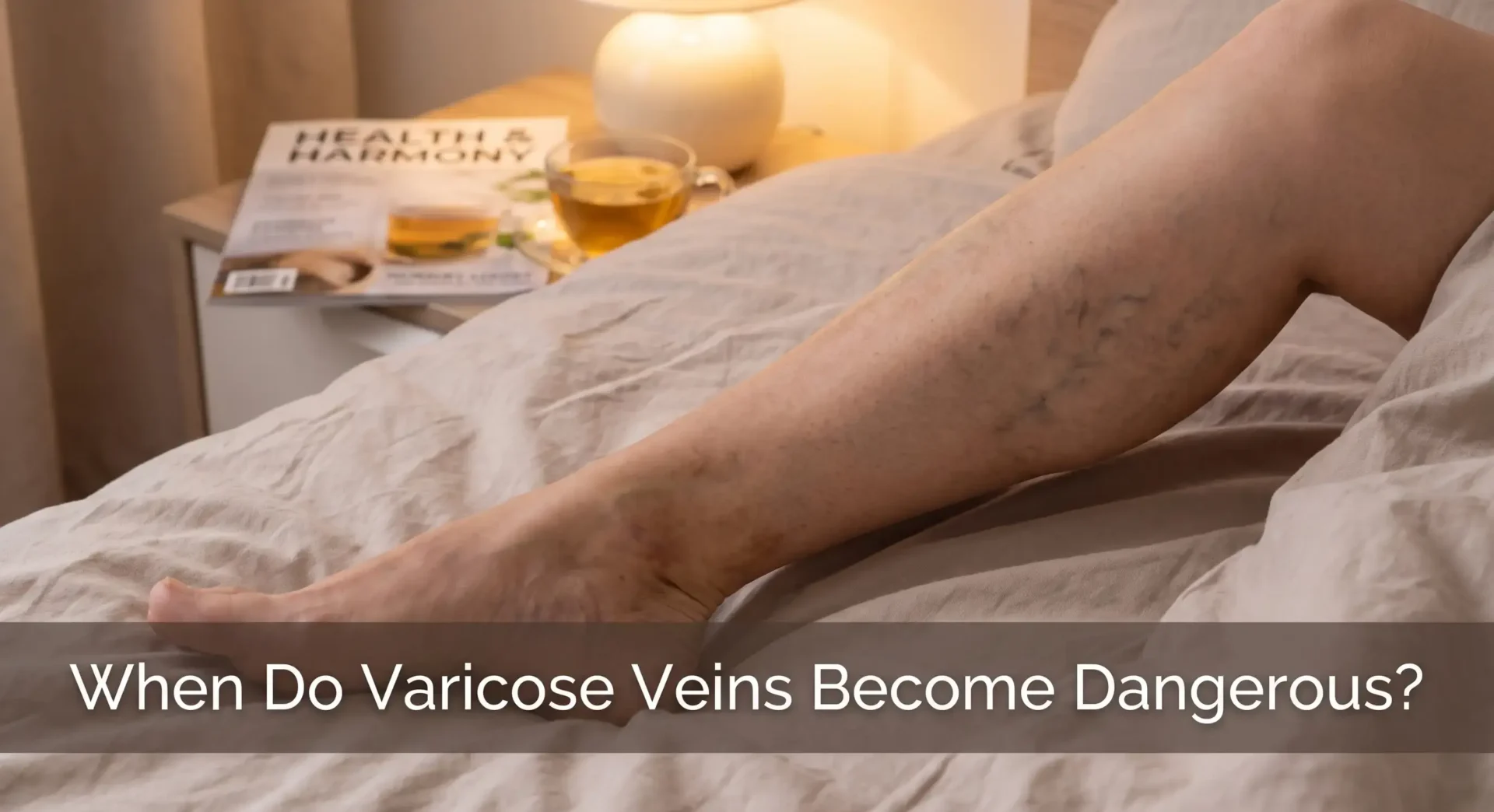
Varicose veins get dismissed as a cosmetic nuisance far too often. In my daily practice as a vascular surgeon in Izmir, the question I hear most is not whether varicose veins look bad, but whether they can actually harm the person living with them. The short answer is yes, they can, and knowing which warning signs matter is the difference between a routine outpatient procedure and an emergency admission.
Below I want to walk you through what happens inside a diseased vein, which symptoms should genuinely worry you, and when a same-week appointment with a vascular specialist is no longer optional. My goal in this article is to give you the same framework I use in clinic when I sit down with a new patient and decide whether we can wait a few months, whether we should intervene in the next two weeks, or whether the person in front of me needs to be in an imaging room before the end of the day.
What Actually Goes Wrong Inside a Varicose Vein
Your legs contain two vein systems: deep veins buried inside the muscle, and superficial veins closer to the skin. Both carry deoxygenated blood back to the heart against gravity. Tiny one-way valves inside these veins open when blood is pushed upward and close to prevent backflow. As long as those valves shut cleanly, the leg empties itself with every step you take.
When the valves in a superficial vein fail, blood pools in the lower leg during long periods of standing, weight gain, or pregnancy. The vein wall stretches, the diameter increases, and the vein begins to bulge under the skin. This condition is called chronic venous insufficiency, and varicose veins are its visible sign. The problem is progressive by nature. A vein that has stretched once cannot repair its valves on its own. Every additional year of untreated reflux means more pressure delivered downward into the ankle tissue, more inflammation in the surrounding skin, and a higher probability that one day the leg will present with a genuine complication rather than a cosmetic complaint.
People often assume the visible bulge is the disease. It is not. The visible vein is the symptom. The disease is the pressure and volume problem hidden inside a network of feeder veins that a duplex ultrasound reveals in about ten minutes. That is why any treatment decision made without an ultrasound is essentially a guess.
According to the National Institutes of Health, chronic venous disease affects up to 40 percent of adults in developed countries, and a meaningful portion progress to complications when the condition is left unmanaged.
Warning Signs That Should Prompt a Vascular Consultation
Not every bluish vein on the calf is an emergency. But a specific set of symptoms tells me a patient has crossed from cosmetic territory into medical territory. I look for the following:
- Persistent aching or heaviness in the leg that worsens by the end of the day
- Night cramps or restless legs, especially after long periods of standing
- Ankle swelling that leaves a sock imprint on the skin
- Brown or reddish discoloration around the ankle or shin
- Hardening or leathery texture of the skin above the ankle
- Itching or eczema-like patches directly over a visible vein
- A vein that has become tender, warm, or firm to the touch
Any one of these deserves a duplex ultrasound and a discussion about treatment. Combined symptoms mean the disease has been progressing for years and the underlying reflux is significant. I also pay close attention to what patients describe about their daily rhythm. A leg that feels normal in the morning and unbearable by evening is a classic pattern of venous origin. A leg that hurts more when walking than when standing points somewhere else, often the arteries or the lumbar spine. Careful history taking prevents unnecessary vein procedures and, equally important, prevents someone from being told their pain is cosmetic when it is actually vascular.
Complications That Turn Varicose Veins Into a Medical Problem
Superficial Thrombophlebitis
When blood pools in a bulging superficial vein, a clot can form inside it. The vein becomes rope-like, red, warm, and painful along its length. This is called superficial thrombophlebitis. It is not immediately life-threatening the way a deep clot is, but the Society for Vascular Surgery notes that up to 25 percent of these patients also have deep vein involvement on ultrasound. That means every case needs imaging, not just anti-inflammatory advice from a pharmacy. Even when the clot itself stays superficial, the inflammation can leave the vein permanently scarred and the surrounding skin darker for years afterwards.
Deep Vein Thrombosis
Deep vein thrombosis, or DVT, is a clot inside one of the deeper veins that carry the bulk of the leg’s blood volume. Patients with long-standing untreated varicose veins have a higher baseline risk. The NHS lists the classic signs as swelling of one leg, throbbing pain in the calf or thigh, warm skin around the painful area, and darkening of the overlying skin.
DVT is a medical emergency because a fragment of the clot can break loose and travel to the lungs. If you have new one-sided swelling with calf pain, do not wait for a routine appointment. Go to the nearest hospital. Time genuinely matters here because the sooner anticoagulation is started, the less likely the clot is to propagate or embolize.
Pulmonary Embolism
A pulmonary embolism happens when a broken-off clot from the leg lodges in a pulmonary artery. Sudden shortness of breath, sharp chest pain that worsens with a deep breath, a rapid heartbeat, coughing up blood, or fainting are the warning signs. This condition kills tens of thousands of people every year in Europe and North America. It is preventable when leg vein disease is identified and managed early, which is precisely why I take chronic ankle swelling in a patient with visible veins as seriously as I do.
Venous Ulcers
Venous ulcers are the endpoint of untreated chronic venous insufficiency. They appear most often on the inner ankle, are shallow but weepy, and refuse to heal for weeks or months. Mayo Clinic emphasizes that once an ulcer forms, treating only the wound without addressing the underlying venous reflux almost guarantees recurrence.
By the time a patient reaches me with an open ulcer, the surrounding skin is usually already discolored, hardened, and itchy. This stage is called lipodermatosclerosis. The good news is that closing the failing vein with endovenous ablation dramatically speeds ulcer healing and prevents new ones. The bad news is that the pigmentation and the leathery skin texture rarely fade completely, which is another reason to treat before the skin reaches that point.
Spontaneous Bleeding
A neglected varicose vein sitting just under thin skin can rupture from a minor bump, a shave nick, or even friction from a shoe. Because the vein is under abnormal pressure, the bleeding can be surprisingly heavy. Elderly patients on blood thinners are especially vulnerable. I have seen patients arrive at the emergency room having lost a significant volume of blood from what began as a small break in the skin over a bulging vein.
Elevate the leg above heart level and apply firm pressure until you can get to an emergency department. Once the acute bleeding is controlled, the underlying vein must be treated so it does not happen again. In my experience this specific complication is one of the most preventable, yet many patients only discover their vein was fragile after the first rupture. If you can already see a bluish vein sitting flush with the surface of thin, older skin, treat that vein electively rather than waiting for an accident to force the decision.
How I Classify Risk in My Clinic
When a new patient walks in, I sort their situation into one of three broad categories. This helps them understand the urgency without medical jargon.
Low Risk: Cosmetic and Mild Symptomatic
Small spider veins, faint reticular veins, and early varicose veins without swelling or skin changes. Compression stockings, weight management, and lifestyle adjustments are usually the first step. Treatment is elective and scheduled at the patient’s convenience. Follow-up is generally annual unless something changes.
Moderate Risk: Established Chronic Venous Insufficiency
Bulging veins with regular aching, ankle swelling by evening, and possibly early discoloration. Duplex ultrasound is essential. Endovenous laser or radiofrequency ablation is offered within weeks to prevent progression to skin damage or ulceration. Waiting more than a season at this stage is where most preventable complications happen.
High Risk: Skin Changes, Ulcers, or Clot Symptoms
Brown pigmentation, healed or active ulcers, palpable inflamed veins, sudden calf swelling, or breathing changes. These patients need imaging on the same day and often intervention within the week. Ignoring this stage is what turns a manageable condition into a life-threatening one.
When Traveling for Treatment Makes Sense
Many international patients reach me after years of watching their veins worsen at home because waiting lists were long or private care was unaffordable. Turkey has become a serious option for vascular care because the same endovenous technologies used in Germany, the UK, and the US are available here, often with shorter waiting times and full continuity of specialist follow-up.
If you are considering professional varicose vein treatment in Turkey, look for a board-certified vascular surgeon who performs duplex ultrasound personally, offers endovenous ablation with laser or radiofrequency, and provides written follow-up plans. Ask specifically about their approach to skin complications, not just cosmetic outcomes. Ask how ulcers, pigmentation, and recurrent veins are managed, because that answer tells you whether you are speaking to a vascular specialist or a cosmetic operator.
Modern Treatment Options I Use
Traditional vein stripping under general anesthesia is now largely obsolete. In my practice, I use:
- Endovenous laser ablation (EVLA): A thin fiber inside the vein delivers heat, closing the diseased vein. Local anesthesia, walk-in walk-out procedure.
- Radiofrequency ablation (RFA): Similar concept using radiofrequency energy. Comfortable, quick, minimal bruising.
- Biological glue (cyanoacrylate closure): No thermal energy, no tumescent anesthesia, immediate return to activity.
- Foam sclerotherapy: For side branches and residual veins after main-trunk treatment.
- Ambulatory phlebectomy: Tiny incisions to remove bulging surface veins in the same session.
Most patients walk out of the clinic within an hour of the procedure and return to office work the next day. Compression is worn for one to two weeks, and a follow-up ultrasound confirms vein closure. The body reabsorbs the treated vein over the following months, and other healthy veins take over its role. Nothing is left inside that needs to be removed later.
What I want patients to understand is that modern treatment is not a scaled-down version of the old operation. It is a fundamentally different approach that treats the underlying reflux at its source instead of pulling out the visible bulge and leaving the pressure problem untouched. That is why recurrence rates after modern endovenous treatment are far lower than after classical stripping when both are performed by experienced hands.
What You Can Do Starting Today
Even before treatment, small adjustments reduce venous pressure:
- Elevate your legs above heart level for 15 minutes twice a day
- Wear graduated compression stockings during long days on your feet
- Walk at least 30 minutes daily; the calf muscle is your second heart
- Avoid crossed-leg sitting and prolonged immobility
- Maintain a body weight within a healthy range
- Hydrate well, especially during flights and long car journeys
These measures slow progression but do not reverse an already-failing vein. Once the valve is destroyed, only closing the vein permanently ends the reflux. Think of lifestyle steps as brake pads, not as a repair. They buy you time and comfort until a definitive procedure is scheduled.
Frequently Asked Questions
Can varicose veins really kill you?
Directly, no. Indirectly through complications, yes. Pulmonary embolism arising from a deep vein clot associated with chronic venous disease can be fatal. This is why unexplained one-sided leg swelling with breathlessness is a medical emergency.
How quickly do varicose veins get worse?
Progression is unpredictable. Some patients remain stable for a decade while others develop skin changes within two to three years. Pregnancy, prolonged standing occupations, and family history accelerate the timeline.
Is leg pain always caused by varicose veins?
No. Muscle strain, arterial disease, nerve compression, and joint problems can all cause leg pain. That is exactly why duplex ultrasound matters. It confirms whether the pain is venous in origin before any treatment is planned.
Are night cramps a sign of dangerous varicose veins?
Frequent night cramps together with visible varicose veins point to advanced venous reflux. They are not immediately dangerous but signal that the disease deserves evaluation rather than dismissal.
Can I fly with untreated varicose veins?
Short flights are generally fine with compression stockings and regular movement. Long-haul flights carry a slightly elevated DVT risk, particularly if you have other risk factors. Speak to a vascular specialist before a long trip.
Do all varicose veins need treatment?
No. Small asymptomatic veins can be observed. Treatment is recommended when there is pain, swelling, skin changes, bleeding, or previous clot formation, or when the patient wishes to prevent progression.
How long does recovery take after modern varicose vein treatment?
Most patients walk immediately after the procedure and return to desk work within 24 to 48 hours. Heavy exercise resumes after one to two weeks, and compression is typically worn for one to two weeks.
Op. Dr. Onur Üstünel
Vascular Surgery Specialist, Izmir