
Do Varicose Veins Cause Itching? Causes, Warnings, and Care
Itching along the shin or ankle is often the earliest sign of failing venous valves. Learn why varicose veins cause itching, which patterns need urgent care, what helps at home, and when to see a vascular specialist.

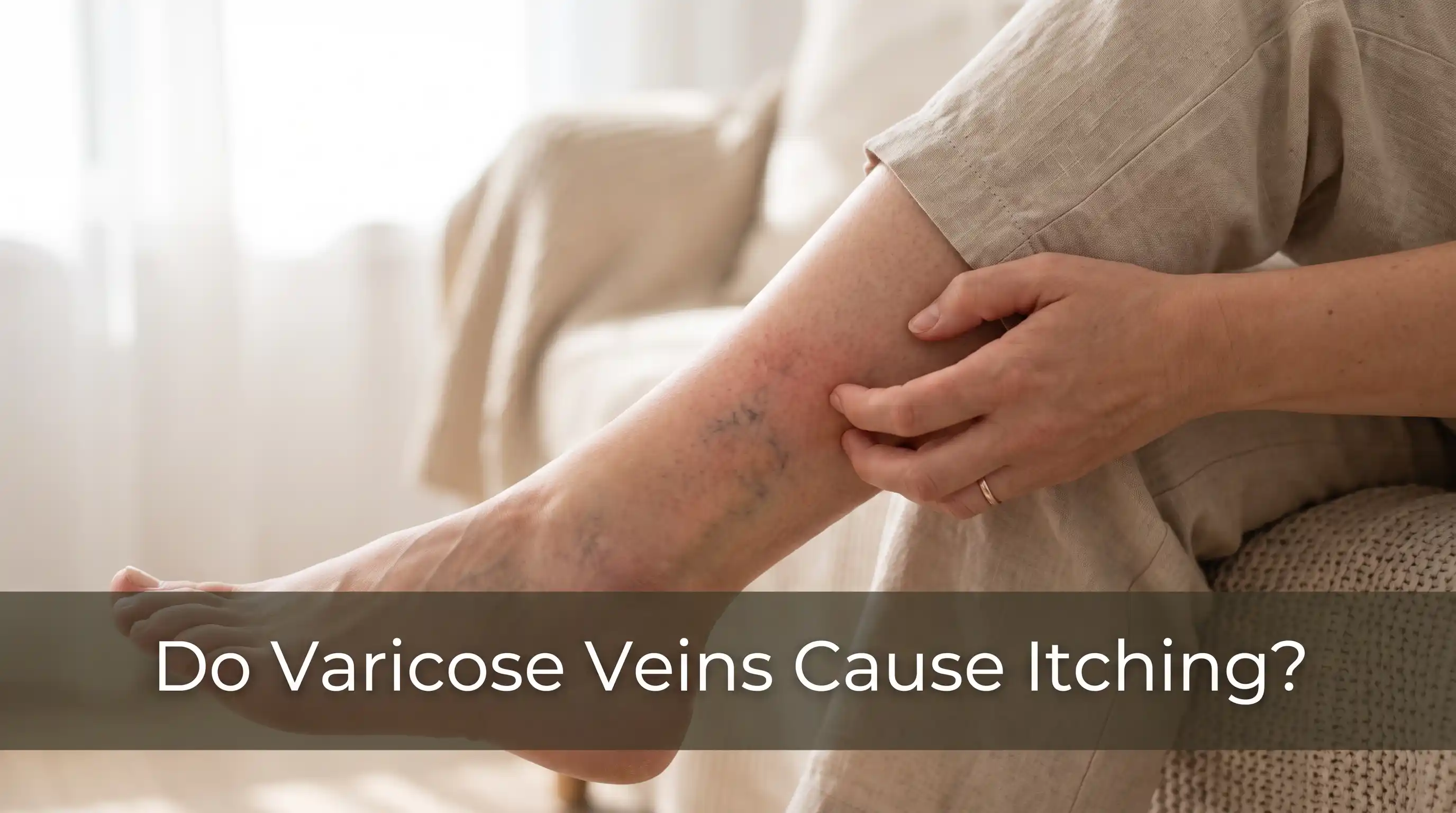
Itching along the shin, ankle, or the inner calf is one of the earliest complaints that brings people into my clinic with varicose veins. The short answer is yes, varicose veins commonly cause itching, and in some cases the itch is the first warning that the venous system needs attention. In this guide I want to walk you through why the skin starts to itch when the veins fail, which patterns are safe to watch and which ones need urgent care, and what actually helps at home versus what requires treatment.
Why Varicose Veins Trigger Itching
Healthy leg veins carry blood upward against gravity with the help of one-way valves. When those valves weaken, blood pools in the superficial veins and pressure builds inside the vessel walls. That pressure pushes fluid, plasma proteins, and red blood cell fragments into the surrounding tissue. Over time the trapped iron from broken red cells irritates the skin, inflammatory mediators are released, and the nerve endings in the dermis start firing as an itch signal.
This is why itching from varicose veins rarely feels the same as an allergy or a fungal rash. It tends to sit deep, comes in waves, and worsens after long standing hours or in warm weather. Reference summaries from the National Library of Medicine describe this cascade as the earliest sign of venous stasis dermatitis, the medical name for skin changes caused by chronic venous insufficiency.
Why the Itch Often Starts Around the Ankle
Gravity concentrates the venous pressure at the lowest point of the leg. The inner ankle sits at the confluence of the great saphenous vein and its perforator branches, which means it takes the most sustained hydrostatic load when valves fail higher up. That anatomy explains why patients often notice the itch starting at the inner ankle and the gaiter area rather than at the thigh, even when the primary reflux originates further up the leg. Once you understand this pattern, it becomes easier to distinguish venous itching from generalized skin conditions that scatter across the body without an obvious topographic logic.
The Skin Signs That Come With the Itch
When I examine a patient who reports itchy legs alongside visible varicose veins, I look for a specific pattern rather than isolated redness. The findings I check for include:
- Reddish or purple discoloration around the ankle
- Brownish pigmentation on the inner ankle from iron deposits
- Dry, flaky skin that looks thinner than surrounding areas
- Swelling that leaves a sock imprint by the end of the day
- Warmth or a firm, tender cord along a visible vein
The combination matters more than any single sign. A patient who reports itching plus ankle swelling plus brownish staining is telling me the venous system has been under pressure for months, not days.
When the Itch Becomes a Warning Sign
Not every itchy leg needs immediate treatment, but a subset of patients present with findings that shift the conversation from lifestyle advice to scheduling a procedure. The most important escalation I watch for is stasis dermatitis. In stasis dermatitis the skin becomes inflamed, thickened, and prone to weeping. According to the Mayo Clinic, untreated venous insufficiency can progress from mild skin changes to open wounds called venous ulcers, and once ulcers form, healing becomes difficult.
The signs that push me to act quickly include:
- An itch that has persisted for weeks despite moisturizers
- Skin that has darkened or hardened along the inner ankle
- A small blister, crack, or weeping patch near a varicose vein
- Sudden onset warmth, tenderness, and firmness along a vein, which raises the possibility of superficial thrombophlebitis
- Any open sore that does not close within two weeks
The last two categories are not something to manage at home. Superficial vein thrombosis can extend into the deep venous system, and a slow-healing sore in this region often means the underlying vein reflux has been ignored for too long.
What Different Itch Patterns Usually Mean
Because patients often ask me how to tell varicose vein itching apart from other causes, I use a mental map that pairs the timing and location of the itch with the likely source. A mild evening itch on the inner calf with visible veins usually points to early venous insufficiency. A constant, dry itch around a discolored ankle suggests stasis dermatitis. A sudden itch layered on top of burning, heat, and a hard vein cord points toward thrombophlebitis. A ring-shaped, peeling itch between the toes or on the sole is almost always fungal, not venous. Recognizing the pattern before treating the symptom is what protects the skin from getting worse.
How I Assess Itchy Legs in the Clinic
When a patient sits down and tells me their legs itch, my mental checklist begins before the physical exam. I ask about the timing of the itch across the day, whether it appears in both legs or one, whether it improves with rest or worsens after standing, and whether any skin changes have appeared alongside the sensation. Each answer narrows the differential. A one-sided itch that follows a visible vein is a very different clinical picture from a symmetric, dry, all-over itch that started after switching soap.
The physical exam then moves through predictable stations. I look for reticular veins and telangiectasias that hint at increased superficial pressure, palpate the ankle for pitting edema, check the color of the skin at the gaiter area (the band between mid-calf and ankle where stasis changes appear first), and assess pulses to rule out arterial disease that could mimic or complicate venous symptoms. A duplex ultrasound then confirms which veins are refluxing and how deep the problem extends. Without this map, any treatment decision is a guess.
What Actually Helps at Home
Home care will not cure the underlying valve failure, but it can settle the itch and buy time until the venous problem is addressed. I usually give patients a small set of habits and ask them to stick with them consistently for four to six weeks before we judge whether they help.
Compression Stockings
Graduated compression stockings are the single most useful non-invasive tool for calming venous itching. They apply the highest pressure at the ankle and gradually decrease up the leg, which pushes blood back toward the heart and reduces the pooling that irritates the skin. The NHS guidance on varicose vein treatment supports compression as a first line measure. I typically start patients at a 20 to 30 mmHg class, worn from morning until the legs are elevated in the evening.
Elevation and Movement
Elevating the legs above heart level for fifteen minutes, two or three times a day, reduces venous pressure enough that the skin gets a break from constant inflammation. Movement matters just as much. Calf muscles act as a secondary pump for the venous system, so a daily walk of twenty to thirty minutes often calms the itch more than any cream.
Skin Care Without Making the Itch Worse
The skin over varicose veins is already fragile. I advise patients to use gentle, fragrance-free moisturizers twice a day, take shorter warm showers instead of hot ones, and avoid scratching even when the urge is strong. Scratching breaks the skin barrier and can convert an itchy patch into an open ulcer within days. When the itch is severe, a short cold compress with a thin cloth between the ice and the skin gives temporary relief without the damage that scratching causes.
What Not to Do
Over-the-counter steroid creams give brief relief but do not solve the vein problem, and long-term use thins the already fragile skin further. Herbal rubs and essential oils can irritate compromised skin and sometimes trigger contact dermatitis on top of the venous problem. If the itch is severe enough that you are reaching for something stronger than a moisturizer, that is a signal to see a vascular specialist rather than to escalate the topical treatment.
Small Daily Adjustments That Add Up
A few habits I ask patients to adopt are easy to underestimate but consistently reduce evening itching. Drinking water throughout the day keeps the skin barrier resilient. Avoiding tight elastic bands on socks that are not medical compression prevents a tourniquet effect just above the ankle. Choosing shoes with a supportive sole so that the calf pump works efficiently during walking is a small mechanical detail that makes a measurable difference in end-of-day symptoms. When patients combine these adjustments with the core measures of compression, elevation, and movement, they often notice the itch drops from a daily complaint to an occasional one within a month.
When to Seek Medical Care
I tell patients that the venous system rarely gets better on its own once the valves have failed, so the itch is worth taking seriously as an early message from the body. A vascular consultation is appropriate when the itch is recurrent, when visible veins are enlarging, or when any of the skin changes I described earlier appear. A Doppler ultrasound is the standard first test. It maps which veins are refluxing and which ones are still competent, and it also rules out deep vein thrombosis, which the MedlinePlus overview of deep vein thrombosis lists as an important differential when leg discomfort presents suddenly.
For international patients considering treatment abroad, professional varicose vein treatment in Turkey combines Doppler mapping with modern endovenous options such as radiofrequency ablation, laser closure, and sclerotherapy. The choice depends on which veins are involved and how far the skin changes have progressed. Early intervention almost always leads to a calmer skin picture within a few weeks because the source of the venous pressure is removed.
Frequently Asked Questions
Can varicose vein itching be the only symptom?
Yes, especially in the early stages. Some patients notice an evening itch on the inner calf months before visible veins appear. If the itch keeps returning in the same spot at the same time of day, a Doppler is a reasonable step even if the skin looks normal.
Does scratching make varicose veins worse?
Scratching does not enlarge the vein itself, but it does damage the skin covering it. Once the skin cracks over a varicose vein, healing is slow and the risk of a venous ulcer rises. Keeping nails short and using cold cloths instead of scratching is a small habit change with a large payoff.
Are antihistamines helpful for venous itching?
Antihistamines are designed for histamine-driven itch, which is a different mechanism from venous inflammation. They occasionally take the edge off, but they do not address the underlying cause and I would not consider them a treatment plan on their own.
Can pregnancy make varicose vein itching worse?
Yes. The added blood volume and hormonal effects of pregnancy relax vein walls and worsen valve function. I usually manage pregnancy-related venous itching with compression stockings, moisturizers, and elevation, then reassess about three months after delivery to decide whether definitive treatment is needed.
Will treating the varicose veins stop the itch?
In most cases yes, especially when treatment happens before stasis dermatitis has set in. When the refluxing vein is closed, venous pressure drops and the skin gets time to recover. In more advanced cases with pigmentation or thickened skin, the itch improves but the color changes may take longer to fade.
Is a cold shower better than a warm one for itchy legs?
Warm showers dilate veins further and often worsen the itch. A lukewarm rinse ending with a brief cool splash is easier on the skin. Very hot baths are the pattern I would avoid completely if venous itching is a recurring problem.
How soon should I see a doctor for a sudden, painful itch along a vein?
Sudden itch combined with warmth, tenderness, and a firm cord along a vein needs same-day evaluation. That pattern raises the possibility of superficial thrombophlebitis, which is managed with anti-inflammatories, compression, and close ultrasound follow-up to make sure the clot does not extend.
A Practical Recap
The itch that appears over varicose veins is not a cosmetic side note. It is the skin reporting on the state of the veins below it. Taken seriously in the early stages, the message is easy to read and simple to act on with compression, movement, and a careful skincare routine. Ignored for years, the same message evolves into pigmentation, skin thickening, and eventually the risk of ulceration. The distance between those two outcomes is smaller than most people expect, which is why I keep coming back to the same core habits with every patient: notice the itch, understand the pattern, get the veins mapped, and act while the skin is still healthy.
Op. Dr. Onur Ustunel, Vascular Surgery Specialist, Izmir